Social Media & Marketing Stickers
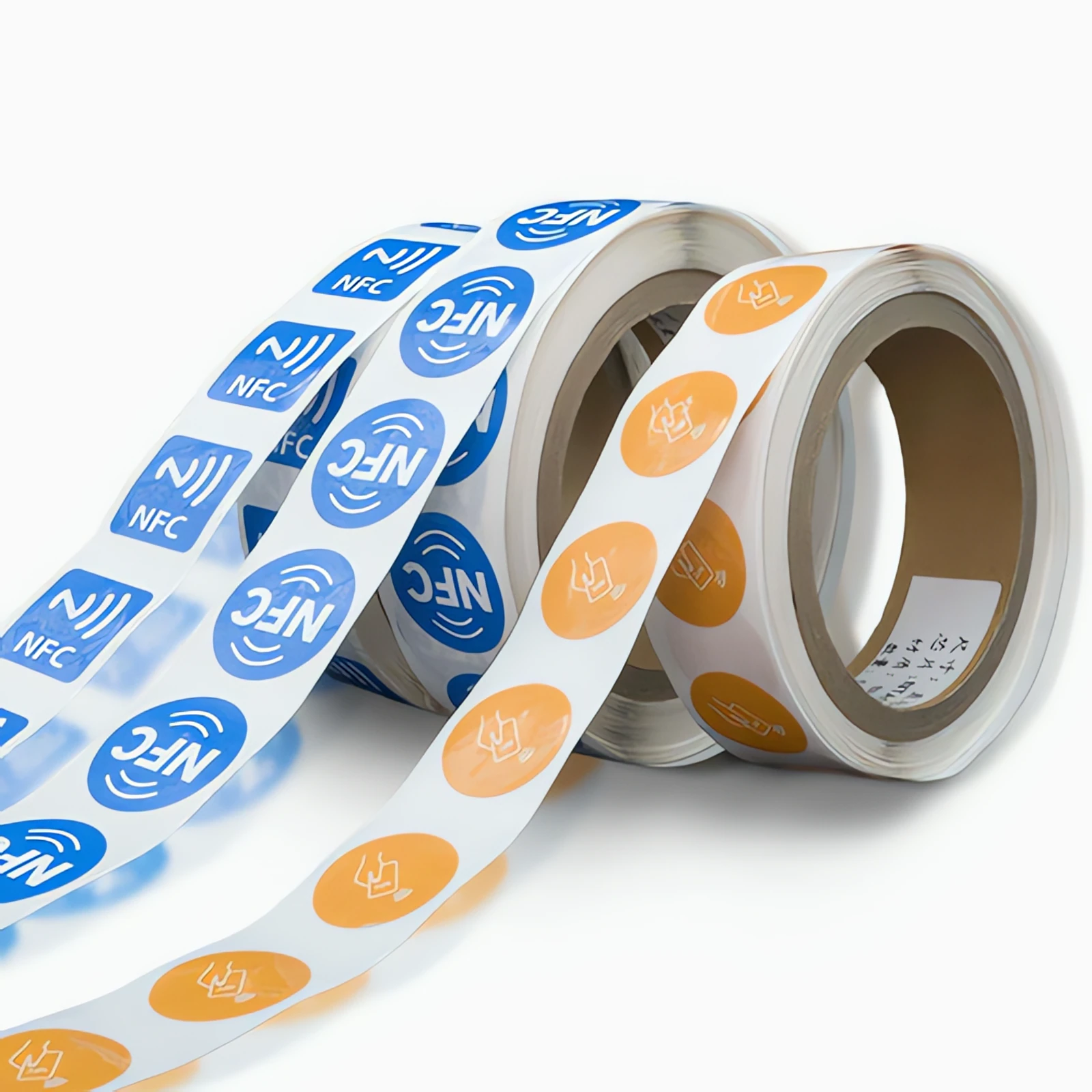
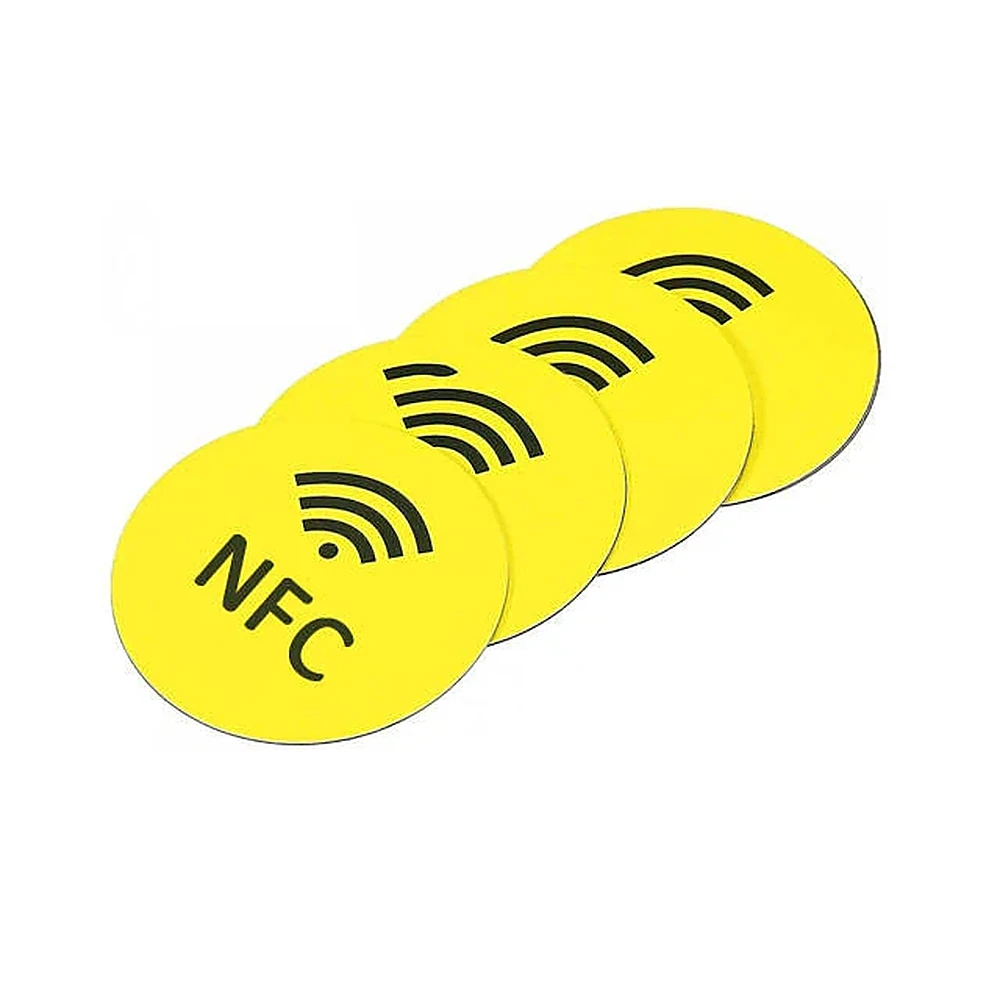
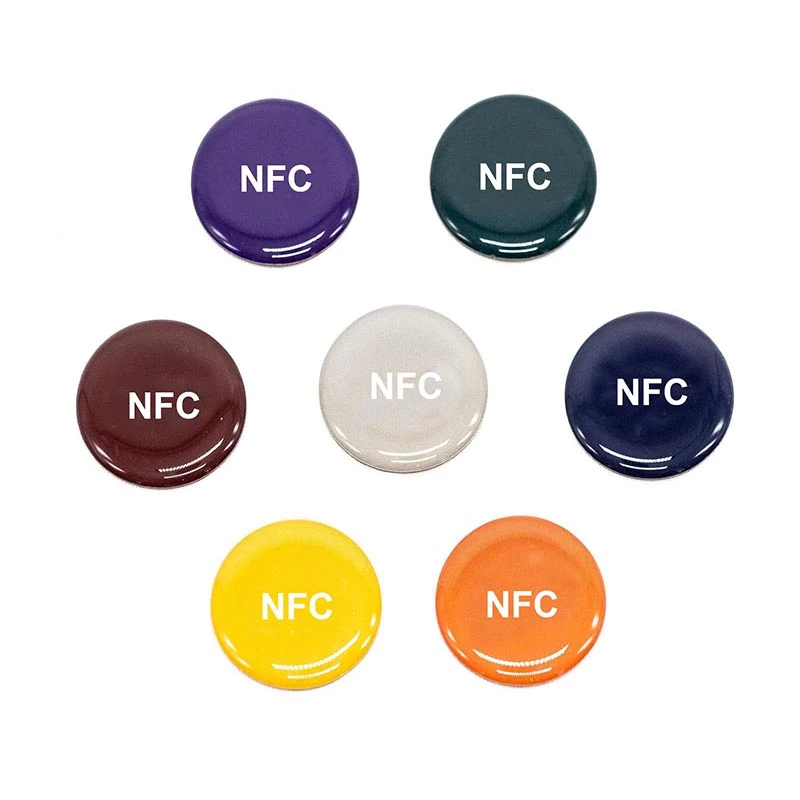
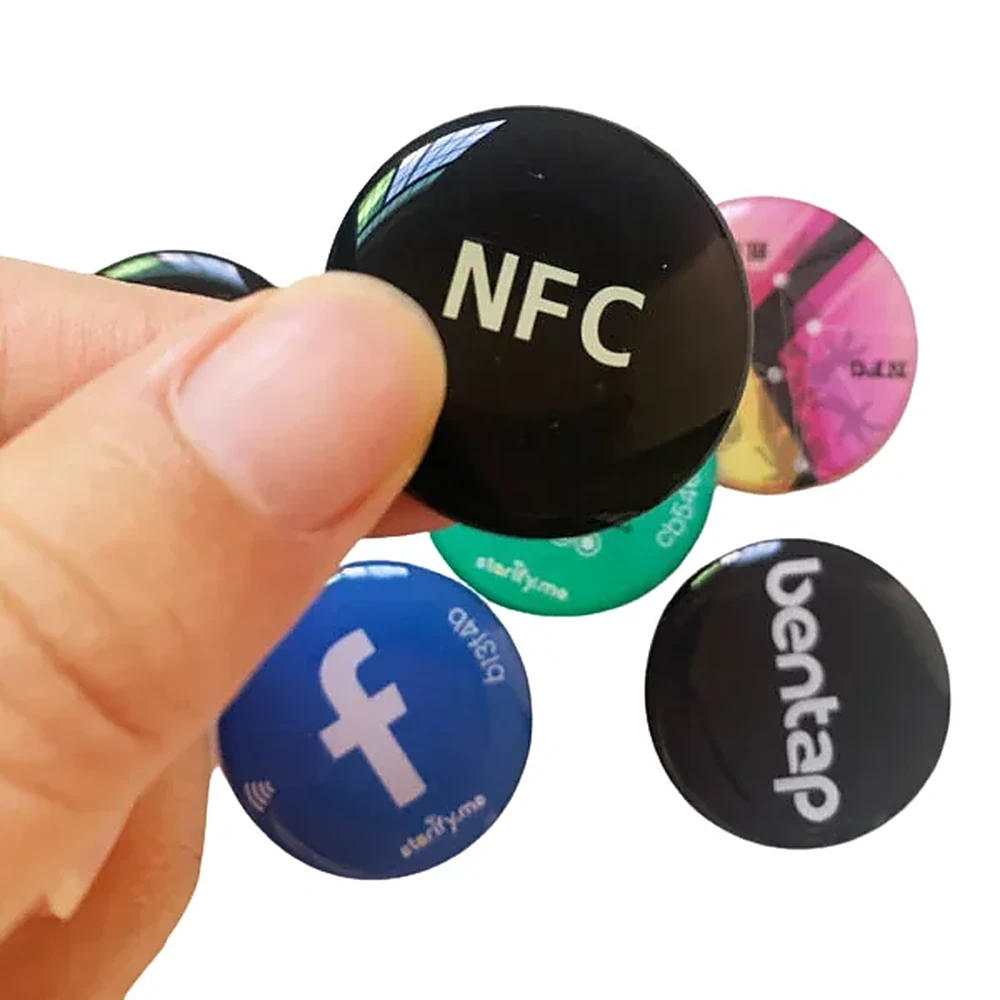
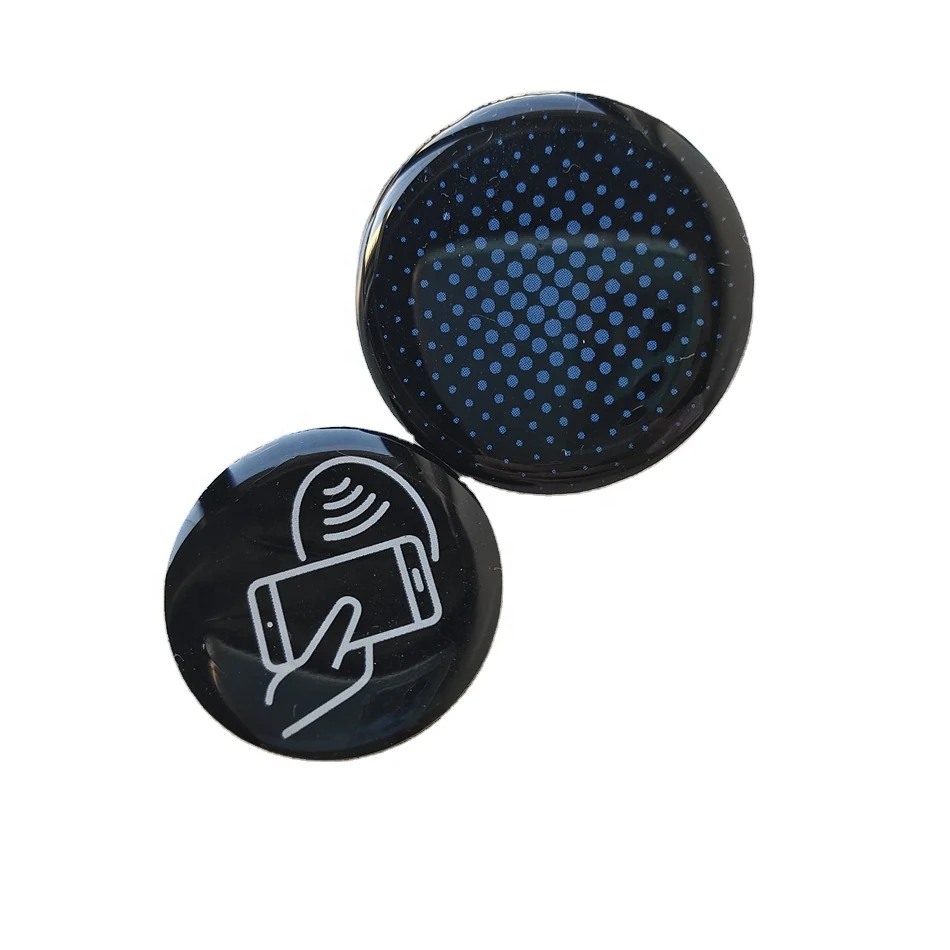
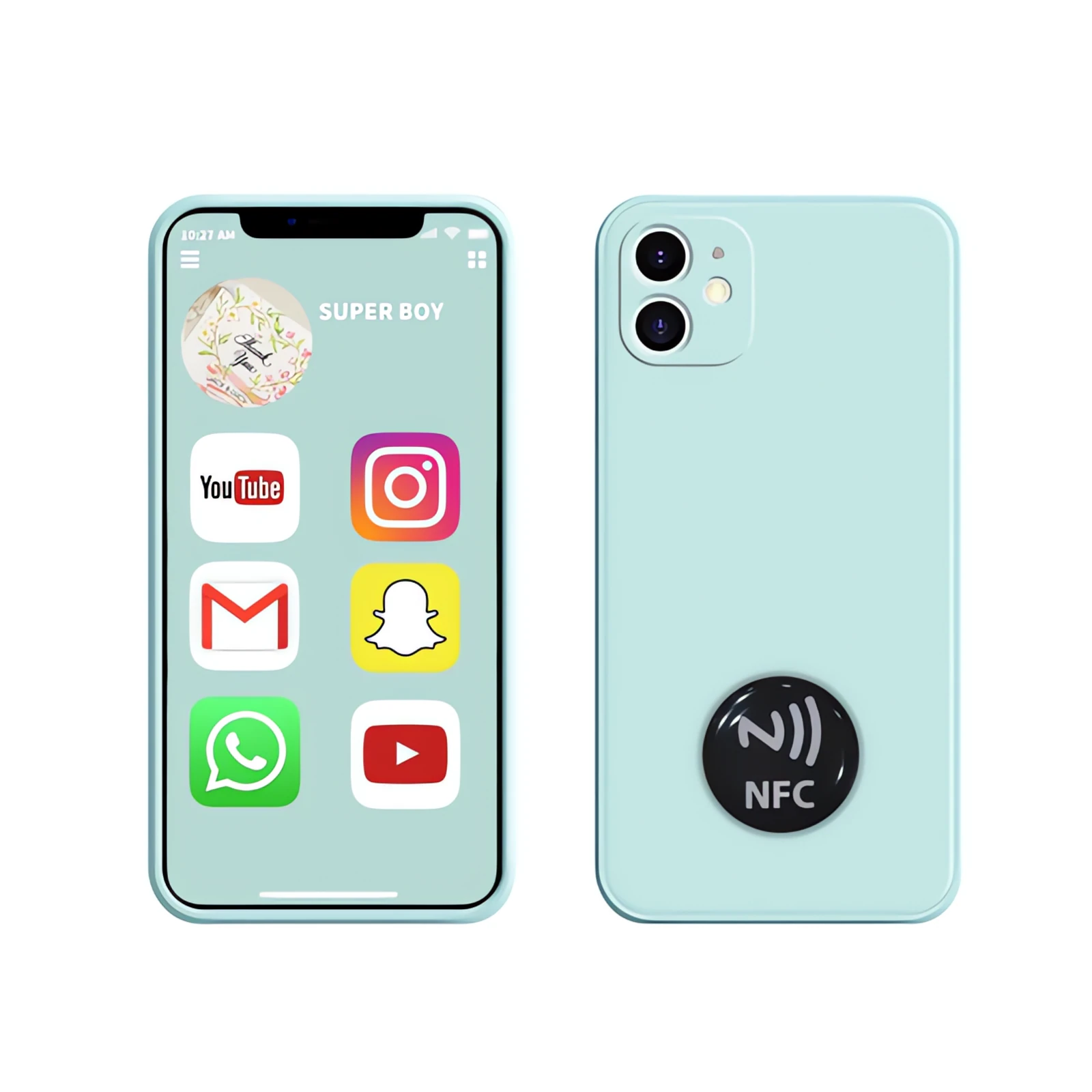
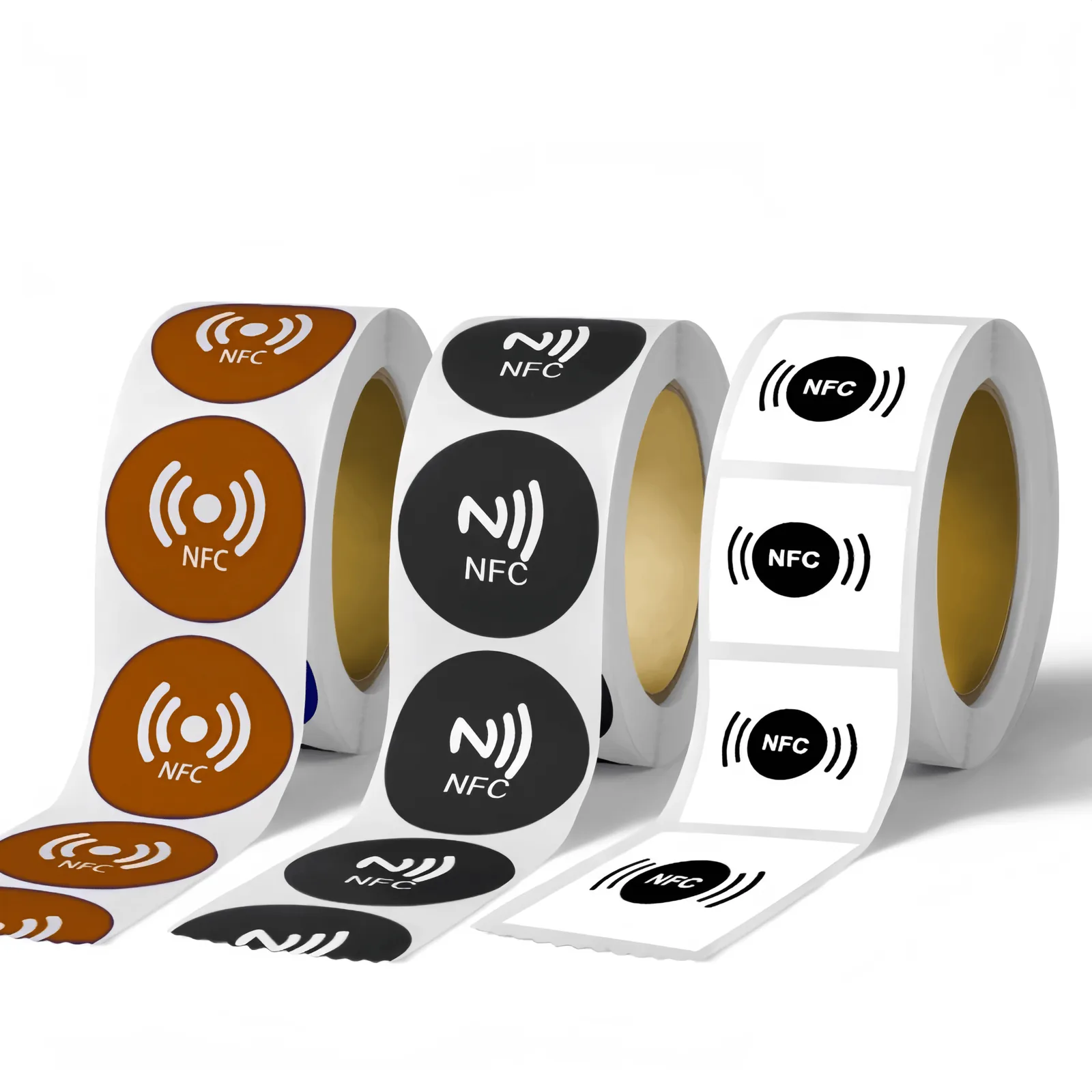
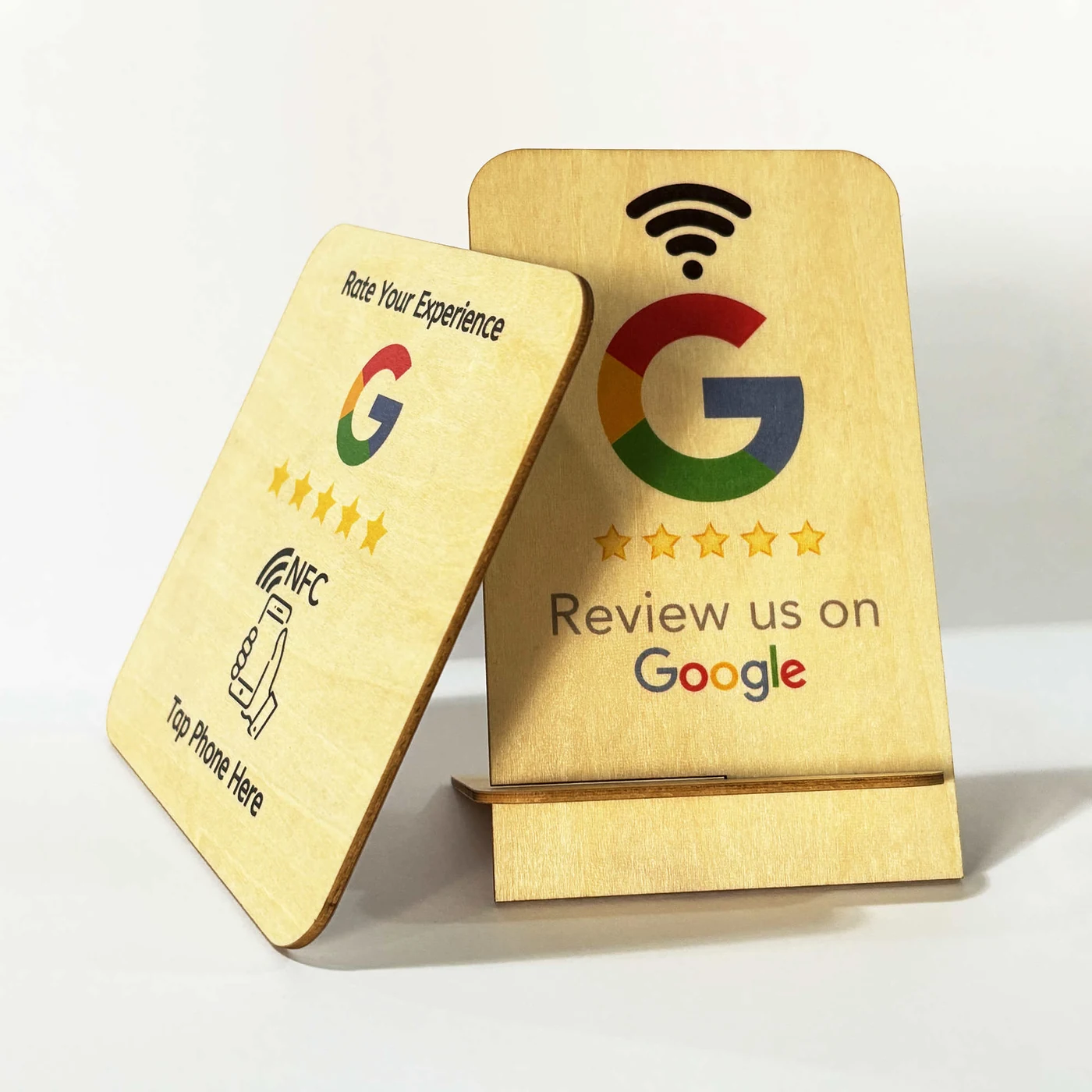
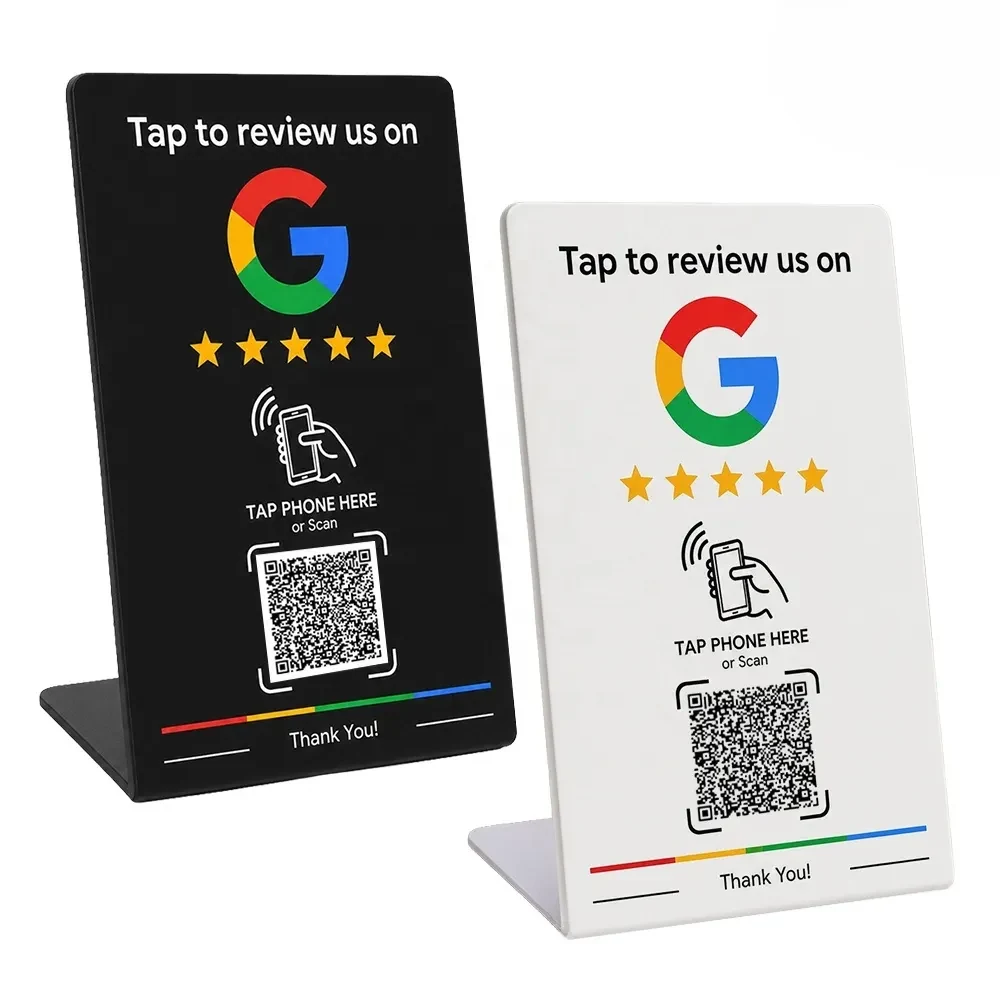
Pre-encoded epoxy or PET stickers that open Instagram, TikTok, WhatsApp, a review page or a digital menu with one tap.
nfc tags
NFC works at 13.56 MHz and is read by any modern smartphone — no dedicated reader needed. That makes it the right choice for consumer interaction, product authentication and small-scale asset checks, and the wrong choice when you need to read a whole pallet at once.
Selection guide
Pick the chip by what you need to store and protect, then pick the body by where it lives. NTAG213 is the cost baseline for URL redirects; NTAG215/216 carry more memory; ICODE SLIX and ISO 15693 give longer range for library and laundry style bulk reading.
Pre-encoded epoxy or PET stickers that open Instagram, TikTok, WhatsApp, a review page or a digital menu with one tap.

Tamper-evident and cryptographically-verifiable tags that confirm a product is genuine at the point of purchase.
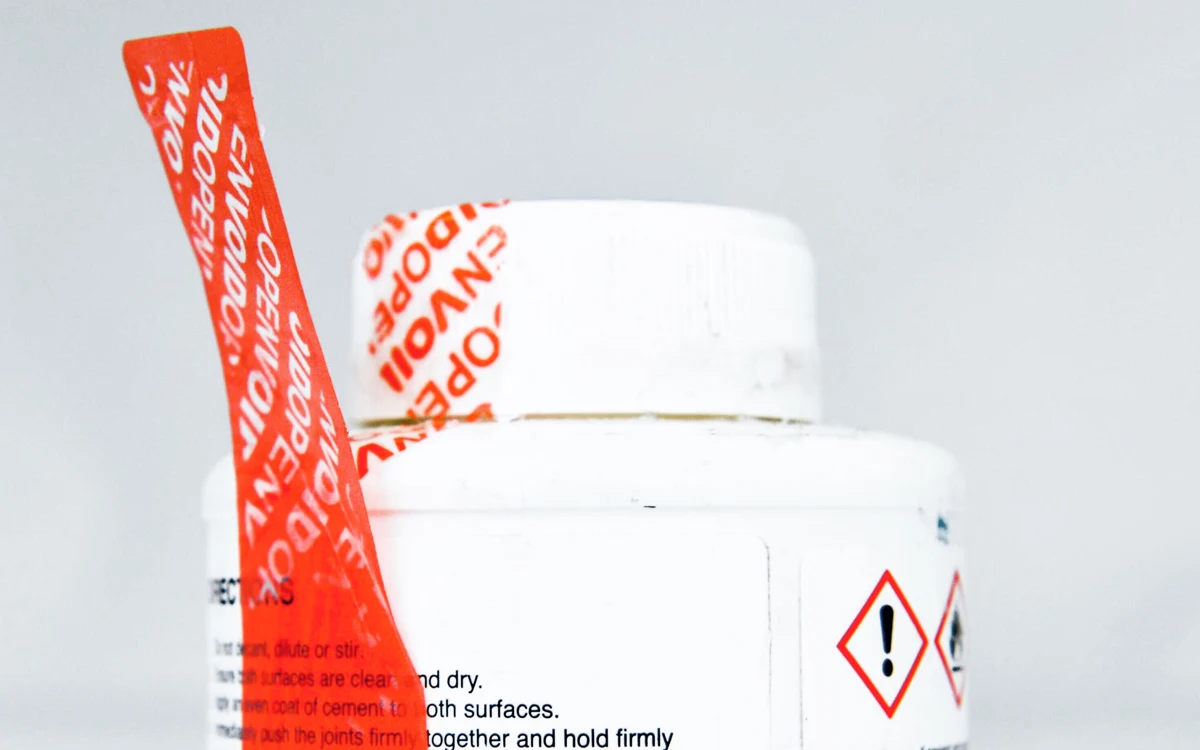
Fragile void labels and ultra-thin FPC tags that break or self-destruct if peeled, flagging any tampering.
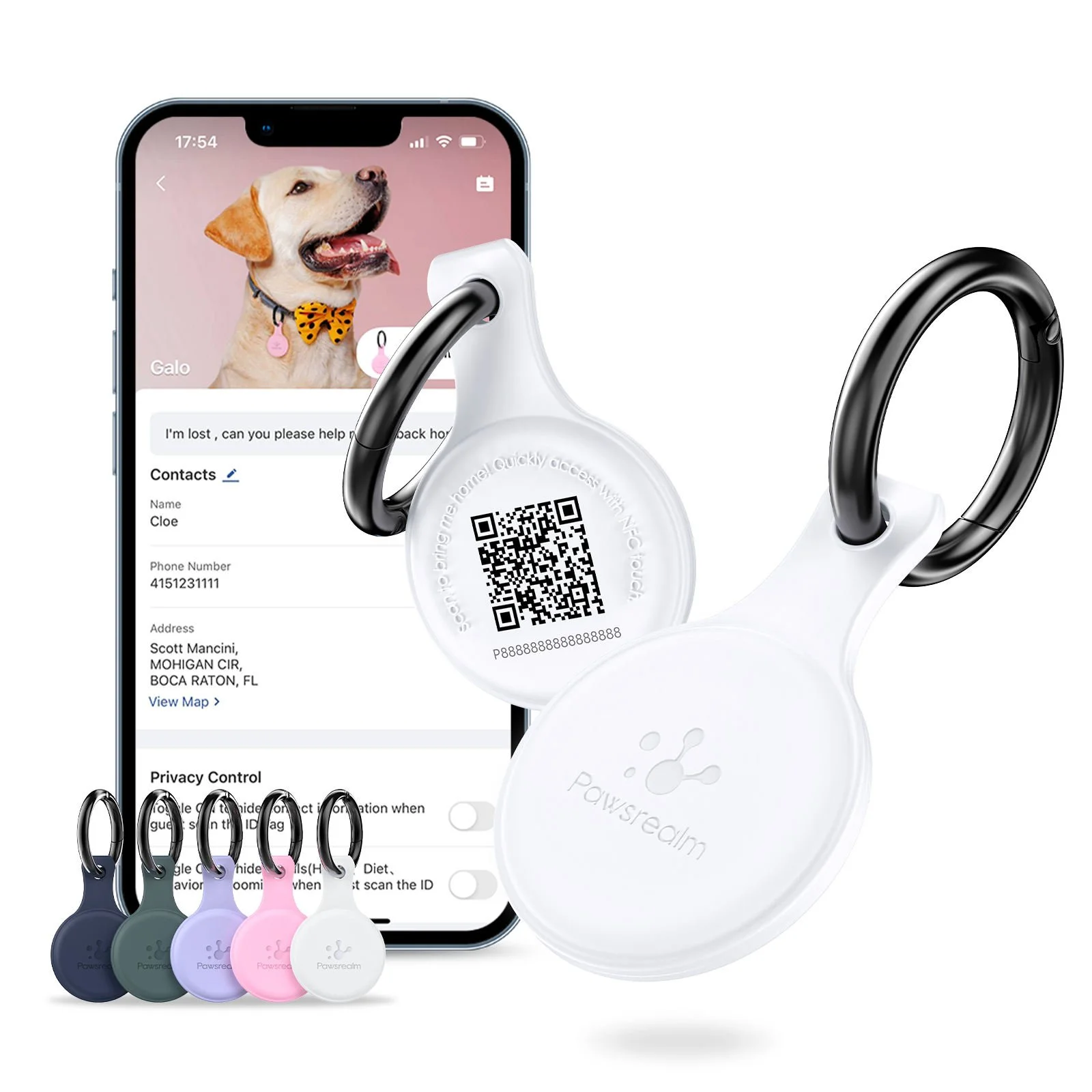
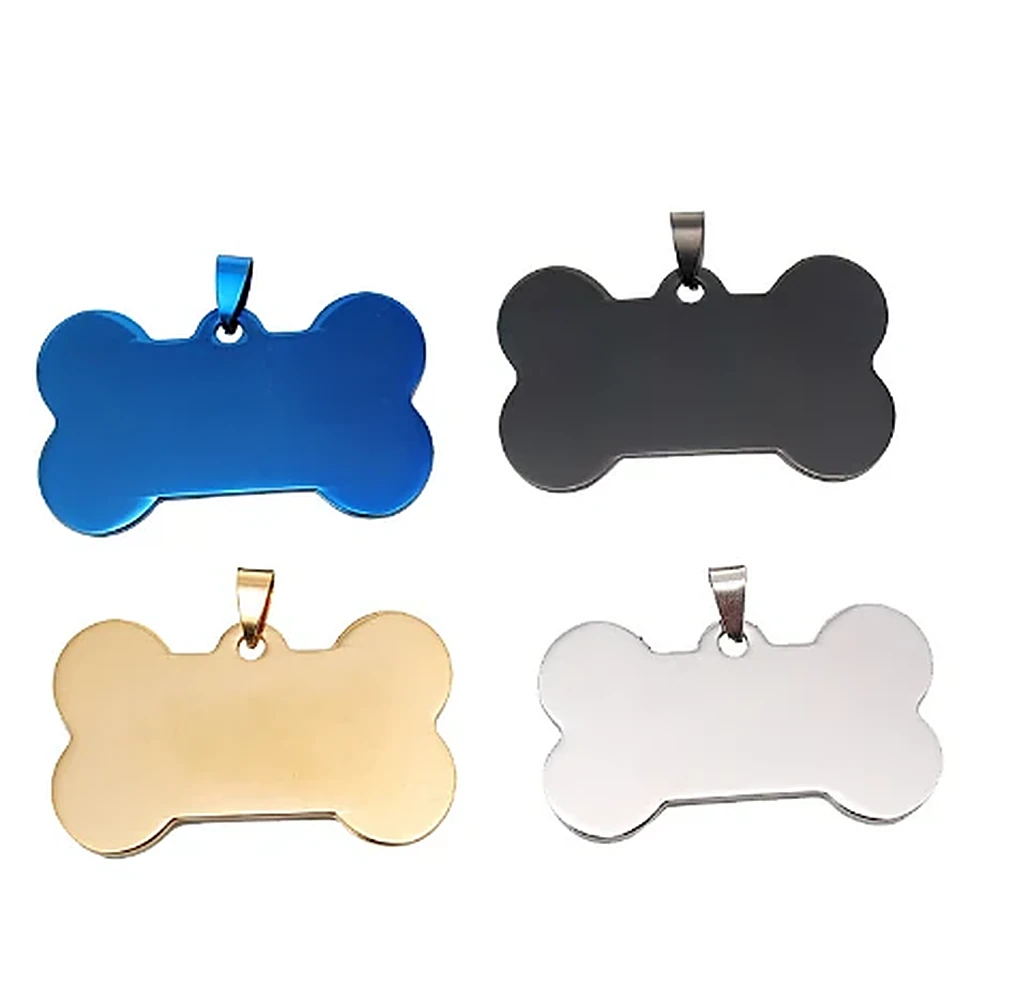
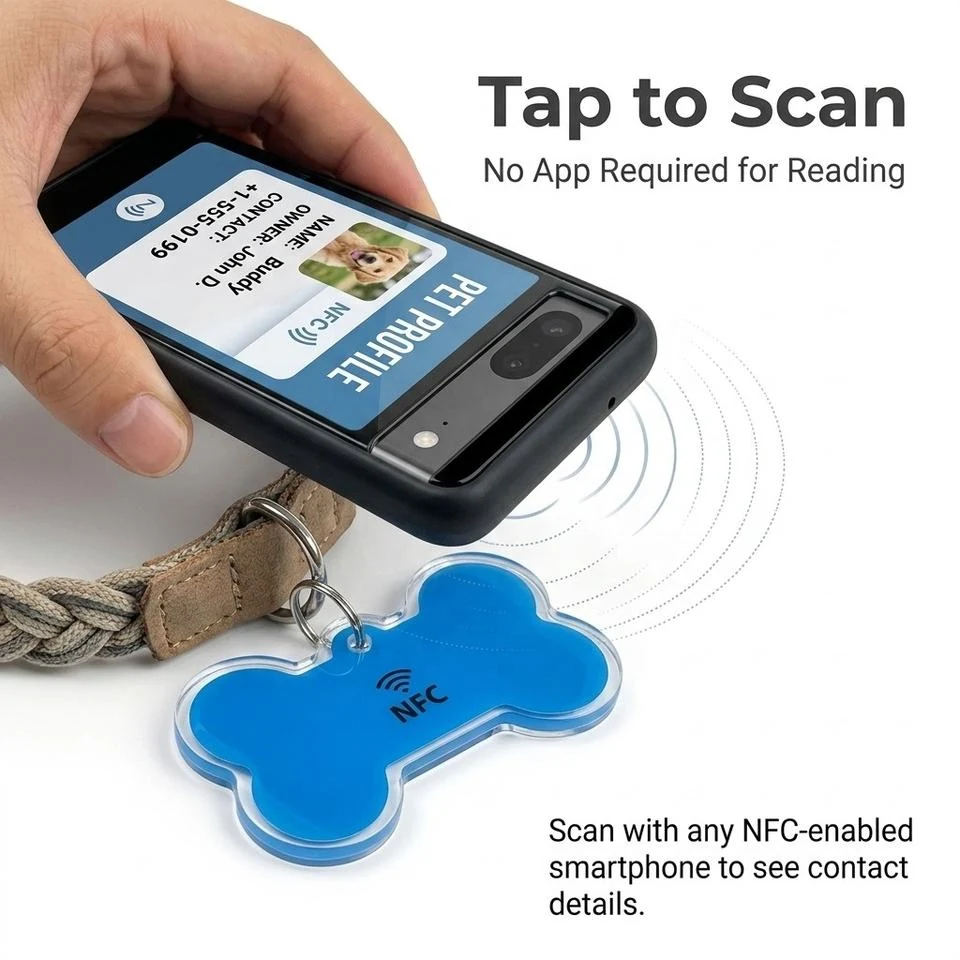
Bone-shaped and stainless-steel NFC tags with QR code backup for pet identification, keys and everyday accessories.

ISO 15693 ICODE SLIX labels for library books, CDs, DVDs and document files where bulk reading at 2-50 cm matters.

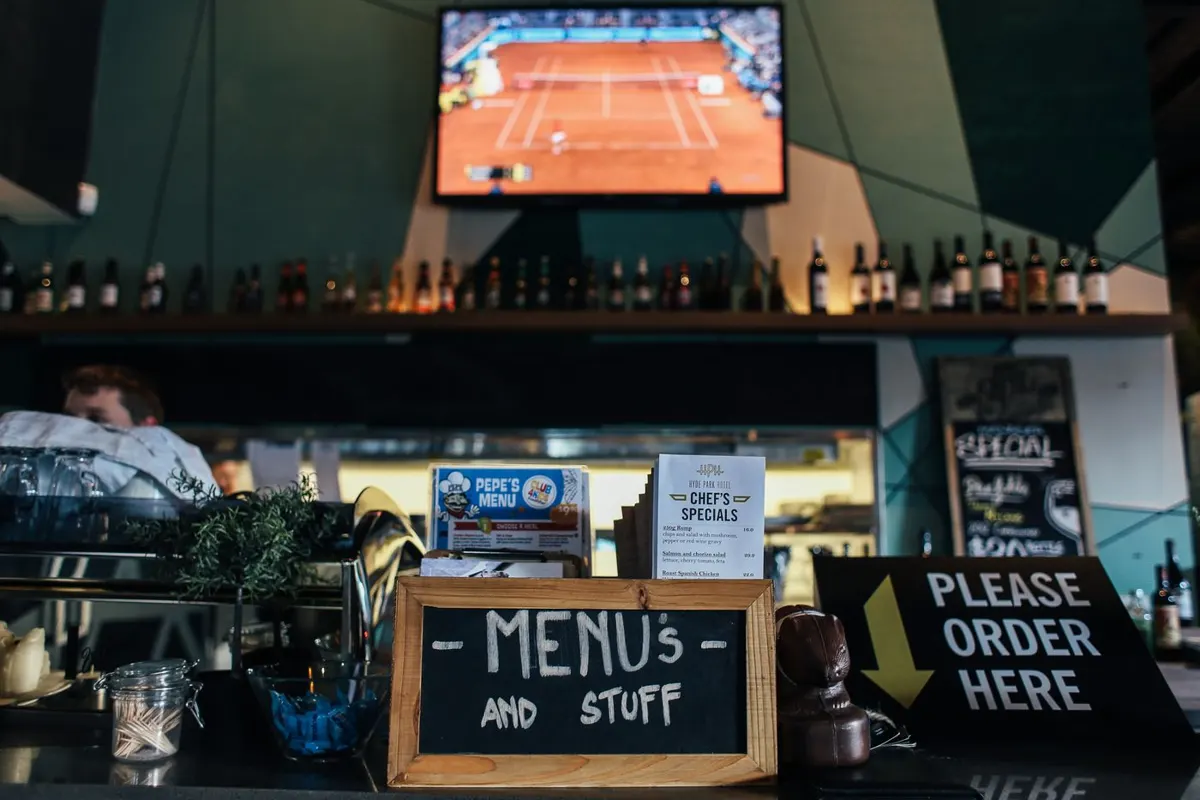
Counter and tabletop NFC epoxy tags for digital menus, guest Wi-Fi and review links -- no app required to tap and open.

Compact rewritable stickers for authentication, inventory checks and asset tracking on equipment, tools and IT hardware.
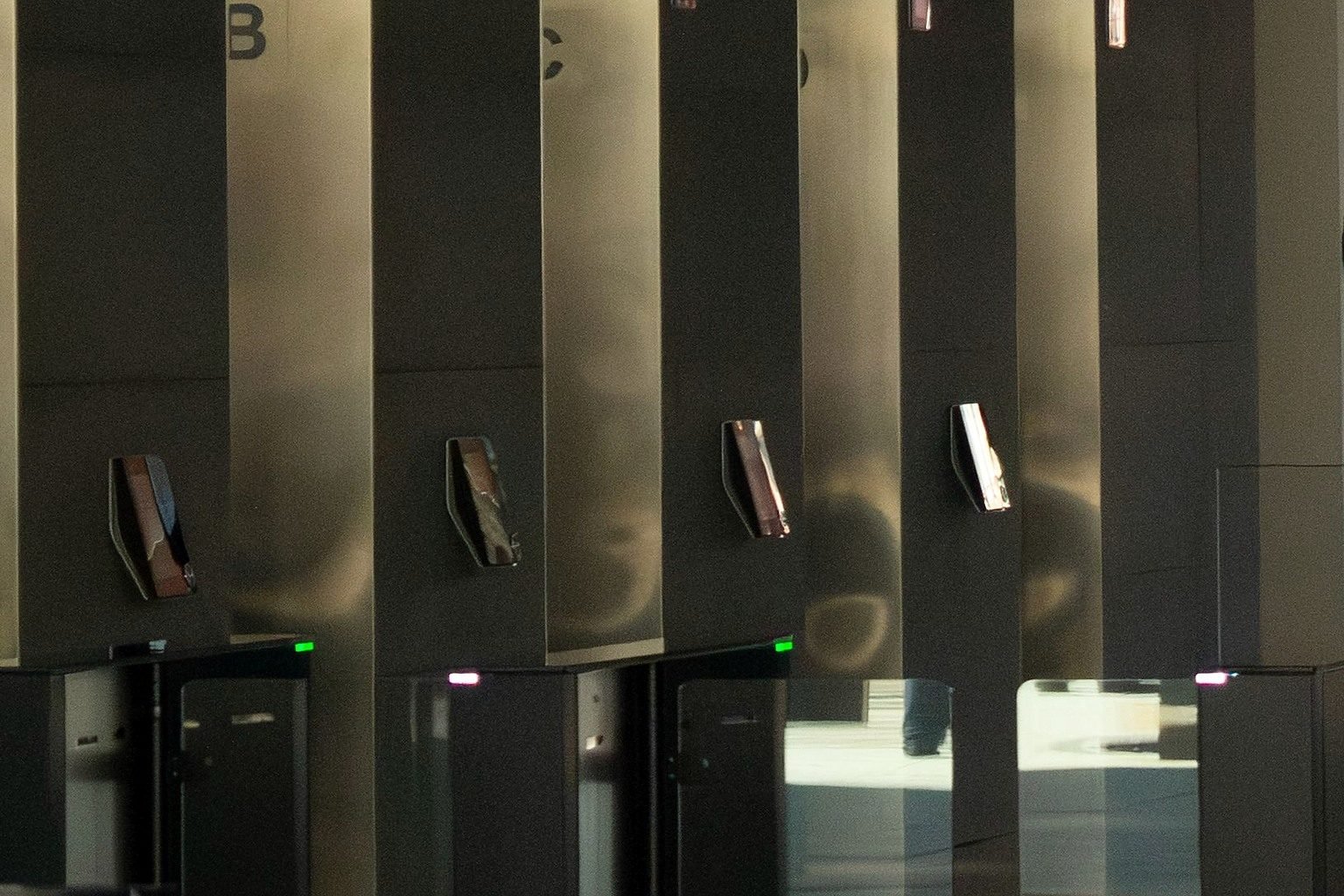
NTAG and MIFARE stickers or fobs as a lightweight, phone-compatible extra credential alongside a card-based access system.
Product range
16 real, in-production SKUs in this range. Search by name or SKU, filter by product type or frequency below, or browse the full list and use the page numbers to see the rest.
30-second self-service finder
Pick surface, frequency or range below to see the top 2–3 sample matches and add them directly to your quote list.
Showing top sample picks for this category.
OEM & ODM capability
Every part of the build is open to customization, matched to your product, your system and your brand. Logo, artwork and packaging are part of the standard build, not an add-on.
NTAG213/215/216, ICODE SLIX or MIFARE Classic/DESFire -- matched to payload size and read range.
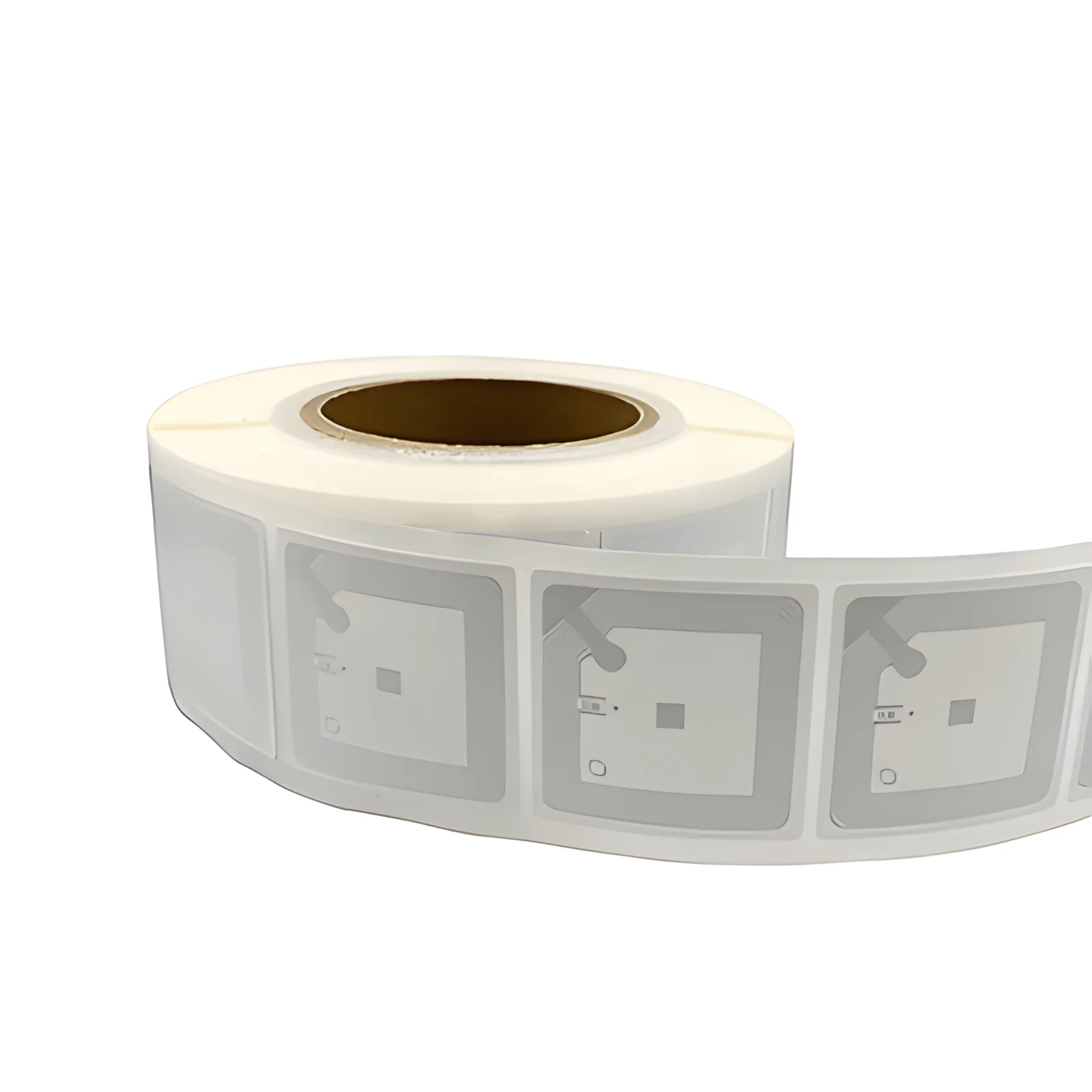
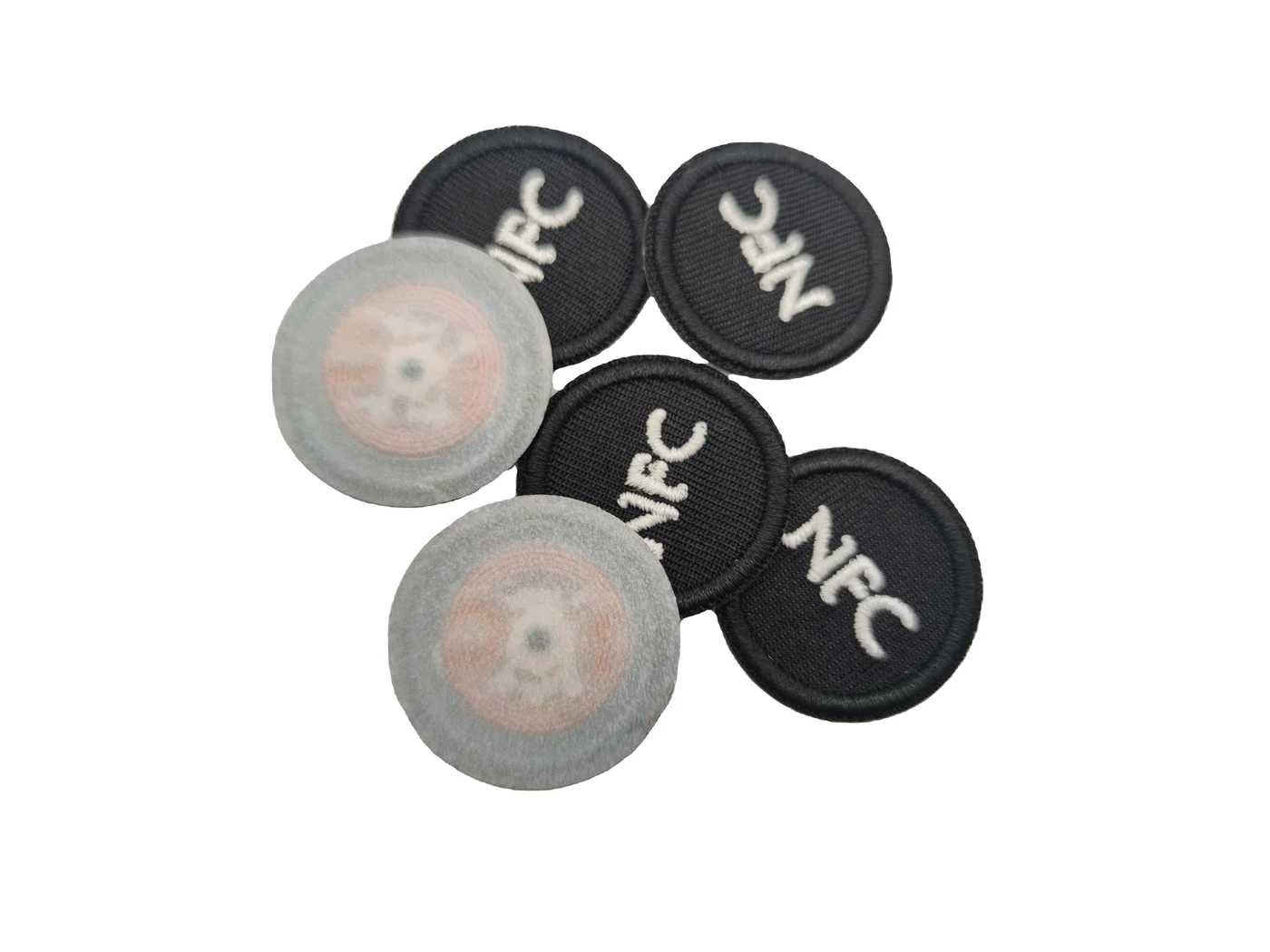
Flat PET sticker, domed epoxy tag, ultra-thin FPC or printable paper label -- matched to the surface and how it's used.
Round, square or die-cut to a custom outline, from 10 mm mini stickers up to large-format epoxy tags.
Full-colour CMYK, single-colour logo or blank/unbranded -- printed on the face or under the epoxy dome.
Pre-written URL, vCard, Wi-Fi credentials or custom NDEF data, with an option to lock the tag against overwriting.
Standard PET stickers are water-resistant; epoxy dome constructions are IP68 rated for repeated wet or outdoor use.
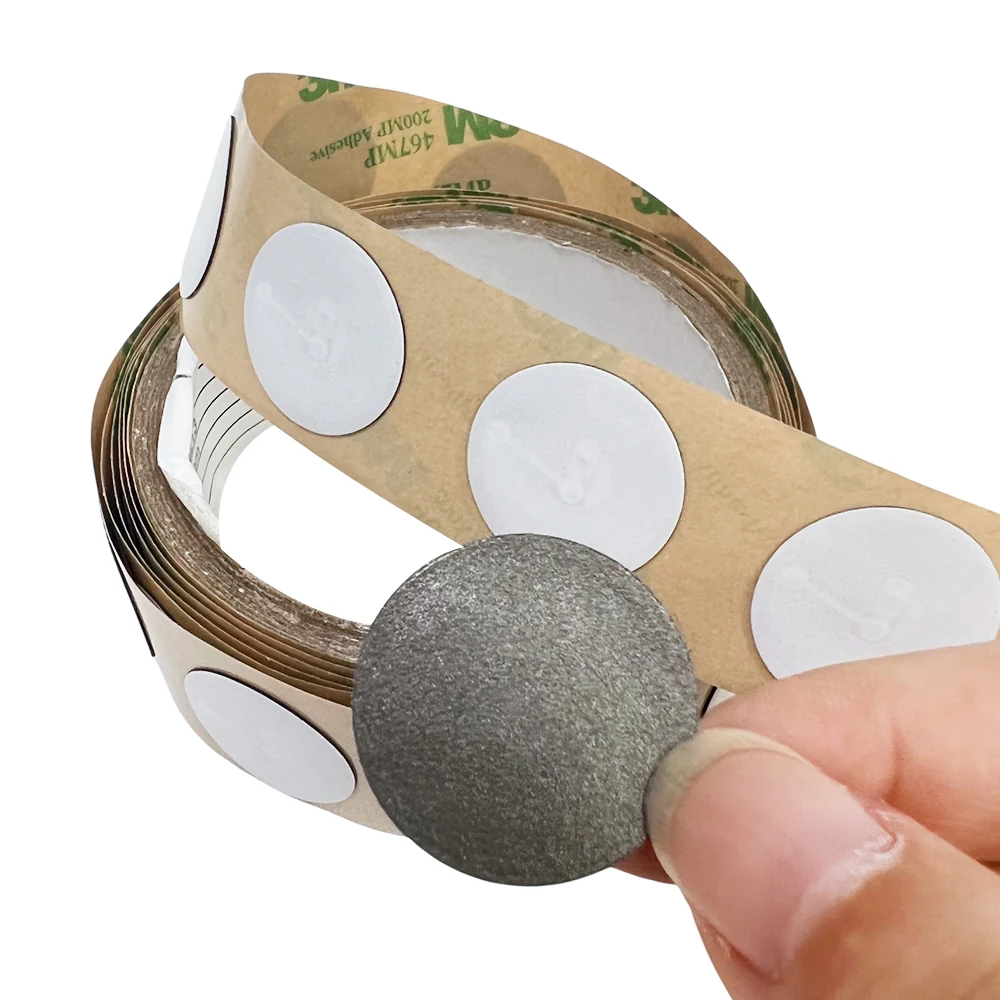
3M adhesive backing as standard, with anti-metal ferrite backing available where the tag mounts on or near metal.
Roll, sheet or individually bagged -- matched to whether you are hand-applying or machine-applying the tags.
Production & quality control
From validated sample to finished tag -- the real production stages behind every order.
Confirm the selected inlay, face stock and adhesive against the intended surface before production.
Bond the RFID chip to the antenna substrate to create the inlay.
Combine the inlay with the selected face material, adhesive and liner.
Apply approved artwork, variable text, barcodes or QR codes.
Encode the agreed data and inspect the encoded labels.
Check finished labels before packing against the approved production requirements.
Pack finished labels in the agreed roll and shipment format.
How to choose
Every NFC/HF tag is the same core inlay -- antenna plus chip -- built into a face material and adhesive chosen for the surface it lands on and how it will be handled.
Marketing tap, authentication, asset tracking or library/document bulk reading -- this decides the chip.
NTAG213 for a single link; NTAG215/216 for larger payloads; ICODE SLIX for range and bulk reading.
Flat PET sticker, waterproof epoxy dome, tamper-evident FPC, or printable label.
Round or custom die-cut shape, full-colour or single-colour artwork.
URL, vCard, Wi-Fi or custom NDEF data, with optional lock-after-write.
Test read distance, phone compatibility and durability before mass production.
PET sticker, epoxy dome, FPC or printable paper -- the visible, printable surface.
The antenna and chip, laminated or embedded beneath the face material.
Full-colour or single-colour print, logo, barcode or serial number.
3M adhesive, with an optional anti-metal ferrite backing.
Removable backing sheet, peeled off at the point of application.
Chip options
Chip choice is OEM/ODM too -- we match your existing reader or controller, not a fixed catalogue. Send a photo of a working card, wristband or your reader model and we will confirm it.
The default access-control and transit chip family worldwide. Classic covers most legacy door systems; Plus and DESFire add AES encryption for higher-security campuses and payment.
| Model | Memory | Protocol | UID | Read/Write Cycles | Typical Use |
|---|---|---|---|---|---|
| MIFARE Classic 1K (S50) | 1 KB EEPROM | 13.56 MHz, ISO14443A | 4 or 7-byte | 100,000 | Hotel keys, access control |
| MIFARE Classic 4K (S70) | 4 KB EEPROM | 13.56 MHz, ISO14443A | 4 or 7-byte | 100,000 | Higher-capacity access, multi-application |
| MIFARE Ultralight | 512-bit (64 bytes) | 13.56 MHz, ISO14443A | 7-byte | 100,000 | Single-use tickets, low-cost transit |
| MIFARE Ultralight EV1 (48/128 bytes) | 384 / 1024-bit | 13.56 MHz, ISO14443A | 7-byte | 100,000 | Tickets with basic anti-counterfeit |
| MIFARE Ultralight C | 144 bytes | 13.56 MHz, ISO14443A | 7-byte | 100,000 | 3DES-secured single-use tickets |
| MIFARE Plus SE / X / S | 1 / 2 / 4 KB | 13.56 MHz, ISO14443A | 4 or 7-byte | 200,000 | Classic-compatible security upgrade |
| MIFARE DESFire EV1 (2/4/8K) | 2 / 4 / 8 KB | 13.56 MHz, ISO14443A | 7-byte | 500,000 | Campus, transit, closed-loop payment |
| MIFARE DESFire EV2 (2/4/8K) | 2 / 4 / 8 KB | 13.56 MHz, ISO14443A | 7-byte | 500,000 | Discontinued by NXP -- EV3 is the current replacement |
| MIFARE DESFire EV3 (2/4/8K) | 2 / 4 / 8 KB | 13.56 MHz, ISO14443A | 7-byte | 500,000 | Current high-security campus/transit/payment |
The standard NFC Forum Type 2 chip behind phone-based NFC -- business cards, smart posters and loyalty taps. No app required on the receiving phone for a basic tap.
| Model | Memory | Protocol | UID | Read/Write Cycles | Typical Use |
|---|---|---|---|---|---|
| NTAG213 | 144 bytes user memory | 13.56 MHz, ISO14443A, NFC Forum Type 2 | 7-byte | 100,000 | NFC business cards, smart posters |
| NTAG215 | 504 bytes user memory | 13.56 MHz, ISO14443A, NFC Forum Type 2 | 7-byte | 100,000 | Loyalty and app-linked NFC tags |
| NTAG216 | 888 bytes user memory | 13.56 MHz, ISO14443A, NFC Forum Type 2 | 7-byte | 100,000 | Larger payloads -- multi-link or vCard NFC cards |
| NTAG 424 DNA | 416 bytes | 13.56 MHz, ISO14443A, AES | 4-byte | 200,000 | Tap-authenticated anti-counterfeit (less common) |
Longer-range 13.56 MHz chips for library, asset and item-level tracking where a phone tap is not the use case.
| Model | Memory | Protocol | UID | Read/Write Cycles | Typical Use |
|---|---|---|---|---|---|
| ICODE SLI | 1024-bit | 13.56 MHz, ISO15693 | 8-byte | 100,000 | Library media, asset tracking |
| ICODE SLIX | 2048-bit | 13.56 MHz, ISO15693 | 8-byte | 100,000 | Library media (most common ICODE variant) |
| ICODE SLIX2 | 2528-bit | 13.56 MHz, ISO15693 | 8-byte | 100,000 | Higher-memory library and asset tracking |
125 kHz chips positioned above basic EM/T5577 proximity, used in logistics, livestock and gas/asset tracking.
| Model | Memory | Protocol | UID | Read/Write Cycles | Typical Use |
|---|---|---|---|---|---|
| HITAG 1 | 2048-bit | 125 kHz | Factory-fixed | 100,000 | Logistics, asset tracking, gas |
| HITAG 2 | 256-bit | 125 kHz | Factory-fixed | 100,000 | Logistics, livestock tracking, asset |
| HITAG S 256 / S 2048 | 256-bit / 2048-bit | 125 kHz | 4-byte | 100,000 | Higher-memory 125 kHz applications |
125 kHz proximity chips behind most legacy door-access installations still in service today.
| Model | Memory | Protocol | UID | Read/Write Cycles | Typical Use |
|---|---|---|---|---|---|
| EM4200 | 64-bit, read-only | 125 kHz | Factory-fixed | 100,000 | Legacy proximity access control |
| EM4305 | 512-bit, read/write | 125 kHz | Programmable | 100,000 | Multi-application proximity |
| EM4450 | 1024-bit, read/write | 125 kHz | Programmable | 100,000 | Higher-memory 125 kHz applications |
A rewritable 125 kHz chip that can emulate several legacy proximity formats, common in card and fob upgrade projects; also a widely used contact EEPROM family.
| Model | Memory | Protocol | UID | Read/Write Cycles | Typical Use |
|---|---|---|---|---|---|
| T5577 | 363-bit, read/write, multi-format | 125 kHz | Programmable | 100,000 | Rewritable proximity, format migration |
| AT24C series | Varies by part | Contact, ISO7816 | Factory-fixed | 100,000 | Contact memory cards |
Contact-based touch memory, not RF -- the chip behind iButton-style patrol and access tokens.
| Model | Memory | Protocol | UID | Read/Write Cycles | Typical Use |
|---|---|---|---|---|---|
| DS1990A | 64-bit ROM ID | 1-Wire (contact) | Factory-fixed | 100,000 | Guard patrol tokens, contact access |
A major Chinese IC design house. Its Mifare-compatible and CPU-card chips are common in cost-sensitive access and transit projects across Asia.
| Model | Memory | Protocol | UID | Read/Write Cycles | Typical Use |
|---|---|---|---|---|---|
| FM11RF08 (Mifare Classic-compatible) | 1 KB | 13.56 MHz, ISO14443A | 4 or 7-byte | 100,000 | Cost-sensitive Classic-compatible cards |
| FM11RF32 (4K-compatible) | 4 KB | 13.56 MHz, ISO14443A | 4-byte | 100,000 | Higher-capacity Classic-compatible cards |
| FM1208 series (CPU card) | 8 / 16 / 80 KB | 13.56 MHz, ISO14443A | n/a (CPU card) | 100,000 | Chinese national ID-style CPU cards |
| FM4442 / FM4428 | 256 bytes / 1024-bit | Contact, ISO7816 | Factory-fixed | 100,000 | Cost-sensitive contact memory cards |
A European chipmaker with a smaller HF footprint, mainly seen in library and asset-tag projects that specify ST by name.
| Model | Memory | Protocol | UID | Read/Write Cycles | Typical Use |
|---|---|---|---|---|---|
| ST25TB512 / SRI512 | 512-bit | 13.56 MHz, ISO14443B | Factory-fixed | 100,000 | Library and access projects specifying ST |
TI's HF tag chip, mainly specified on legacy projects still running the Tag-it standard.
| Model | Memory | Protocol | UID | Read/Write Cycles | Typical Use |
|---|---|---|---|---|---|
| TI2048 (Tag-it HF-I) | 2048-bit | 13.56 MHz, ISO15693 | Factory-fixed | 100,000 | Legacy Tag-it-standard deployments |
Contact chips, not RFID -- read through physical gold-plated pads (ISO 7816), the older technology behind some hotel and payphone-style cards still in use.
| Model | Memory | Protocol | UID | Read/Write Cycles | Typical Use |
|---|---|---|---|---|---|
| SLE4428 | 1 Kbit EEPROM | Contact, ISO7816-2 | PIN-protected | 100,000 | Legacy contact smart cards |
| SLE5542 / SLE5528 | 256 bytes / 1024-bit | Contact, ISO7816 | PIN-protected | 100,000 | Legacy contact smart cards |
FAQ
Every NFC-enabled Android and every iPhone from the 7 onwards can read NFC Forum Type 2 tags such as NTAG213/215/216 without an app. ISO 15693 (ICODE) is supported by iPhone 7 and later and by most recent Android devices, but coverage is less universal — use NTAG if broad phone compatibility matters.
Yes. Send us the URL or the list of unique URLs and we encode them at the factory, optionally locking the tag so the content cannot be overwritten.
HF is a near-field magnetic coupling technology — a few centimetres is physically normal and it is a feature, not a defect: it guarantees the user tapped the tag they intended. If you need metres of range, use UHF instead.
Not without help. A plain NFC sticker on metal will detune and stop reading. Use our on-metal NFC construction, which adds a ferrite isolation layer.
MOQ starts at 50-100 pcs depending on the format -- epoxy stickers and social-media tags start around 50-100 pcs, printed PET stickers around 100 pcs. Blank or stock-chip stickers are available in smaller trial quantities.
Yes -- the epoxy dome constructions are IP68 rated for outdoor, poolside or handheld use. Flat PET stickers are water-resistant but not built for submersion; choose epoxy if the tag will get wet repeatedly.
Yes -- our fragile/void HF labels break into pieces if peeled, and our ultra-thin FPC tags physically destroy themselves when removed, so both flag tampering for warranty seals and authentication.
Yes -- see our RFID readers & hardware range for handheld and fixed readers matched to 13.56 MHz HF, suited to library and document bulk-reading deployments.
Yes. Chip, form factor, size, print and encoding are all engineered around your use case -- there is no fixed catalogue design. Send your requirement and we will confirm what we can build.
Yes -- request matched samples so you can validate phone compatibility, read range and durability on your real use case before placing a bulk order.
Resources
Practical buying and technical guides for this product range.
Engineering support
Marketing tap, product authentication or library bulk reading each need a different chip and body -- send your use case and reader details and we'll confirm a working sample.
Get the latest news, case studies, and product updates from FYRFID delivered to your inbox. No spam — unsubscribe any time.
Thanks for subscribing — we’ll be in touch.
We couldn't subscribe you right now. Please try again.