Before you specify either system
Read range isn't a quality tier here, it's a control. A library self-checkout station deliberately limits its read zone to a few centimetres so a patron's own items check out and nothing else on a nearby cart does. An archive room audit deliberately wants the opposite, several metres of range to sweep a whole cabinet at once. Choosing the frequency is choosing how much control you want over what gets read at once.
The Library Workflow: Deliberate, One Station at a Time
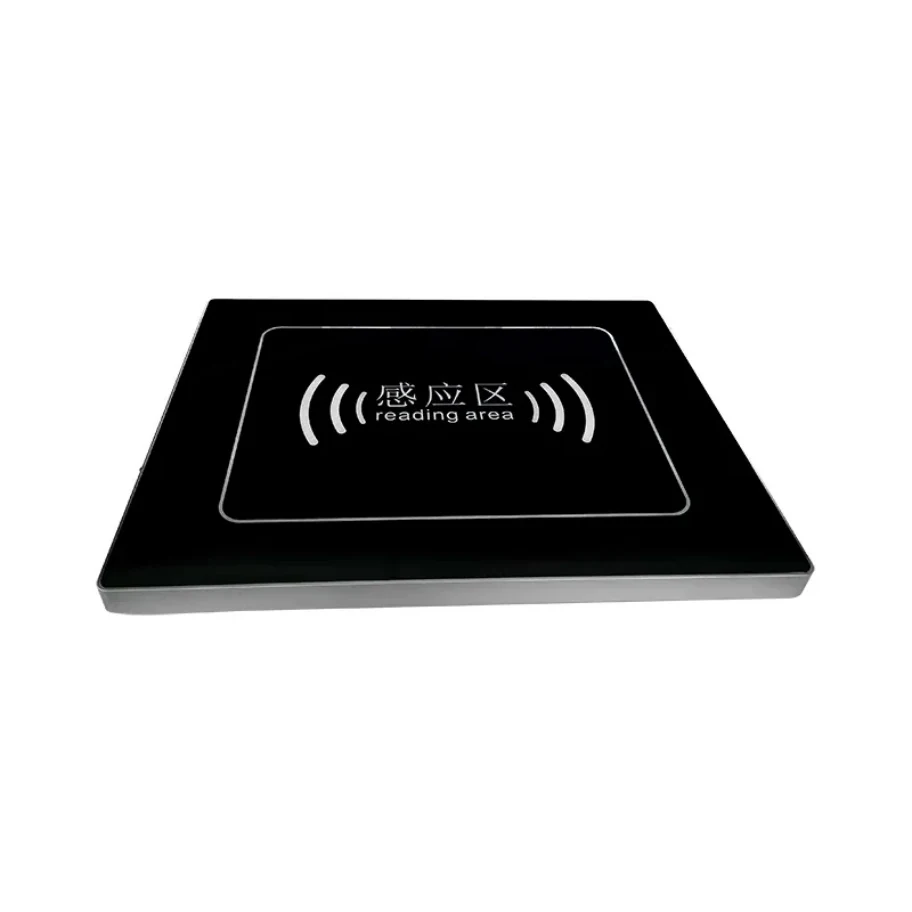
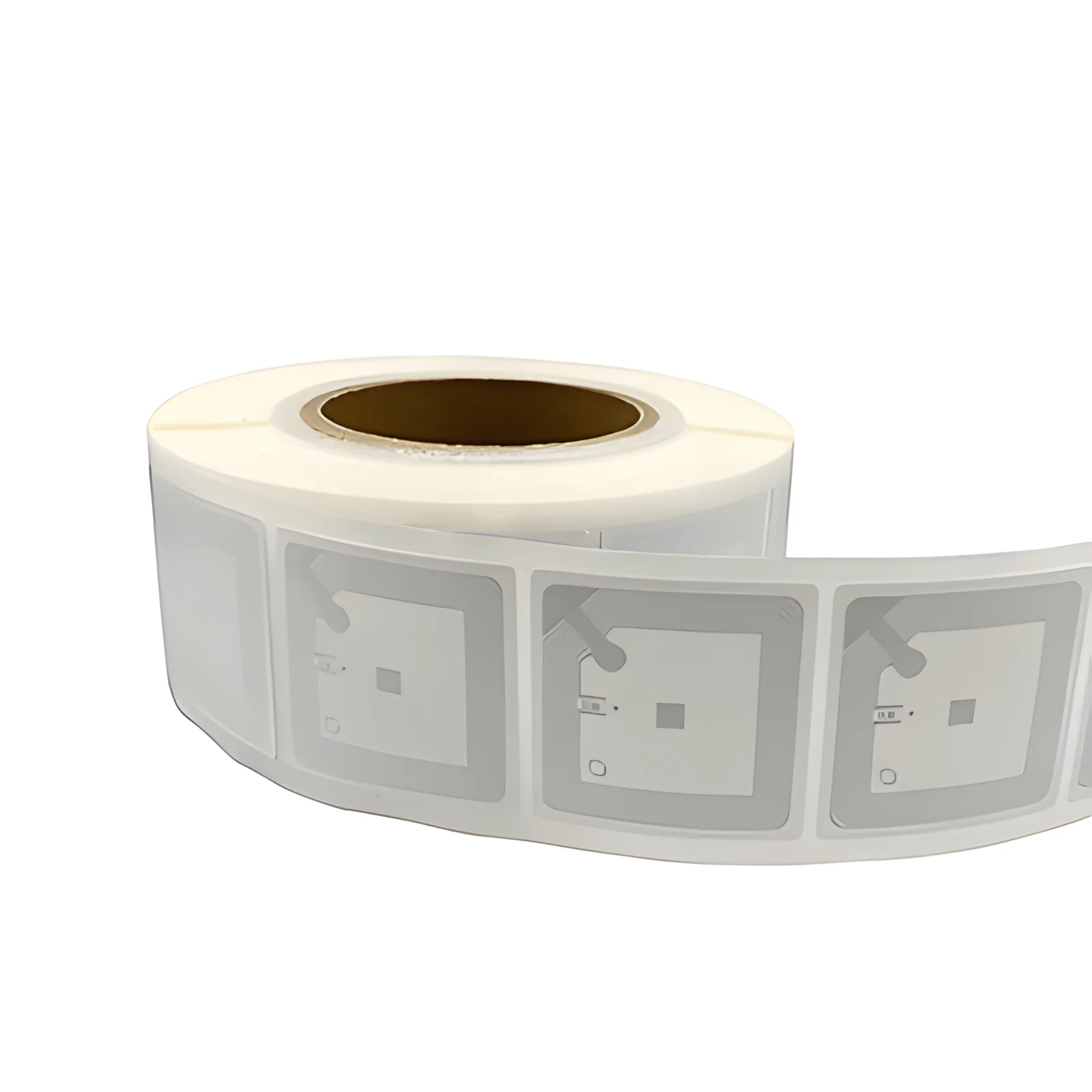
A book's life in an RFID-enabled library starts at cataloguing, where our printable HF library label (FYL-HF-004) is applied and encoded with the item's identifier. It runs at 13.56MHz on ISO 15693 or ISO 14443, with a genuinely short 2-50cm read range. That short range is the entire point: a patron places books on a desktop reader pad at a self-checkout station, and the system reads only what's actually sitting in that zone, not the returns bin next to it or the cart of books being reshelved on the other side of the desk.
Our desktop UHF reader with library software (FY-RD-CHIP-012, ISO 18000-6C, RS-232/USB) plays the equivalent role for a UHF-based library deployment, giving staff a defined reading area rather than an open-ended scan. The deliberate, contained read zone is what makes self-checkout trustworthy for both the library and the patron: it has to read exactly what's placed on the pad, not what's nearby.
The Archive Workflow: Sweep the Whole Room at Once
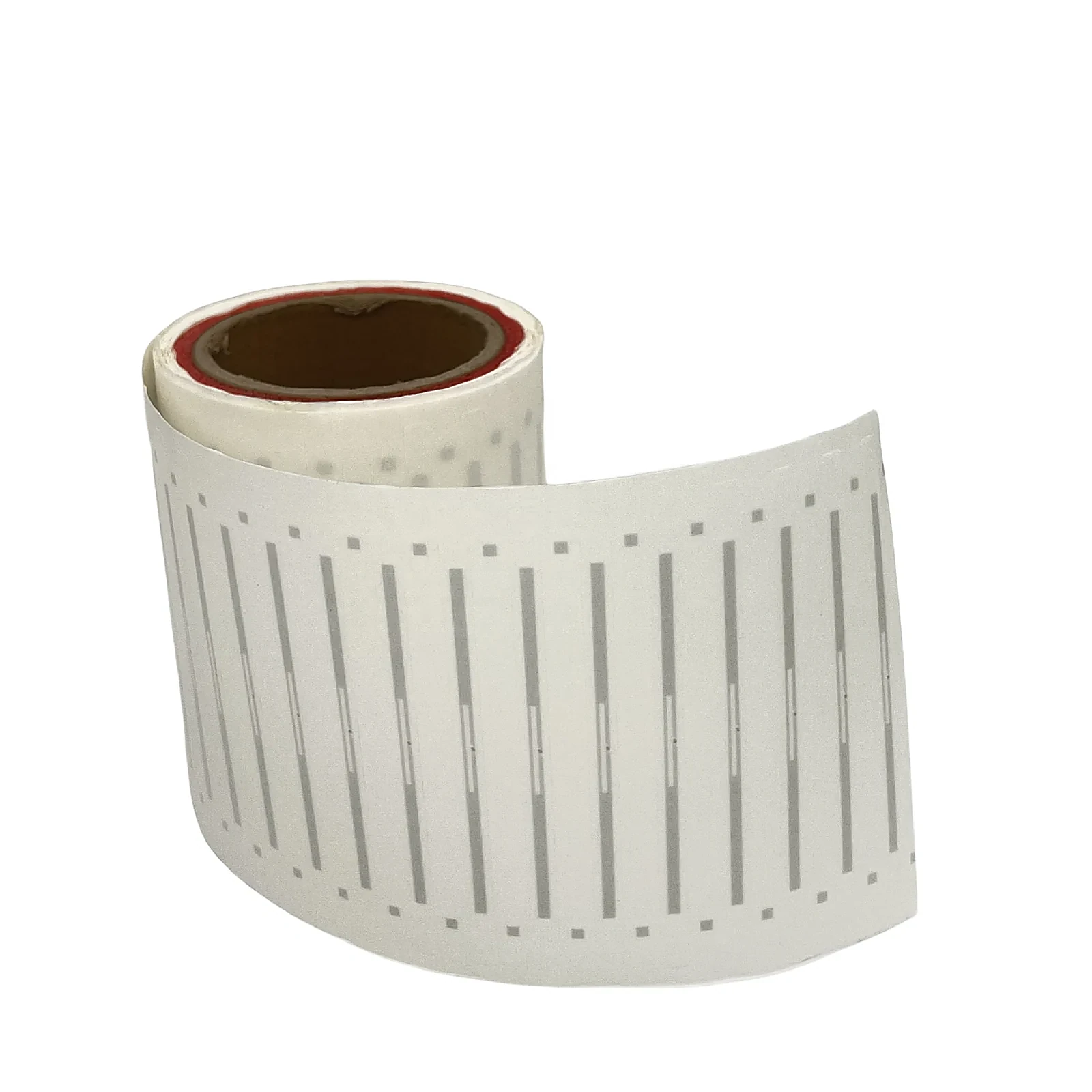
A law firm, hospital records department or government archive has the opposite operational problem: hundreds or thousands of files in cabinets, and the real question isn't "what's on this desk" but "where is file #4471 right now, and can we prove every file in this room is accounted for without pulling each one by hand." Our UHF document tracking label (FYL-SP-010) is built for exactly this: a narrow 100×15mm spine format at 3-6m read range, applied to folder spines and archive box sides without interfering with filing.
The hardware that makes this workflow actually work is the RFID wand, the same handheld reader technology covered in our handheld buying guide, swept along a row of cabinets. A single pass reads every tagged spine in range, turning what used to be a manual, folder-by-folder audit into a sweep that takes seconds per cabinet. This only works because the tag's 3-6m range is deliberately long, the opposite requirement from the library's checkout desk.
| Library circulation | Document/archive audit | |
|---|---|---|
| Tag | FYL-HF-004 (HF, ISO 15693/14443) | FYL-SP-010 (UHF, ISO 18000-6C) |
| Read range | 2-50cm | 3-6m |
| Why that range | Reads only what's placed on the checkout pad | Sweeps a full cabinet or shelf row in one pass |
| Reading hardware | Desktop reader pad (FY-RD-CHIP-012) | Handheld RFID wand |
| Operator action | Patron places items on a defined pad | Staff sweep a wand along a row of files |
| Real risk if range is wrong | Wrong-range HF misses items not placed precisely on the pad | Wrong-range UHF at a checkout desk over-reads neighbouring items |
What Actually Goes Wrong When the Range Doesn't Match the Workflow
- A long-range UHF tag specified for a library self-checkout desk, causing the reader to pick up books on a nearby cart or in a patron's bag along with the ones actually being checked out.
- A short-range HF tag specified for an archive room audit, making a full-cabinet sweep impossible and forcing staff back to checking files one at a time.
- A desktop reader's marked reading area ignored during installation, placed somewhere books get set down incidentally, causing false or missed reads.
- A handheld wand purchased without confirming its read range against actual cabinet spacing and file density in the specific archive room.
- No pilot test of the checkout or audit workflow with real items before committing to tagging the full collection or file room.
Before You Place a Production Order
- Confirm which real problem you're solving: a deliberate, one-station-at-a-time read (library-style, favours HF) or a bulk sweep across a room (archive-style, favours UHF).
- Confirm the reading hardware's zone or range actually matches the physical layout, desk spacing for HF, cabinet-to-cabinet distance for UHF wand sweeps.
- Confirm the label format fits the item: adhesive book label vs narrow spine label for folders and boxes.
- If you also need self-checkout software integration, confirm the reader's SDK and data format against your library or document management system.
- Pilot the full circulation or audit workflow with a small batch of real items before committing to tagging the full collection.
The wand used for archive sweeps is a handheld reader. This covers what to confirm on read range and battery life before ordering one.