Before you specify either system
Work out which side of the read is actually moving before choosing hardware. If a person or object moves past fixed reading infrastructure, that points to one construction. If a person carries a reader past fixed, stationary tags, that points to the opposite construction. Both solve "prove presence at a place and time," but the physical roles are inverted.
Race Timing: The Tag Moves, the Reader Stays Put
In a timed race, the runner is moving and the reading infrastructure is fixed: mats or gates positioned at the start, splits and finish. Our race timing tag runs on an Alien M830 dogbone inlay specifically because it has to read reliably through foam packaging and through the human body itself, worn on a bib or shoe, which is a genuinely harder RF problem than reading a tag sitting in open air. Body tissue absorbs and attenuates UHF signal, which is exactly why a generic UHF label isn't a substitute for a construction actually engineered for this use case.
This tag is also built to slot into existing race infrastructure rather than replace it: it's compatible with ChronoTrack, EMS and Jaguar, established timing systems already running at most organised races. Disposable and lightweight, it's a single-use tag by design, ordered in batches matched to expected field size (MOQ 1,000 pcs) rather than something reused race to race.
Guard Patrol: The Tag Stays Put, the Reader Moves
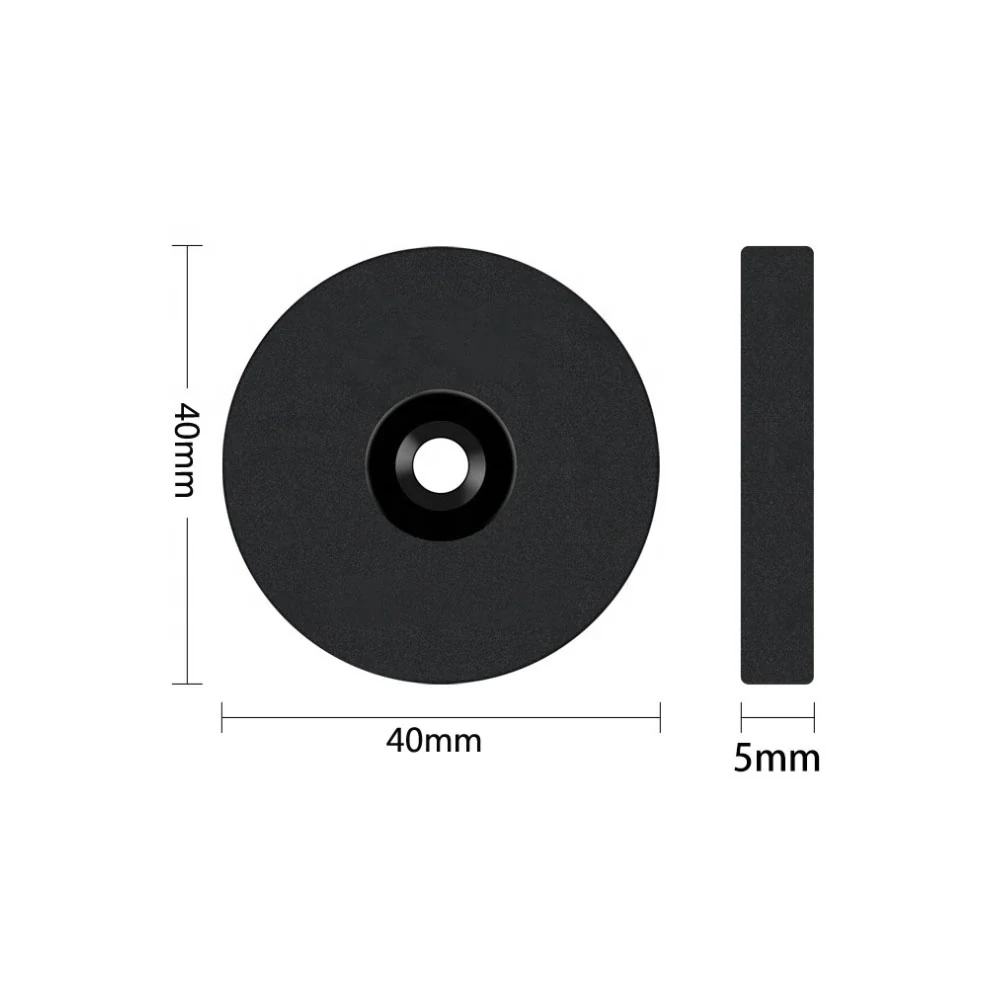
A guard patrol system inverts the race-timing setup entirely: the tags are permanently fixed at each checkpoint location, a fence corner, a building entrance, an equipment room, and the guard carries the reader past them on a patrol route. Our patrol tag (FYT-SP-001) runs 13.56MHz on a rewritable MIFARE Classic 1K chip, in a 40mm or 52mm round token, IP65 rated for permanent outdoor mounting. Tapping the tag with the patrol reader logs that specific checkpoint, at that specific time, proving the guard was physically present rather than just somewhere in the building.
The short, deliberate tap range here isn't a limitation, it's the entire security value. A checkpoint tag readable from metres away would let a guard log a visit without actually walking to that location. The close-range requirement forces genuine physical presence, the same principle behind the library self-checkout desk's contained read zone, applied here to prevent a guard skipping stops on a route rather than to avoid misreading a neighbouring book.
| Race timing tag | Guard patrol tag | |
|---|---|---|
| SKU | FYT-SP-002 (M830 dogbone) | FYT-SP-001 |
| What's fixed | The reader (mat or gate) | The tag (checkpoint location) |
| What moves | The tagged runner | The reader (carried by the guard) |
| Frequency | UHF | LF 125kHz or HF 13.56MHz |
| Read range | Designed to read through foam and the body at a gate | Deliberately short, requires a close tap |
| Reusability | Disposable, single-use per race | Permanent, reused every patrol |
| System compatibility | ChronoTrack, EMS, Jaguar timing systems | Standard guard tour reader systems |
What Actually Goes Wrong When These Get Confused
- A generic UHF label substituted for a real race timing tag, missing reads at the finish gate because the antenna wasn't engineered to read reliably against a human body.
- A long-range tag specified for a patrol checkpoint, letting a guard log a visit without physically walking to that location, undermining the entire security purpose.
- Patrol tags mounted somewhere not genuinely IP65-durable long-term, failing outdoors well before the guard tour software's data suggests a problem.
- Race tags ordered without confirming compatibility with the specific timing system (ChronoTrack, EMS, Jaguar or another) already in use at the venue.
- No test pass, a runner through an actual timing gate, or a guard tapping an actual mounted checkpoint, before relying on the system for a live race or contracted patrol route.
Before You Place a Production Order
- Confirm which side of your workflow is actually moving, the tagged subject or the reader, before choosing a construction.
- For race timing, confirm your existing timing system (ChronoTrack, EMS, Jaguar or other) and order a tag confirmed compatible with it.
- For patrol checkpoints, confirm mounting locations can support genuinely permanent, weatherproof installation, not a temporary fix.
- Confirm expected field size or checkpoint count against MOQ before ordering, race tags are disposable per event, patrol tags are a one-time fixed installation.
- Test the full chain, an actual runner through a gate, or an actual guard tapping a mounted checkpoint, before relying on the system live.
The same principle, read range as a deliberate operational control rather than just a spec, shows up again here in a library and archive context.
Sources & standards
- ISO/IEC 18000-63:2021 (formerly 18000-6C) — ISO/IEC, reference