Key Takeaway · Before you order
Read range through open air and read range through windshield glass are not interchangeable figures. Confirm any quoted range is measured on the actual glass, vehicle type, antenna position and approach speed before approving a deployment.
The Workflow, Not Just the Tag
A windshield tag only works because of what happens before it's ever applied to a car: the tag's unique ID gets registered to a specific vehicle, plate and account in the access-control or toll-billing software first. The physical tag itself carries no meaning until that link exists, the same enrollment principle covered in our access-control guide, just applied to a vehicle credential instead of a personnel badge.
Mounting comes next, and it is not incidental. The tag goes on the inside of the windshield, typically the upper corner, facing outward toward where the gate reader antenna will read it. Glass, tint and a moving vehicle approach are harder RF conditions than a static open-air test. A tag rated for 10 m in open air will not necessarily deliver that distance once mounted behind glass.
What Happens as the Car Approaches
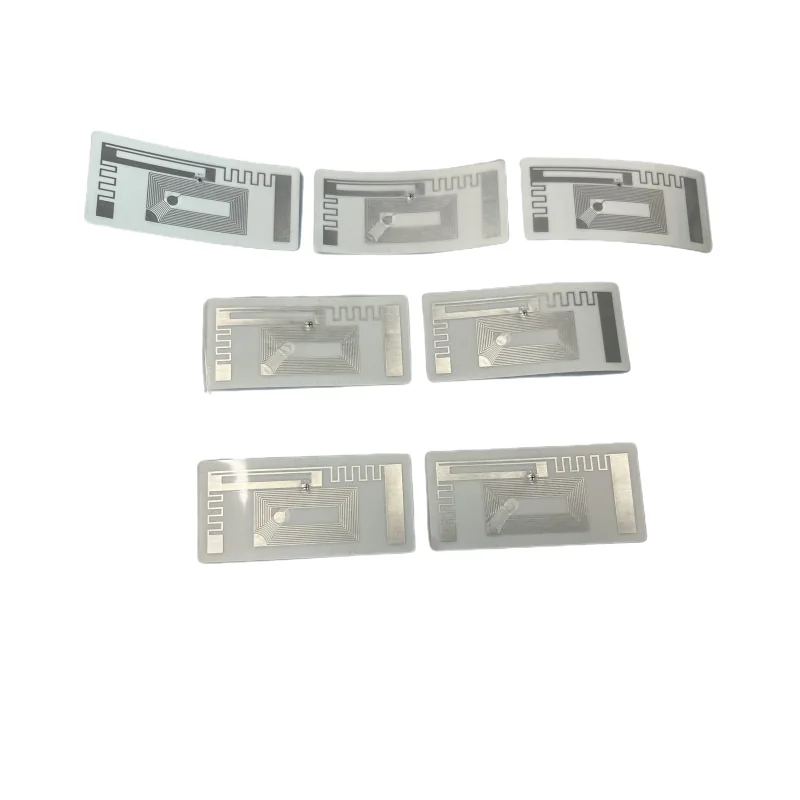
As the vehicle approaches the gate, a fixed UHF reader and antenna, the same long-range hardware combination covered in our portal deployment guide, reads the tag well before the car needs to stop, checks the ID against the registered account, and signals the barrier or toll system to act. Our dual-frequency tag (FYL-SP-001) reads UHF at 5-15m for this automated pass, while its NTAG213 NFC chip gives a 0-5cm tap-to-verify fallback for a human attendant to check manually when a read fails, tint too dark, tag damaged, angle wrong, without holding up the whole lane while troubleshooting.
The Tamper Feature Matters More Than the Range
A windshield tag's real fraud risk is not only chip cloning: it can also be moving a valid tag from one car to another. If that risk matters, specify a tamper-evident construction and require the supplier to confirm its removal behaviour and test evidence. Do not assume every adhesive windshield tag is one-time-use.
What Actually Goes Wrong When This Gets Specified Wrong
- A tag's open-air read range quoted and trusted without confirming the same number holds once mounted behind windshield glass and tint.
- A non-tamper-evident tag specified for a paid parking or toll account, leaving no defense against a tag being moved to a second vehicle.
- No manual-verification fallback built into a lane where reader misreads are common enough that they'd otherwise block traffic.
- Tag registration (linking the ID to a plate or account) treated as a software afterthought rather than the step that actually makes the physical tag meaningful.
- No test pass with the actual mounted tag, at the actual gate, at real approach speed, before issuing tags to a full vehicle fleet or customer base.
Before You Place a Production Order
- Confirm quoted read range is benchmarked on windshield glass, not open air, if that's how the tag will actually be mounted.
- Confirm whether fraud risk (shared accounts, resale) justifies a tamper-evident, one-time-use construction over a standard adhesive tag.
- Confirm whether your lane needs a manual-verification fallback (NFC tap) for when automated long-range reads fail.
- Confirm your access-control or billing software's registration workflow before tags are mounted, not after.
- Test a mounted sample against your actual gate reader and approach speed before committing to a full fleet or customer rollout.
Glass Mounting, Tint Interference, and Hardware Specification
Windshield tag failures almost always trace back to glass chemistry or antenna geometry rather than chip quality. Laminated safety windshields with solar-control metallic oxide coatings attenuate 860–960 MHz UHF waves severely, dropping a 10-meter gate tag below 1 meter—making pre-order testing across your actual fleet vehicle classes essential.
| Credential format | Mount location | Metallized / IR glass | Tamper security | Typical gate setup |
|---|---|---|---|---|
| Dielectric Glass UHF Sticker | Interior top/corner windshield | Fails behind metallic IR tint | Kiss-cut slits snap antenna on peel | 8–12 dBi overhead or bollard reader (6–10 m) |
| Exterior Headlight UHF Decal | Outer acrylic/polycarbonate headlamp | Bypassed completely | UV weatherproof + tamper slits | Works on armored, armored-film & heated windshields |
| Dual UHF + NFC Windshield Tag | Interior glass corner | Verify tint cutout zone first | Void adhesive + frangible trace | Gate UHF access + smartphone NFC patrol check |
| Hold-to-Window Hard Card (PVC) | Held or visor-clipped by driver | Read drops if held deep inside cabin | Transferable (no vehicle bind) | Suitable only for multi-vehicle visitor permits |
- Leave ≥ 50 mm clearance from black ceramic frit borders, metal mirror stalks, and windshield wiper blades so capacitance detuning stays predictable.
- Match antenna polarization—circularly polarized gate antennas forgive slight windshield tilt variation across sedans, SUVs, and cab-over trucks.
- Correlate EPC to human-readable ID—laser-engrave or thermal-print serial numbers on the back face so security guards can audit vehicles without a handheld reader.
The fixed reader and antenna that read a windshield tag at the gate follow the same long-range portal fundamentals covered here.
Sources & standards
- ISO/IEC 18000-63:2021 (formerly 18000-6C) — ISO/IEC, reference