Key Takeaway · Why this matters
An RFID quote is only as comparable as the questions behind it. If the application, label, reading method, data, integration, operations and support are not written down, each supplier fills the gaps with a different assumption, and the cheapest quote is often the one that assumed the least.
1. Application: What Are You Counting, and Where?
State the object (garment, carton, tool, pallet), the place it is read (production line, warehouse door, shop floor) and the decision the read supports (count, locate, verify, release). A garment counted at a dispatch door and a garment located on a shop floor need different readers even if the label is the same.
2. Label: What Must It Survive and Where Does It Sit?
Give the surface, the size available, and the process the label must live through: heat, wash, pressure, metal or liquid nearby. These decide the construction. A UHF label follows the EPC Gen2 air interface, ISO/IEC 18000-63, but two labels that both comply can behave very differently on metal or on a wet carton.
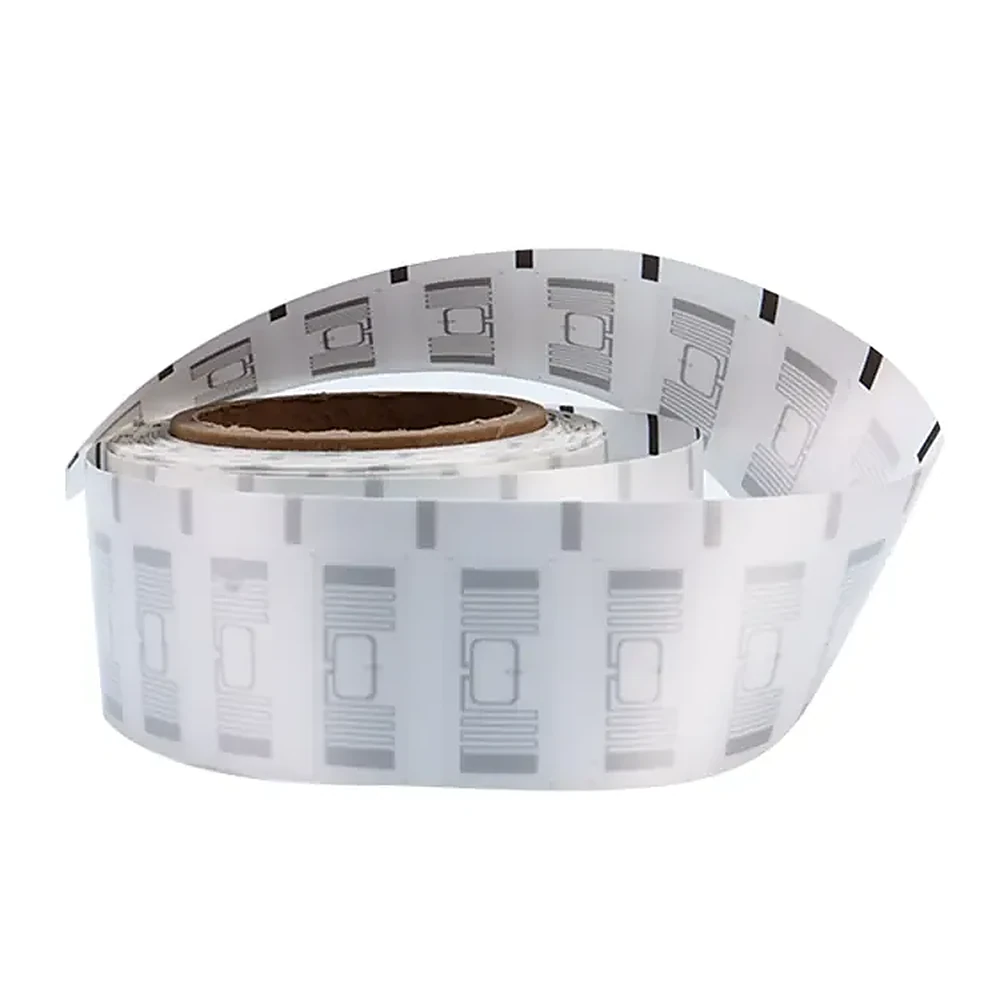
3. Reading: Handheld, Fixed, or Both?
A handheld reader suits stock counts and spot checks. A fixed reader and antennas suit a door or conveyor where reading must happen without a person. Say which, and how far the reader will be from the label. Quote a read distance only with the label, reader and mounting named together, because the distance belongs to the combination, not to any one part. Describe the room too: rack layout, dock doors, metal shelving, liquids nearby, temperature and moisture. Metal reflects the signal, liquids absorb it, and dense storage creates dead zones.
4. Data: What Should the Chip Carry?
Decide whether the EPC is a plain serial number that points to a database record, or carries a structured code laid out under the GS1 EPC Tag Data Standard. Also decide who owns the numbering. Changing this after labels are printed means reprinting. Also decide the level of detail: item level or case level, and whether you need a live location or a periodic count. Those two choices change tag quantity, reader placement and software more than any chip choice.
5. Integration: Where Does the Read List Go?
Name the system that receives the data: a spreadsheet, a warehouse system, an ERP or a POS. Ask what the reader offers for that handover, such as an SDK or an export, and who writes the connection. Many first projects use a demonstration app and a spreadsheet for comparing expected and read lists, and add integration once the read results are proven.
6. Operations: Who Does What on Day One?
Decide who attaches the label, who encodes it, who reads, and who handles a label that fails. If the label is printed in-house, it also needs a printer with an RFID module, and an acceptance test on your own stock is worth running first.
7. Support: Who Keeps It Working Next Year?
RFID is not a one-time purchase. Tags wear out, reader firmware needs updating, processes change and new staff need training. Say whether you have someone in-house who can manage readers, how much downtime you can accept, and what you expect from the supplier after delivery. A quote that is cheap because it includes no support is not comparable with one that does.
| Question | Write down | Changes the quote by |
|---|---|---|
| Application | Object, place, decision | Reader type and number |
| Label | Surface, size, process | Construction and chip |
| Reading | Handheld or fixed, distance | Reader and antennas |
| Data | EPC scheme, numbering owner | Encoding and printing |
| Integration | Target system, handover | Software scope |
| Operations | Who attaches, encodes, reads | Printer and training |
| Support | In-house skills, downtime, after-sales | Service scope and training |
Then Start Small
Once the seven are answered, the lowest-risk first step is a small pilot with a written pass line, not a volume order. It shows whether the label survives your process and whether the reader sees it where you need it, and it turns the quote comparison into a test result.
A test for the supplier
A supplier who starts with readers and tag specs before asking about your business problem, your systems, your environment, your data and your support needs is selling a box, not solving a problem. Use these seven questions to check them as much as yourself.
Pilot Readiness & Spec Freeze Scorecard
First-time buyers save months of trial-and-error by freezing environment, surface material, frequency regulation, and data ownership in a single one-page brief before inviting vendor quotes. Use the matrix below to score whether your project brief is ready for free evaluation sample dispatch.
| Decision Pillar | Unready Brief (Causes Wrong Quotes) | Production-Ready Spec Sheet |
|---|---|---|
| 1. Item Surface | "Standard warehouse labels" | "Corrugated cartons + 20% stainless tool bins (needs dual tag mix)" |
| 2. Read Distance & Gate | "Long range UHF" | "3–4 m dock portal + 1.5 m handheld inventory checks" |
| 3. Regional Band | "Global frequency" | "ETSI 865–868 MHz (EU deployment) or FCC 902–928 MHz (US)" |
| 4. Label Printing & EPC | "Print logo" | "Zebra ZT411 thermal transfer + pre-encoded GS1 SGTIN-96 EPC" |
| 5. Pilot Gate Criteria | "See if it works" | "Read ≥ 99% across 200 packed units under 10 passes before bulk PO" |
The pilot structure that follows these six questions.