Before you choose
Decide where the tag has to be at the end of the garment's journey, before you compare chips or read range. If the customer takes it off, it is a hang tag. If it must stay in the garment through wear and washing, it is a woven or fabric label. If staff remove it at the till and it goes back into stock, it is a hard tag. The read performance you need follows from that choice, not the other way round.
Start With Who Removes the Tag, and When
All four constructions below speak the same language to a reader: UHF at 860-960MHz, ISO 18000-6C / EPC Gen2, the same protocol our fixed portals and handhelds already use. That is the useful part: you can mix them in one store and one reader still sees all of them. What differs is the body around the chip, and that decides whether the tag survives the customer, the wash, or the shop floor.
1. Hang Tag: Removed by the Customer, Read Until Then
A printed hang tag carries the inlay inside a card or PET face, with the price, size and barcode on the surface. Our washable-apparel range includes a 110×40mm format (FY-11040-CHIP-001) on Impinj Monza 4QT / R6 / R6-P chips, listed at 1-10m read range, on PET, coated paper or PVC with full-colour CMYK printing. This is the lowest-cost route to item-level counting, because the tag only has to survive until the first wear. It will not survive a wash, and it is not meant to.
Choose it when the goal is stock accuracy from factory to sale: receiving, replenishment, cycle counts, self-checkout. Do not choose it if you want to read the garment again after the customer owns it, for returns or repairs, because the customer will remove it.
2. Woven Label: Sewn In, Stays for the Life of the Garment
A woven label is the inlay built into a fabric ribbon that is stitched into a seam or neck. Our sew-in apparel label (FY-TG-L5035-001) is 70×40mm on silk ribbon with an Alien Higgs-9 chip, listed up to 8m read range, IP68, and -30°C to +85°C operating range. A second customisable woven format (FYL-HF-003) is offered in sizes such as 100×53mm and 24×80mm with logo, QR code and number printing. Because it stays in the garment, it supports returns, authenticity checks and after-sales traceability, which a hang tag cannot.
Two practical points. A sewn label sits in a fixed position, so its position decides read reliability: keep it away from metal zips, buttons and snaps, and test it on a folded, boxed garment, not a flat one. And operating temperature is not wash rating, so if the garment will be laundered, confirm the wash specification separately.
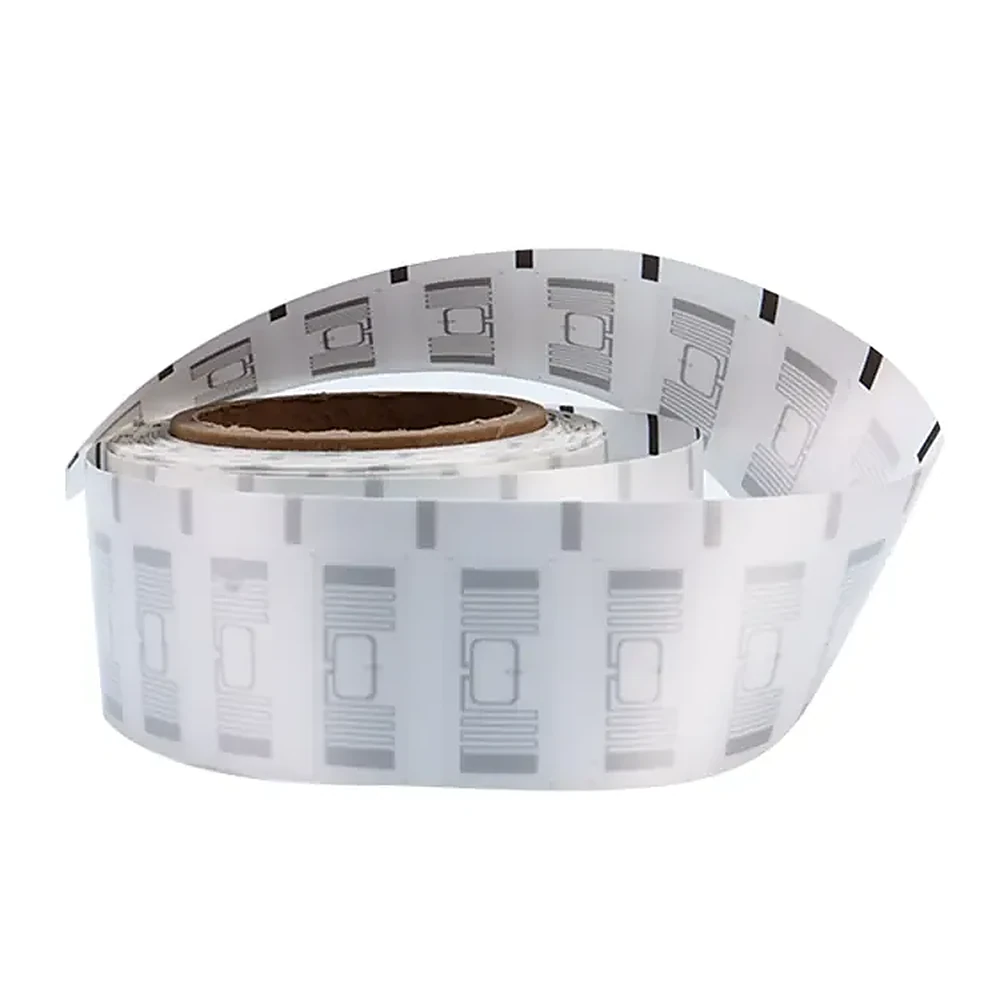
3. Washable Fabric Tag: For Garments That Are Laundered Again and Again
For uniforms, workwear and rental textiles the tag has to survive the wash. Our washable fabric tag (FYL-UHF-008) uses a chip-on-board module in high-temperature nylon cloth with metal fibre yarn, in sizes from 60×20mm to 87×20mm, listed at 2-6m read range and up to 200 wash cycles on the spec sheet. If a garment will be washed, buy this class of tag, not a woven label rated only for operating temperature. Wash cycles, chemicals and tumble-drying are the conditions to confirm for your own laundry, as covered in our laundry-tag guide.
4. Hard Tag: Loss Prevention, Removed at the Till and Reused
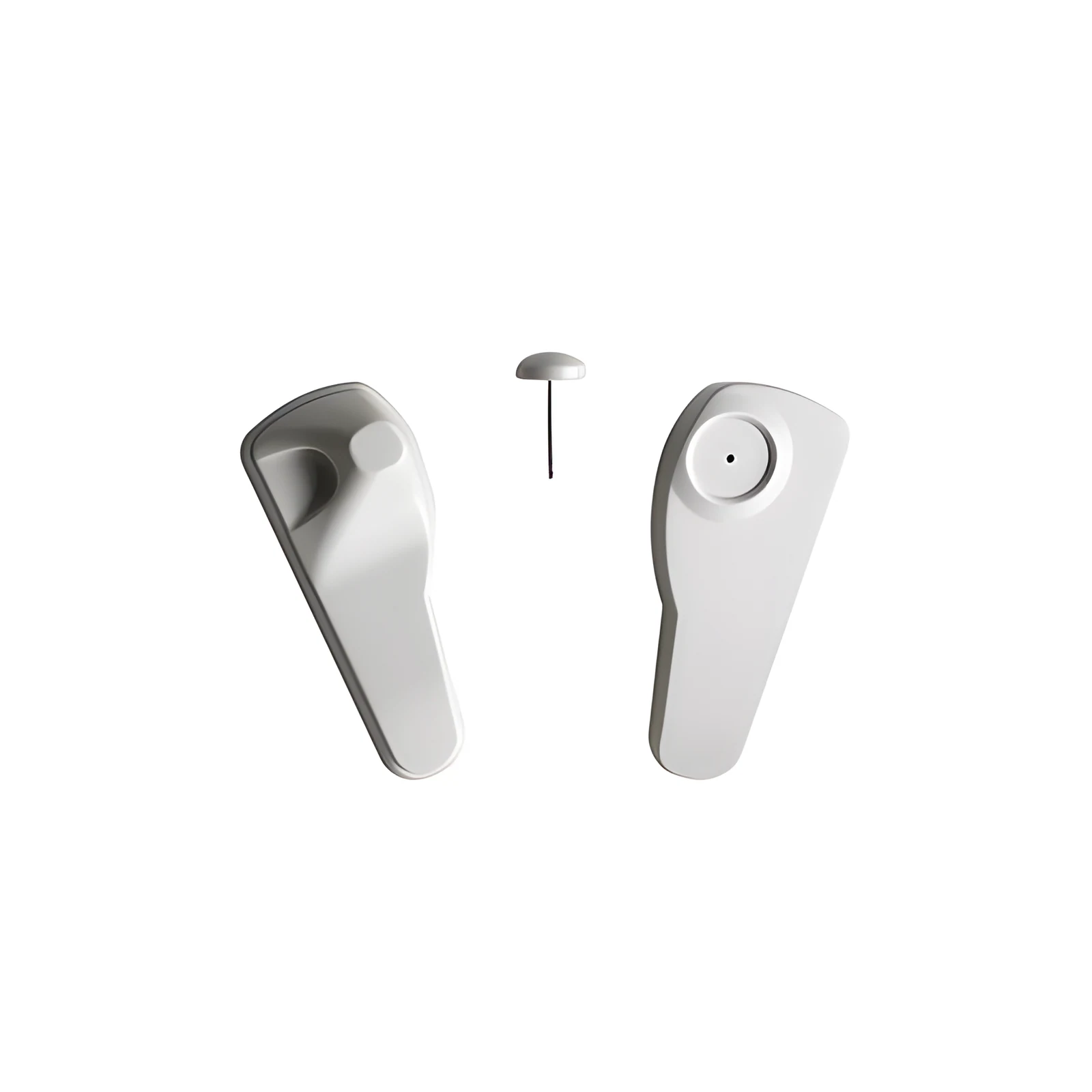
A reusable ABS hard tag (FYL-SP-012) combines UHF identification with an EAS-compatible magnetic lock, removed at the till with a detacher and returned to stock. A 73×31×21mm UHF + EAS version (FY-TG-CHIP-010) is offered on Alien Higgs or Impinj Monza chips. This is the right choice for high-value or high-shrink lines, and it is the only one of the four that deters theft. It is also the one that needs a detacher at every point of sale, which belongs in the same order, not an afterthought.
| Hang tag | Woven label | Washable fabric tag | Hard tag | |
|---|---|---|---|---|
| Example SKU | FY-11040-CHIP-001 | FY-TG-L5035-001 | FYL-UHF-008 | FYL-SP-012 |
| Who removes it | Customer | Nobody, stays in garment | Nobody, stays in garment | Staff at the till |
| Survives washing | No | Check wash spec separately | Yes, up to 200 cycles listed | Not applicable |
| Listed read range | 1-10m | Up to 8m | 2-6m | Confirm for your reader |
| Deters theft | No | No | No | Yes, EAS compatible |
| Reusable | No | No | No | Yes |
| Best for | Stock accuracy to point of sale | Returns, authenticity, traceability | Uniforms, rental, workwear | High-value or high-shrink lines |
What Actually Goes Wrong
- A hang tag chosen for a programme that needed after-sale traceability, so every return arrives with no tag to read.
- A woven label sewn next to a metal trim or zipper, then wondering why one batch reads at half the distance of another.
- Operating temperature read as wash rating, so labels are laundered a few times and quietly stop reading.
- Hard tags ordered without a detacher at each till, leaving staff unable to release stock and queues building at peak hours.
- Read range quoted for a single tag in open air, then judged against a tightly packed carton of dozens of garments.
Before You Place an Order
- Write down who removes the tag and when: customer, nobody, or staff at the till.
- Confirm whether the garment will be laundered, and get the wash specification for your process, not a generic one.
- Confirm the position of the tag against metal trims, and test on a folded, packed carton before approving.
- Confirm whether you need an EAS function, and match its frequency to your existing gates before ordering.
- Ask for a small pilot batch and run it through your real reader, packing and till process, not just a bench test.
Once the tag is chosen, this walks through the five stages of hardware from factory encoding to self-checkout.