Tool & Equipment Management
Laser-marked or screw-mounted tags survive daily handling, oil and impact on hand tools and powered equipment.
Selection guide
Three questions decide the tag: what surface, what environment, and how it is fixed. Flat steel with room temperature and adhesive mounting is the easy case. Curved pipe, 200 °C, solvent washdown or screw mounting each rule out most of the catalogue.
Laser-marked or screw-mounted tags survive daily handling, oil and impact on hand tools and powered equipment.
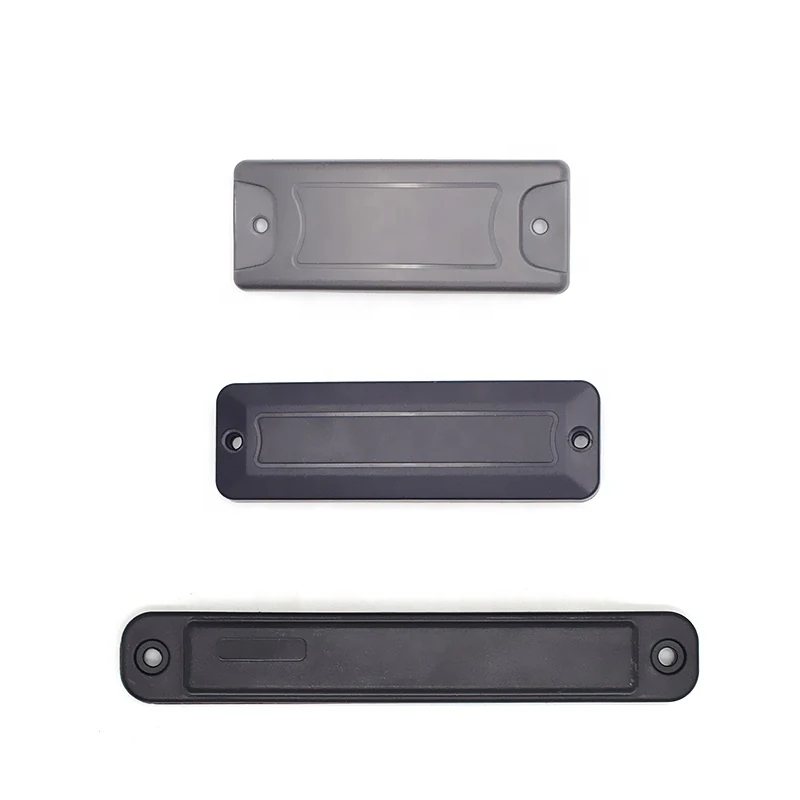
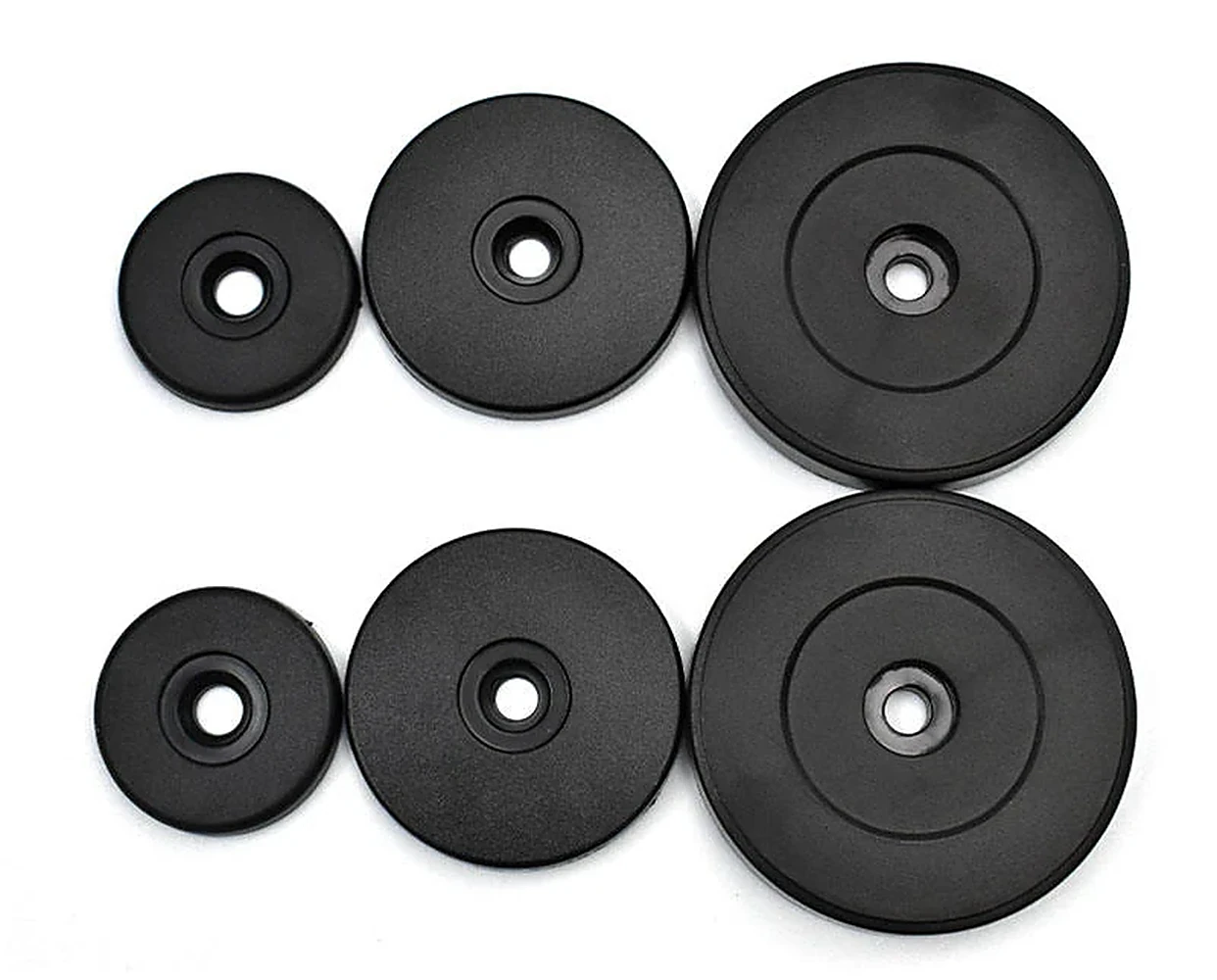
ABS hard tags rated for repeated forklift and conveyor contact, mounted to steel racks and metal pallets.

Low-profile on-metal labels for servers, network cabinets and chassis where space is tight and metal is everywhere.

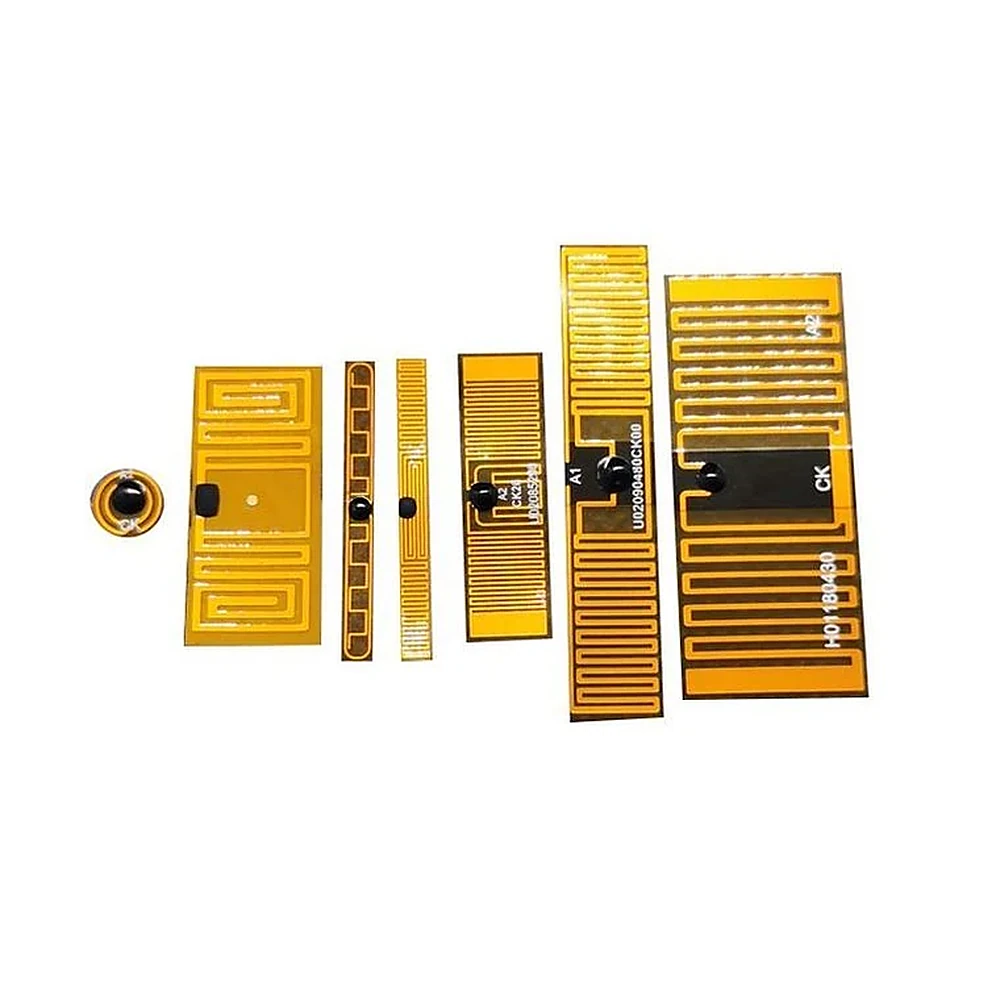
Curved-surface FPC and rugged constructions hold up on pipe, gas cylinders and tank fittings in the field.

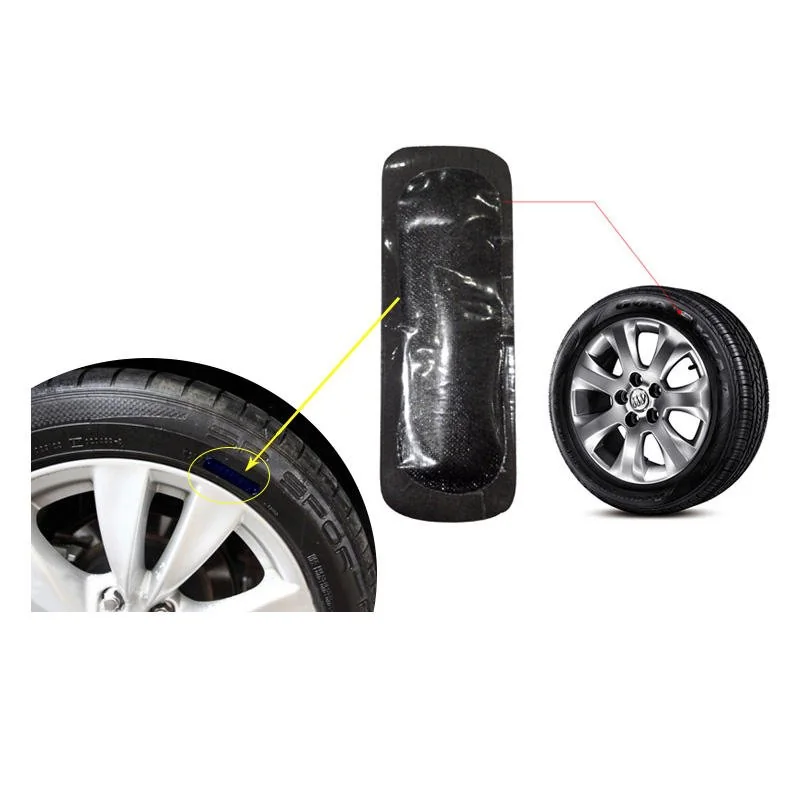
High-temperature tags embedded or mounted through the tire lifecycle -- production, warehousing, retreading and recall.

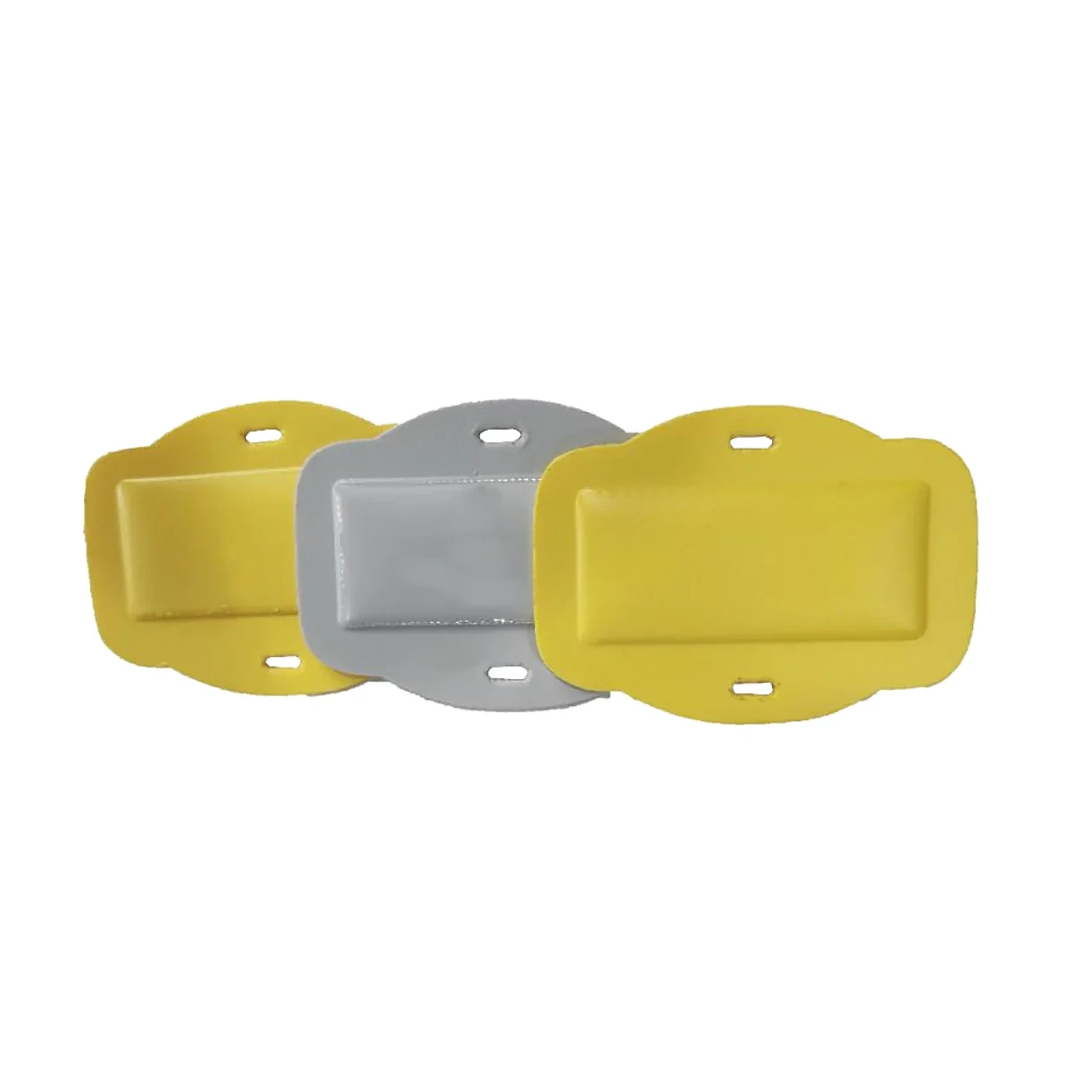
Tamper-evident windshield and vehicle tags for gated access, fleet and parking management.

Screw-mounted rugged tags rated for outdoor exposure and repeated automated collection cycles.
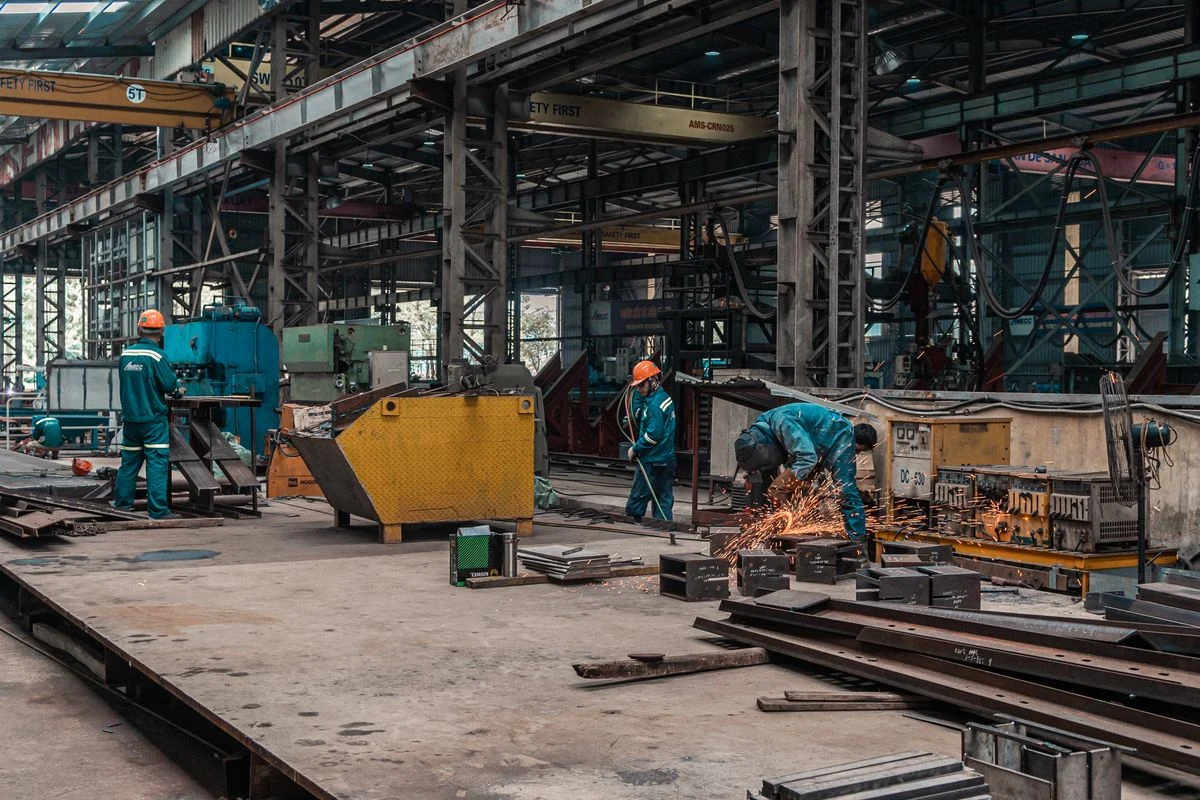
Carrier and landmark tags that track parts, fixtures and WIP through paint lines, ovens and metal-heavy production floors.
Product range
43 real, in-production SKUs in this range. Search by name or SKU, filter by product type or frequency below, or browse the full list and use the page numbers to see the rest.
30-second self-service finder
Pick surface, frequency or range below to see the top 2–3 sample matches and add them directly to your quote list.
Showing top sample picks for this category.
OEM & ODM capability
Every part of the build is open to customization, matched to your product, your system and your brand. Logo, artwork and packaging are part of the standard build, not an add-on.
FPC, ABS, PPS or ceramic, matched to your surface and environment.
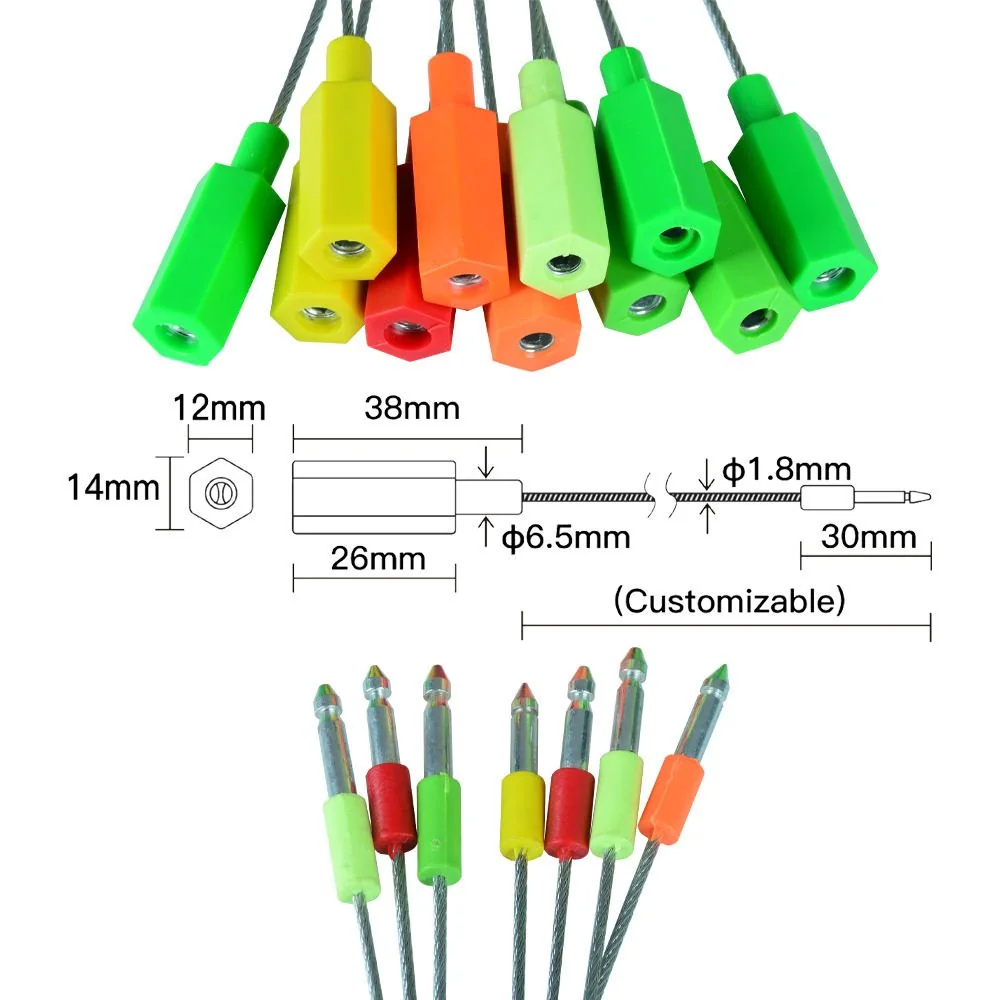
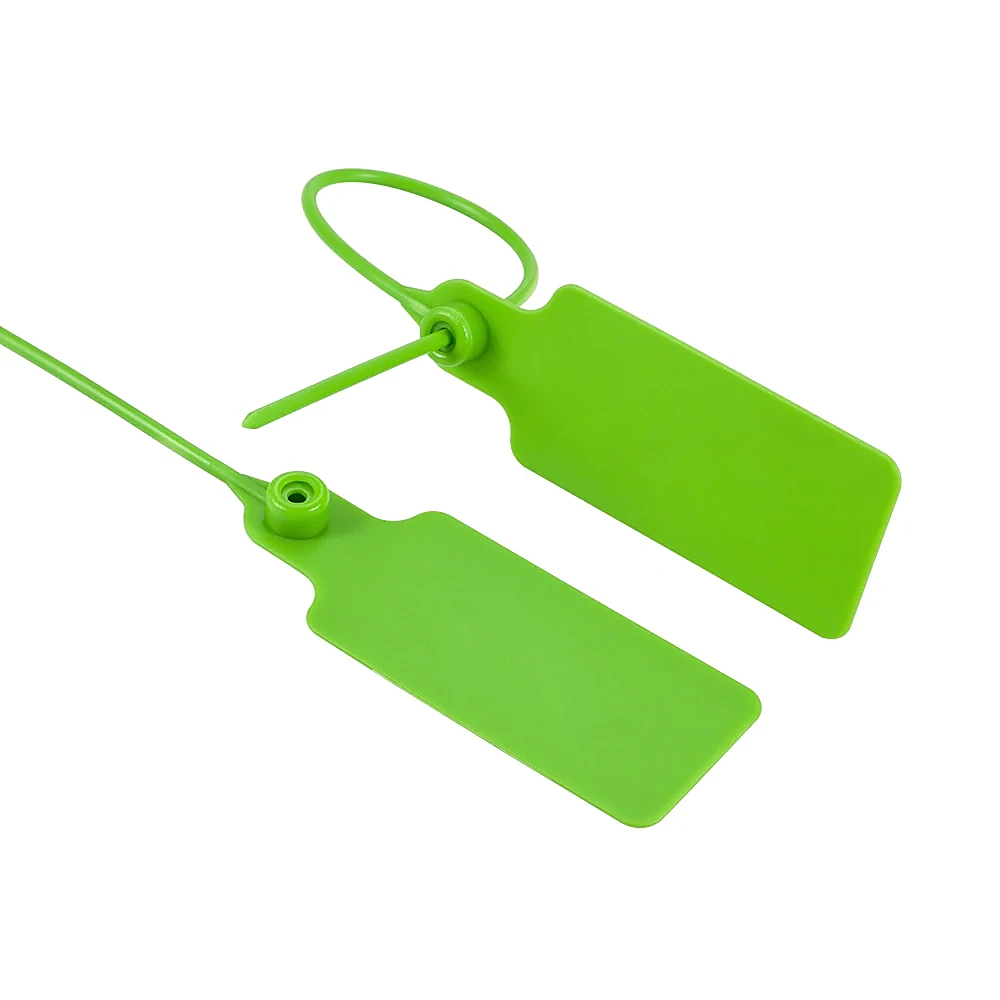
3M adhesive, screw, cable-tie or embedded/potted mount -- matched to your surface.
Standard range as default; PPS high-temperature construction rated to 250 C.
Any current-generation UHF chip -- not tied to one chip family.
Fully custom -- antenna, material and dimensions are designed around your surface and target read range.
IP68 rugged construction available for outdoor, washdown and submersion exposure.
Laser engraving for hard and specialty tags; RFID thermal printing for flexible anti-metal labels.
EPC or user memory encoded to your numbering scheme, verified before packing.
Production & quality control
From validated sample to finished tag -- the real production stages behind every order.
Confirm protocol, chip, size, read range, metal type, and temperature/waterproof/chemical requirements; select the PET, PCB, ceramic, absorbing material, foam and adhesive construction.
Antenna processing, chip Flip-Chip bonding, dispensing and hot-pressing or curing, then electrical testing -- chip bonding, continuity, frequency response and base RF performance -- to reject failures before the next stage.
Combine the RFID inlay with ferrite, absorbing material, foam or another isolation layer -- the step that turns a standard tag into an on-metal tag.
For hard tags: encapsulation or potting into the ABS, PPS or ceramic housing, cured under controlled pressure, temperature and time, then die-cut, CNC or laser processed into the final shape, mounting holes or special structures.
Laser engraving for hard and specialty tags, or RFID thermal printing for flexible anti-metal labels -- serial numbers, QR codes or variable data.
Write EPC / UID data and verify the read result.
Tested on a real metal surface, not in air, for read range, frequency stability, directionality and consistency -- then high/low temperature, humidity, ageing, waterproof, salt spray, tensile, pressure, abrasion or chemical-exposure testing per the product's rated grade.
Appearance, dimensions, bonding, encoding, RF performance and batch sampling, then roll, sheet or piece packaging with full batch traceability.
How to choose
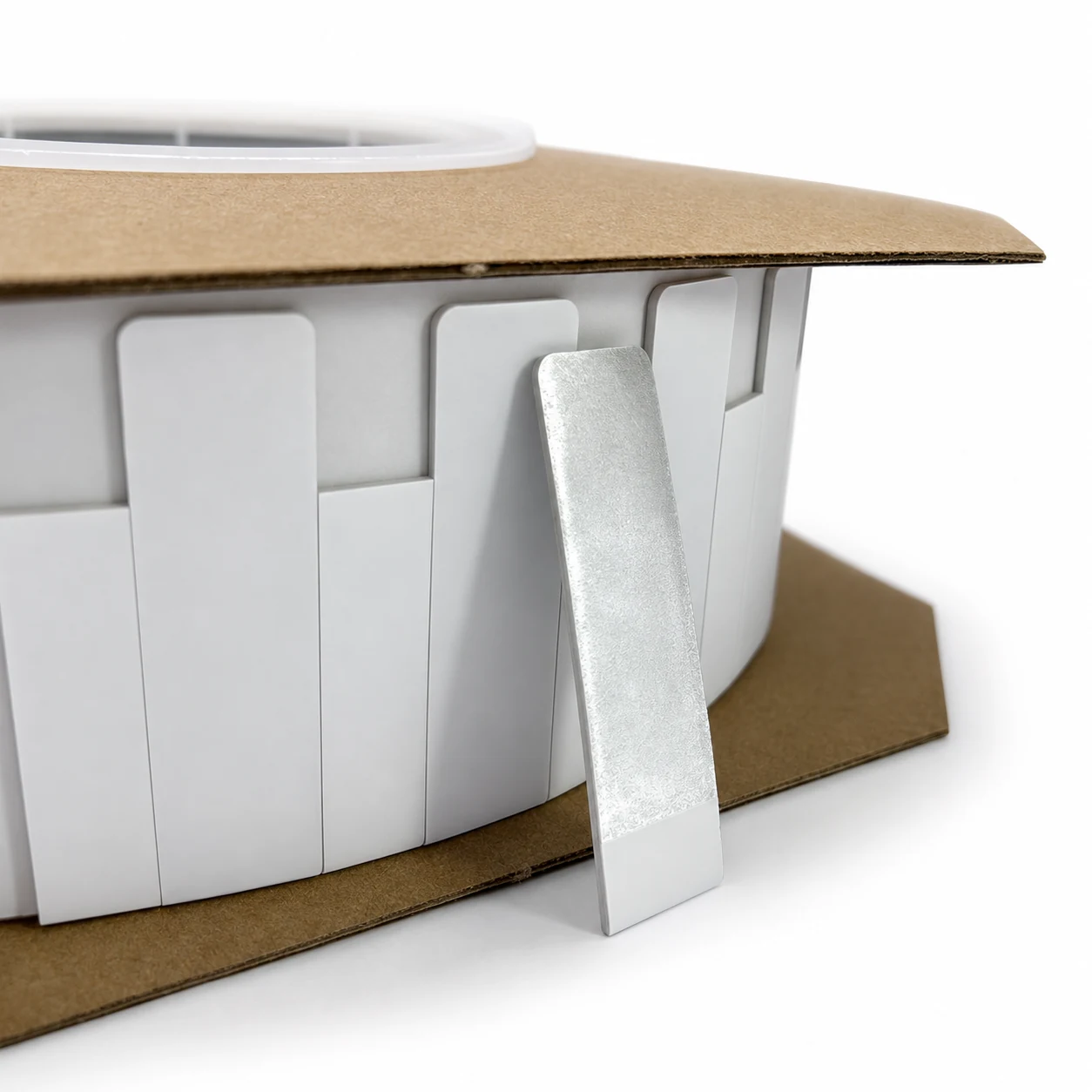
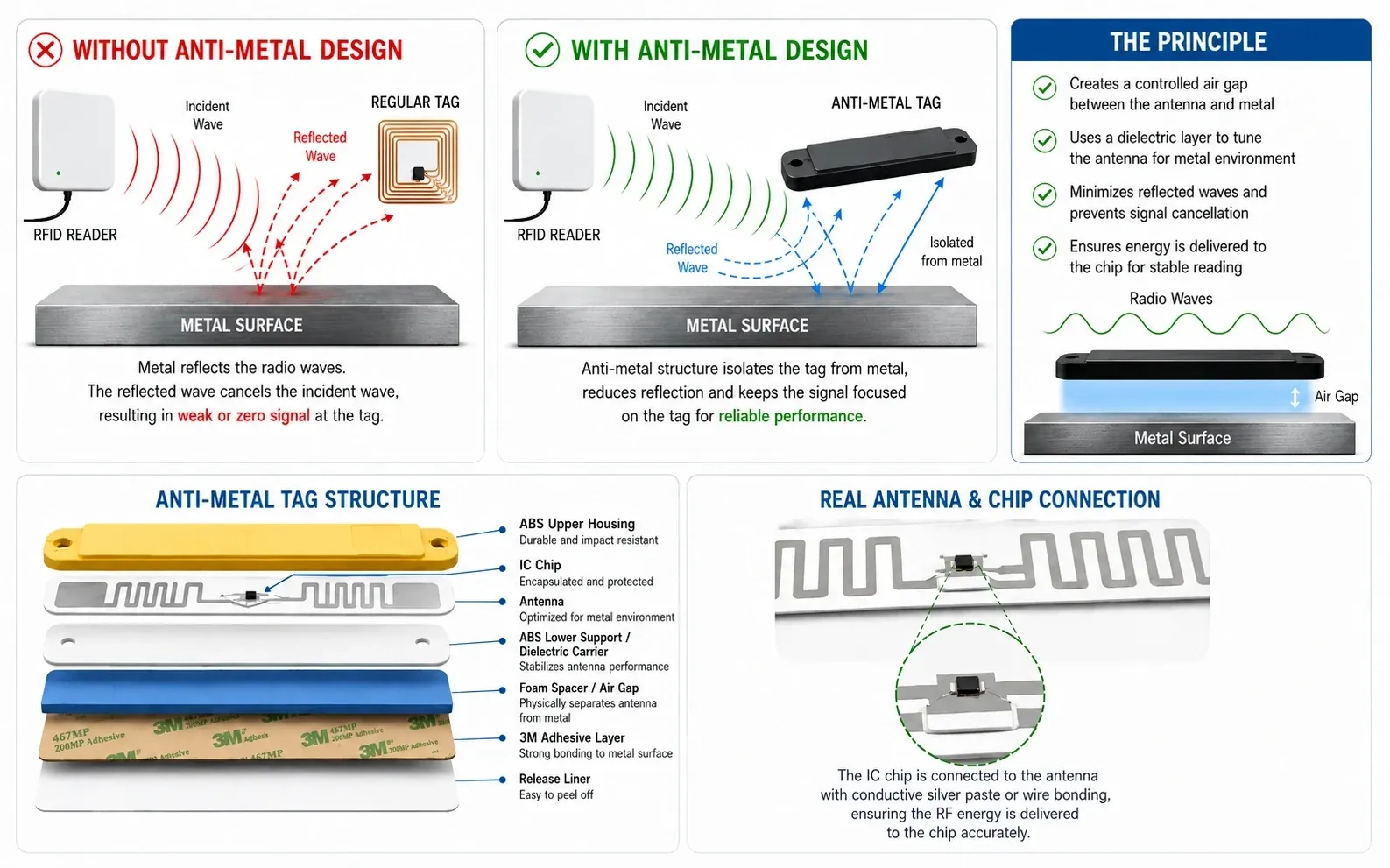
Metal reflects RF and detunes an ordinary tag until it stops reading entirely. An isolation layer between the antenna and the metal surface is what makes an on-metal tag work -- this is the real layer stack of one of our ABS anti-metal tags.
Flat steel, curved pipe or cast/rough metal decides the construction's thickness and flexibility.
Indoor, outdoor, chemical washdown or sustained high heat (up to 250 C) narrows the material.
Adhesive, screw, cable-tie or embedded/potted -- matched to vibration and access.
1-15 m depending on construction -- confirm against your reader and antenna setup.
Select the chip family and marking method -- laser engraving or RFID printing.
Test the actual tag on your real metal surface, not in air -- this is the step most buyers skip and regret.
Chip options
On-metal construction doesn't limit chip choice either -- we integrate current-generation UHF chips as they release, not locked to one family. Tell us your reader/EPC needs and we will confirm the match.
Baseline, regardless of chip
One of the earliest UHF RFID chip makers. The Higgs family (Higgs-3 through Higgs-10) is widely used across retail and logistics inlays for broad compatibility and mature manufacturing.
| Model | Read sensitivity | TID prefix | EPC memory | User memory | Access PW | Kill PW |
|---|---|---|---|---|---|---|
| Higgs 3 | -18dbm | E2003412 | 96-496 | 512 | 32 | 32 |
| Higgs 4 | -18.5dBm | E2003414 | 128 | 128 | 32 | 32 |
| Higgs-EC | -22.5dBm | E2003811 / E2003812 | 128 | 128 | 32 | 32 |
| Higgs 9 | -22.5dBm | E2803821 | 96-496 | 688 | 32 | 32 |
| Higgs 10 | -23dBm | E2803813 | 96\128 | 32\0 | 32 | 32 |
A major global semiconductor company. Its UCODE family spans entry-level tags (UCODE 7/8/9) up to the DNA series, which adds authentication for brand-protection applications.
| Model | Read sensitivity | TID prefix | EPC memory | User memory | Access PW | Kill PW |
|---|---|---|---|---|---|---|
| Ucode 7 | -21dBm | E2806890 | 128 | 0 | 32 | 32 |
| Ucode 7m | -21dBm | E2806811 | 128 | 32 | 32 | 32 |
| Ucode 7xm | -19dBm | E2C06D12 | 448 | 1024 | 32 | 32 |
| Ucode 7xm+ | -19dBm | E2C06D92 | 448 | 2048 | 32 | 32 |
| Ucode 8 | -23dBm | E2806894 | 128 | 0 | 32 | 32 |
| Ucode 8m | -23dBm | E2806994 | 96 | 32 | 32 | 32 |
| Ucode 9 | -24dBm | E2806995 / E2806915 | 96 | 0 | 0 | 32 |
| Ucode 9xe | -24dBm | E2806A16 | 128 | 0 | 0 | 32 |
| Ucode 9xm | -24dBm | E2806897 | 128\256\496 | 752\624\384 | 32 | 32 |
| Ucode DNA | -19dBm | E2C06892 | 224 | 3072 | 32 | 32 |
| UCODE DNA Track | -19dBm | E2C06C12 | 448 | 256 | 32 | 32 |
| Ucode DNA City | -19dBm | E2C06B12 | 224 | 1024 | 32 | 32 |
| Ucode G2XM | -15dBm | E2006003 | 240 | 512 | 32 | 32 |
| Ucode G2XL | -15dBm | E2006004 | 240 | 0 | 32 | 32 |
| Ucode G2iL | -18dBm | E2006806 | 128 | 0 | 32 | 32 |
| Ucode G2iL+ | -18dBm | E2006807 | 128 | 0 | 32 | 32 |
| Ucode G2iM | -17.5dBm | E200680A | 256 | 512 | 32 | 32 |
| Ucode G2iM+ | -17.5dBm | E200680B | 448 | 640 | 32 | 32 |
| Ucode I2C | -18dBm | E200680D | 160 | 3328 | 32 | 32 |
The RAIN RFID market leader -- Impinj's Monza and M-series chips have shipped in the tens of billions. Newer M700/M800 chips add AutoTune and Integra diagnostics for retail use.
| Model | Read sensitivity | TID prefix | EPC memory | User memory | Access PW | Kill PW |
|---|---|---|---|---|---|---|
| Monza 4i | -22dBm | E2801114 | 256 | 480 | 32 | 32 |
| Monza 4D | -22dBm | E2801100 | 128 | 32 | 32 | 32 |
| Monza 4E | -22dBm | E280110C | 496 | 128 | 32 | 32 |
| Monza 4QT | -22dBm | E2801105 | 128 | 512 | 32 | 32 |
| Monza R6 | -22.1dBm | E2801160 | 96 | 0 | 0 | 0 |
| Monza R6-P | -22.1dBm | E2801170 | 128 | 32 | 32 | 32 |
| Monza R6-A | -22.1dBm | E2801171 | 96 | 0 | 32 | 32 |
| Monza R6-B | -22.1dBm | E2801171 | 96 | 0 | 32 | 32 |
| M730 | –24dBm | E2801191 | 128 | 0 | 32(共享) | — |
| M750 | –24dBm | E2801190 | 96 | 32 | 32(共享) | — |
| M770 | –24dBm | E28011A0 | 128 | 32 | 32(共享) | — |
| M780 | –23.5dBm | E28011C0 | 496 | 128 | 32(共享) | — |
| M781 | –23.5dBm | E28011C1 | 128 | 512 | 32(共享) | — |
| M830 | -25.5dBm | E28011B0 | 128 | 0 | 32(共享) | — |
| M850 | -25.5dBm | E28011B0 | 96 | 32 | 32(共享) | — |
A Chinese UHF chip line -- the KX2005X series targets cost-sensitive, high-volume tagging for the domestic and export label market.
| Model | Read sensitivity | TID prefix | EPC memory | User memory | Access PW | Kill PW |
|---|---|---|---|---|---|---|
| KX2005X-B | -23.5dBm | E281D011 | 96-240 | 1312 | 32 | 32 |
| KX2005X-S | -23.5dBm | E281D012 | 128 | 0 | 32 | 32 |
| KX2005X-544 | -23.5dBm | E281D013 | 96-240 | 544 | 32 | 32 |
| KX2005X-BL | -23.5dBm | E281D015 | 96-240 | 1312 | 32 | 32 |
| KX2005X-BT | -23.5dBm | E281D016 | 96-240 | 1312 | 32 | 32 |
| KX2005X-BR | -23.5dBm | E281D017 | 96-240 | 1312 | 32 | 32 |
| KX2005XG-B | -21.5dBm | E281D021 | 96-240 | 1312 | 32 | 32 |
| KX2005XG-S | -21.5dBm | E281D022 | 128 | 0 | 32 | 32 |
| KX2005XG-544 | -21.5dBm | E281D023 | 96-240 | 544 | 32 | 32 |
| KE2006 | -19.5dBm | E281D030 | 128 | 0 | 32 | 32 |
Known for ultra-low-power IC design. Its EM4xxx chips include dual read-sensitivity modes and expanded memory for sensor or logging use cases.
| Model | Read sensitivity | TID prefix | EPC memory | User memory | Access PW | Kill PW |
|---|---|---|---|---|---|---|
| EM4324 | -8dBm,-27dBm | E200B001/2 | 96 | 720 | 32 | 32 |
| EM4325 | -8dBm,-30dBm | E200BXXX | 352 | 3072 | 32 | 32 |
| EM4423 | -16dBm | E280B0A0/1 | 128\224 | 160\64 | 32 | 32 |
| EM4124 | -19dBm | E200B080 | 96 | 0 | 32 | 32 |
| EM4126 | -19dBm | E200B0C0 | 208 | 0 | 0 | 0 |
| EM4425 | -20dBm | E200B110 | 480 | 1056 | 32 | 32 |
A Chinese UHF chip brand -- the Qstar series covers general retail and logistics tagging across a range of memory configurations.
| Model | Read sensitivity | TID prefix | EPC memory | User memory | Access PW | Kill PW |
|---|---|---|---|---|---|---|
| Qstar-71GB-O | -21dBm | E280F337 | 496 | 128 | 32 | 32 |
| Qstar-73GB-O | -21dBm | E280F336 | 128 | 512 | 32 | 32 |
| Qstar-73GB-O-V | -21dBm | E280F338 | 64-512 | 128-528 | 32 | 32 |
| Qstar-7U | -24dBm | E280F302 | 128 | 128 | 32 | 32 |
A Chinese IC design company with a broad RFID portfolio spanning HF and UHF. Its FM13UF series serves domestic and export label production.
| Model | Read sensitivity | TID prefix | EPC memory | User memory | Access PW | Kill PW |
|---|---|---|---|---|---|---|
| FM13UF011E | -24.2dBm | E2827803 | 96-496 | 512-112 | 32 | 32 |
| FM13UF0051E | -24.2dBm | E2827802 | 128 | 32 | 32 | 32 |
A Chinese UHF chip supplier -- the SWP-U series covers standard retail and logistics tagging needs.
| Model | Read sensitivity | TID prefix | EPC memory | User memory | Access PW | Kill PW |
|---|---|---|---|---|---|---|
| SWP-U1 | -23dBm | E283B130 | 128 | 0 | 32 | 32 |
| SWP-U1M | -23dBm | E283B131 | 128 | 128 | 32 | 32 |
FAQ
Metal shorts the tag antenna's near field and shifts its resonant frequency. The tag is not damaged — it simply cannot be energised. An on-metal construction places a ferrite or spacer layer between antenna and metal so the antenna sees free space.
We are a factory -- Shenzhen Fuyuan Technology Co., Ltd. (FYRFID) manufactures RFID tags in-house, and works with specialist partner lines for injection-molded and potted on-metal constructions where that is the more efficient route. You are buying direct from the manufacturer, not through a trading intermediary.
MOQ starts at 5,000 pcs for custom on-metal constructions -- ABS, PPS and ceramic builds involve tooling, so the minimum is higher than printed labels. Send your construction, size and quantity for an exact quote.
Yes. Construction, mounting method, operating temperature, chip, size and marking are all engineered around your surface and application -- there is no fixed catalogue size. Send your metal type, environment and target read range and we will confirm what we can build.
Our on-metal tags are designed to be mounted flush; the isolation is built into the tag. Mounting them off metal generally works too, but the tuning is optimised for the metal case.
Use the flexible FPC construction for small radii, or a rugged tag with a cable-tie mount for larger cylinders. Send us the diameter and we will confirm which tags hold their range at that curvature.
When you need continuous location of high-value assets across a large site without a person walking past with a reader. Active tags cost far more per unit and need battery replacement, so they suit hundreds of assets, not hundreds of thousands.
Yes -- request matched samples so you can validate read range and durability on your real metal surface before placing a bulk order.
Large-core roll for industrial applicators or small-core roll for desktop label printers on flexible labels; hard tags (ABS/PPS/ceramic) ship in bulk trays or boxes.
Yes, custom die-cut or molded to your dimensions and mounting requirement -- there is no fixed size catalogue for on-metal tags.
Resources
Practical buying and technical guides for this product range.
Engineering support
Whichever construction you're evaluating -- flexible FPC, ABS, PPS high-temperature or ceramic -- our team can help you match it to your surface, environment and mounting method.
Get the latest news, case studies, and product updates from FYRFID delivered to your inbox. No spam — unsubscribe any time.
Thanks for subscribing — we’ll be in touch.
We couldn't subscribe you right now. Please try again.