Guest Room Door Locks
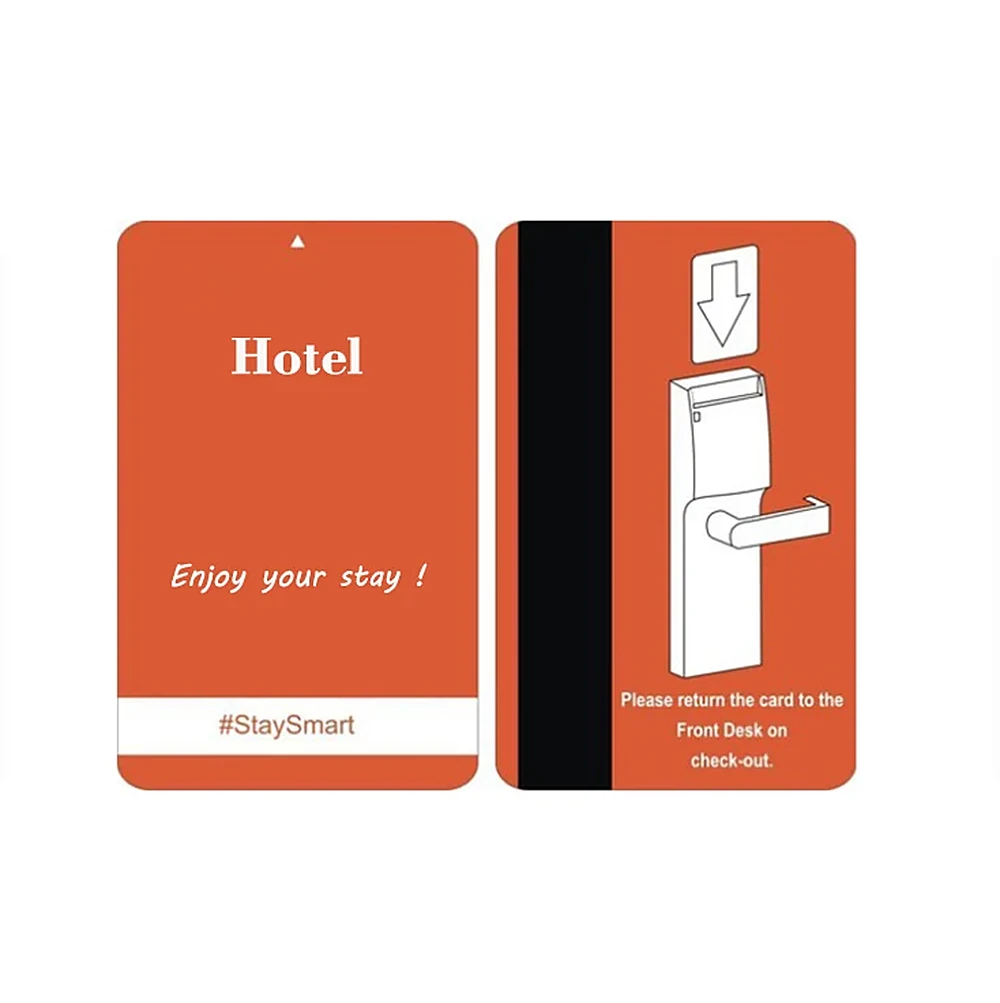
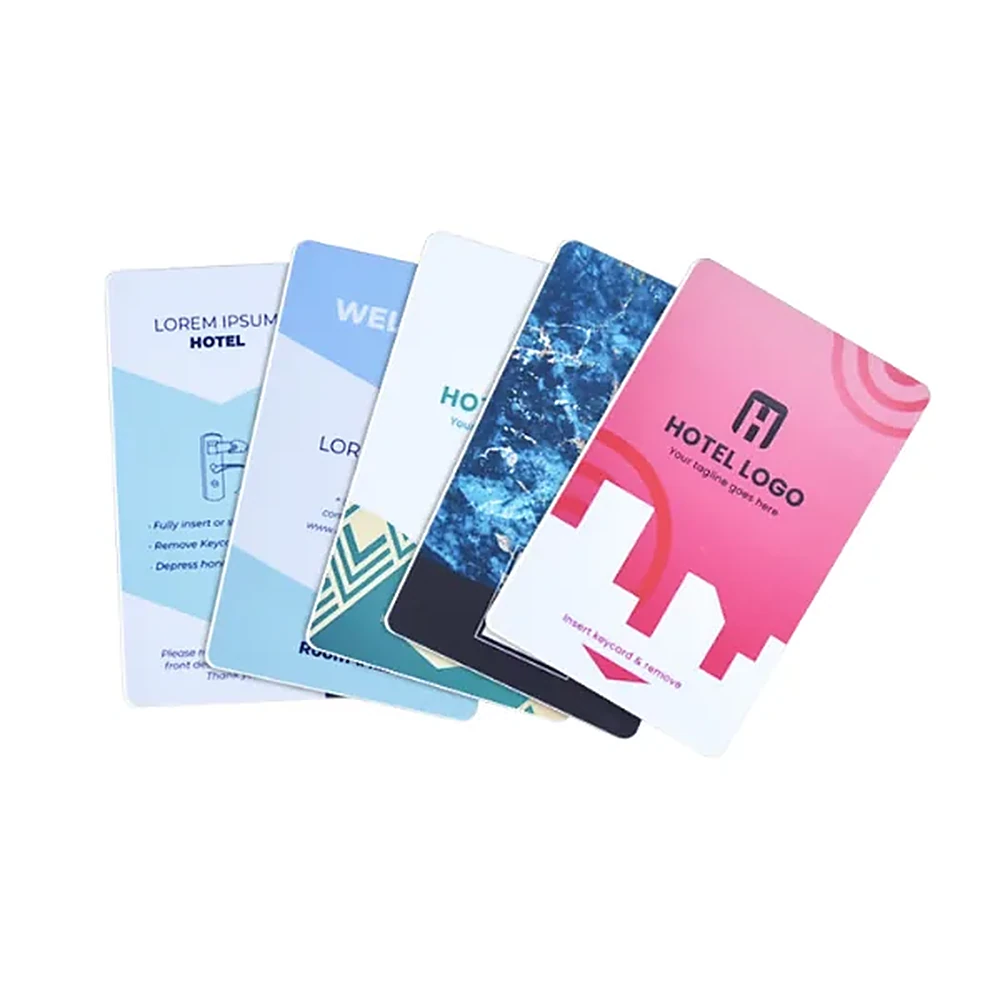
Tap-to-unlock CR80 cards matching your property encoder and mortise lock.
rfid hotel key cards
Every hotel door lock system expects an exact chip family, SAK/ATQA signature and card thickness. We manufacture custom-printed CR80 hotel key cards in PVC, FSC bamboo/wood and hybrid magnetic stripe formats engineered for global hospitality locks.
Selection guide
Confirm your lock brand and existing key-card chip first: legacy systems use MIFARE Classic 1K or T5577, high-security properties deploy DESFire EV2/EV3, and sustainable resorts switch to bamboo or walnut wood cards.
Tap-to-unlock CR80 cards matching your property encoder and mortise lock.
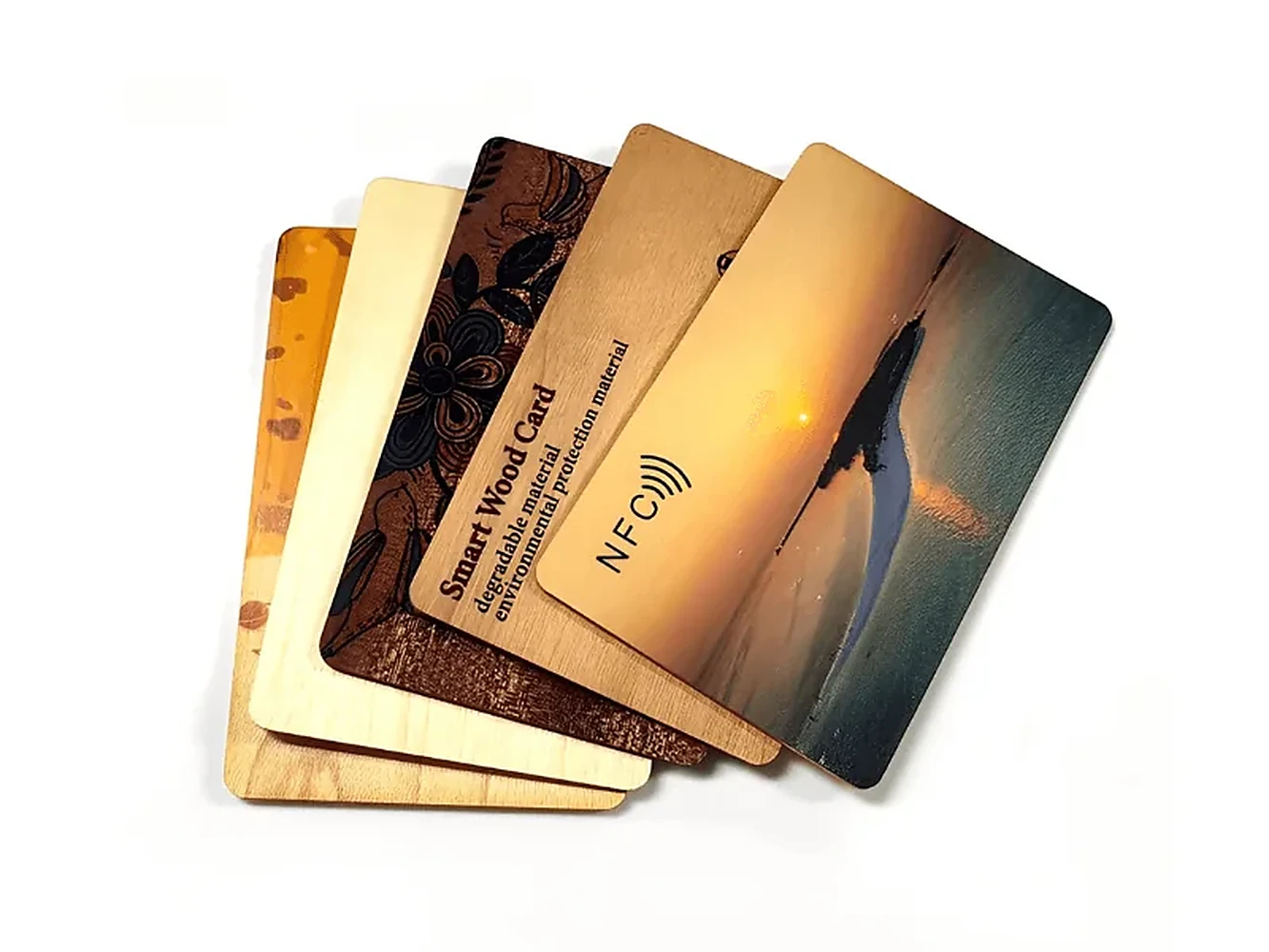
Laser-engraved bamboo and birch cards replacing disposable guest plastic.
Single credential spanning room doors, locker rooms and wellness suites.

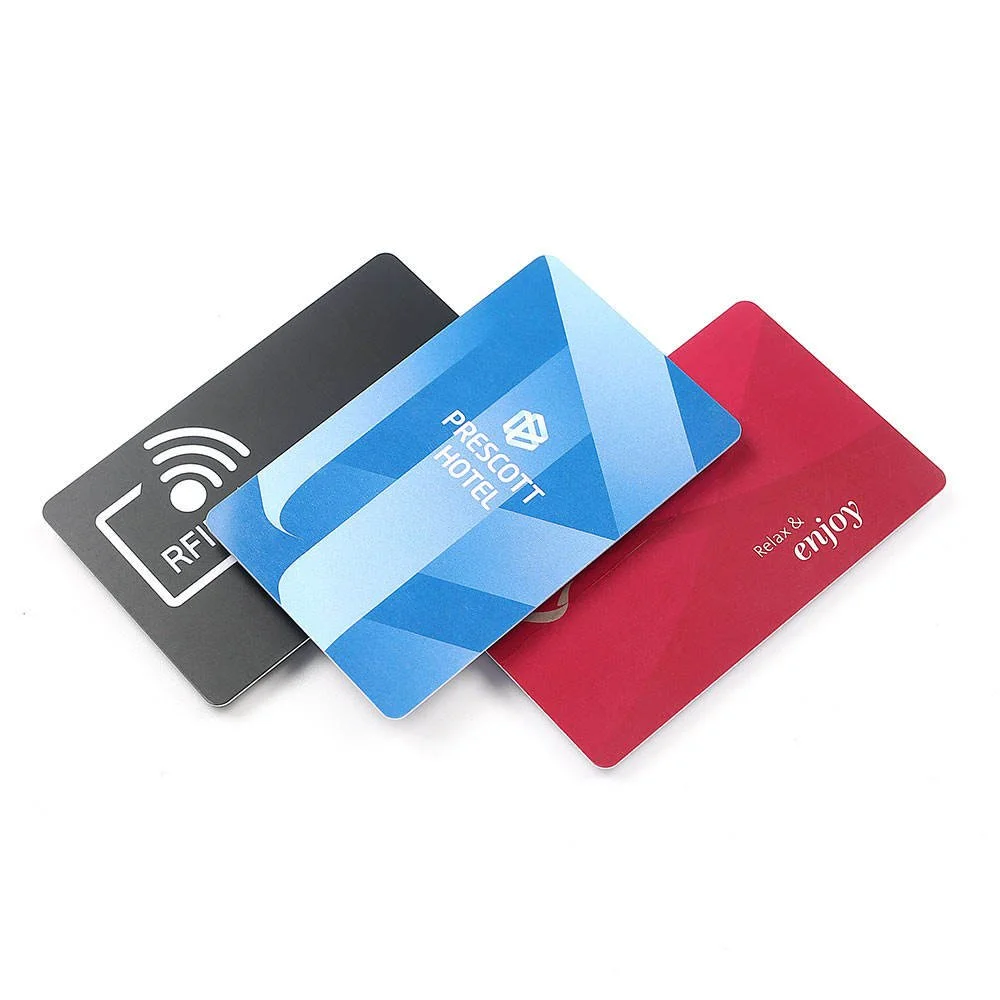
Metallic, matte-black or spot-UV membership keys for executive floors.

Hybrid mag-stripe + 13.56 MHz cards simplifying multi-wing property upgrades.

DESFire encrypted credentials separating housekeeping lifts and guest floors.
Product range
7 real, in-production SKUs in this range. Search by name or SKU, filter by product type or frequency below, or browse the full list and use the page numbers to see the rest.
30-second self-service finder
Pick surface, frequency or range below to see the top 2–3 sample matches and add them directly to your quote list.
Showing top sample picks for this category.
OEM & ODM capability
Send your PMS lock model or sample card—we verify exact chip compatibility, print custom artwork and ship free evaluation samples.
MIFARE Classic 1K, Ultralight EV1/C, DESFire EV2/EV3, F08 and 125 kHz T5577.
Gloss/matte PVC, recycled rPVC, PETG, FSC bamboo, cherry, basswood and walnut.
How to choose
Precision wire-embedded or etched inlays sit sealed inside CR80 PVC or layered wood veneers to meet ISO 7810 durability.
Confirm brand/model (VingCard, Onity, Salto, Saflok, Orbita, etc.) or read an existing working card chip with an NFC smartphone app.
Select standard PVC, recycled PETG or plastic-free wood veneer with matte or gloss coating.
Validate front-desk encoder writing and mortise lock reading before batch printing artwork.
Full-color CMYK PVC, recycled PETG or sealed natural wood veneer.
Pre-laminated core holding the MIFARE, DESFire or T5577 transponder coil.
Overlay protection, signature panel or HiCo/LoCo magnetic stripe.
Chip options
Chip choice is OEM/ODM too -- we match your existing reader or controller, not a fixed catalogue. Send a photo of a working card or your reader model and we will confirm it.
The default access-control and transit chip family worldwide. Classic covers most legacy door systems; Plus and DESFire add AES encryption for higher-security campuses and payment.
| Model | Memory | Protocol | UID | Read/Write Cycles | Typical Use |
|---|---|---|---|---|---|
| MIFARE Classic 1K (S50) | 1 KB EEPROM | 13.56 MHz, ISO14443A | 4 or 7-byte | 100,000 | Hotel keys, access control |
| MIFARE Classic 4K (S70) | 4 KB EEPROM | 13.56 MHz, ISO14443A | 4 or 7-byte | 100,000 | Higher-capacity access, multi-application |
| MIFARE Ultralight | 512-bit (64 bytes) | 13.56 MHz, ISO14443A | 7-byte | 100,000 | Single-use tickets, low-cost transit |
| MIFARE Ultralight EV1 (48/128 bytes) | 384 / 1024-bit | 13.56 MHz, ISO14443A | 7-byte | 100,000 | Tickets with basic anti-counterfeit |
| MIFARE Ultralight C | 144 bytes | 13.56 MHz, ISO14443A | 7-byte | 100,000 | 3DES-secured single-use tickets |
| MIFARE Plus SE / X / S | 1 / 2 / 4 KB | 13.56 MHz, ISO14443A | 4 or 7-byte | 200,000 | Classic-compatible security upgrade |
| MIFARE DESFire EV1 (2/4/8K) | 2 / 4 / 8 KB | 13.56 MHz, ISO14443A | 7-byte | 500,000 | Campus, transit, closed-loop payment |
| MIFARE DESFire EV2 (2/4/8K) | 2 / 4 / 8 KB | 13.56 MHz, ISO14443A | 7-byte | 500,000 | Discontinued by NXP -- EV3 is the current replacement |
| MIFARE DESFire EV3 (2/4/8K) | 2 / 4 / 8 KB | 13.56 MHz, ISO14443A | 7-byte | 500,000 | Current high-security campus/transit/payment |
The standard NFC Forum Type 2 chip behind phone-based NFC -- business cards, smart posters and loyalty taps. No app required on the receiving phone for a basic tap.
| Model | Memory | Protocol | UID | Read/Write Cycles | Typical Use |
|---|---|---|---|---|---|
| NTAG213 | 144 bytes user memory | 13.56 MHz, ISO14443A, NFC Forum Type 2 | 7-byte | 100,000 | NFC business cards, smart posters |
| NTAG215 | 504 bytes user memory | 13.56 MHz, ISO14443A, NFC Forum Type 2 | 7-byte | 100,000 | Loyalty and app-linked NFC tags |
| NTAG216 | 888 bytes user memory | 13.56 MHz, ISO14443A, NFC Forum Type 2 | 7-byte | 100,000 | Larger payloads -- multi-link or vCard NFC cards |
| NTAG 424 DNA | 416 bytes | 13.56 MHz, ISO14443A, AES | 4-byte | 200,000 | Tap-authenticated anti-counterfeit (less common) |
Longer-range 13.56 MHz chips for library, asset and item-level tracking where a phone tap is not the use case.
| Model | Memory | Protocol | UID | Read/Write Cycles | Typical Use |
|---|---|---|---|---|---|
| ICODE SLI | 1024-bit | 13.56 MHz, ISO15693 | 8-byte | 100,000 | Library media, asset tracking |
| ICODE SLIX | 2048-bit | 13.56 MHz, ISO15693 | 8-byte | 100,000 | Library media (most common ICODE variant) |
| ICODE SLIX2 | 2528-bit | 13.56 MHz, ISO15693 | 8-byte | 100,000 | Higher-memory library and asset tracking |
125 kHz chips positioned above basic EM/T5577 proximity, used in logistics, livestock and gas/asset tracking.
| Model | Memory | Protocol | UID | Read/Write Cycles | Typical Use |
|---|---|---|---|---|---|
| HITAG 1 | 2048-bit | 125 kHz | Factory-fixed | 100,000 | Logistics, asset tracking, gas |
| HITAG 2 | 256-bit | 125 kHz | Factory-fixed | 100,000 | Logistics, livestock tracking, asset |
| HITAG S 256 / S 2048 | 256-bit / 2048-bit | 125 kHz | 4-byte | 100,000 | Higher-memory 125 kHz applications |
125 kHz proximity chips behind most legacy door-access installations still in service today.
| Model | Memory | Protocol | UID | Read/Write Cycles | Typical Use |
|---|---|---|---|---|---|
| EM4200 | 64-bit, read-only | 125 kHz | Factory-fixed | 100,000 | Legacy proximity access control |
| EM4305 | 512-bit, read/write | 125 kHz | Programmable | 100,000 | Multi-application proximity |
| EM4450 | 1024-bit, read/write | 125 kHz | Programmable | 100,000 | Higher-memory 125 kHz applications |
A rewritable 125 kHz chip that can emulate several legacy proximity formats, common in card and fob upgrade projects; also a widely used contact EEPROM family.
| Model | Memory | Protocol | UID | Read/Write Cycles | Typical Use |
|---|---|---|---|---|---|
| T5577 | 363-bit, read/write, multi-format | 125 kHz | Programmable | 100,000 | Rewritable proximity, format migration |
| AT24C series | Varies by part | Contact, ISO7816 | Factory-fixed | 100,000 | Contact memory cards |
Contact-based touch memory, not RF -- the chip behind iButton-style patrol and access tokens.
| Model | Memory | Protocol | UID | Read/Write Cycles | Typical Use |
|---|---|---|---|---|---|
| DS1990A | 64-bit ROM ID | 1-Wire (contact) | Factory-fixed | 100,000 | Guard patrol tokens, contact access |
A major Chinese IC design house. Its Mifare-compatible and CPU-card chips are common in cost-sensitive access and transit projects across Asia.
| Model | Memory | Protocol | UID | Read/Write Cycles | Typical Use |
|---|---|---|---|---|---|
| FM11RF08 (Mifare Classic-compatible) | 1 KB | 13.56 MHz, ISO14443A | 4 or 7-byte | 100,000 | Cost-sensitive Classic-compatible cards |
| FM11RF32 (4K-compatible) | 4 KB | 13.56 MHz, ISO14443A | 4-byte | 100,000 | Higher-capacity Classic-compatible cards |
| FM1208 series (CPU card) | 8 / 16 / 80 KB | 13.56 MHz, ISO14443A | n/a (CPU card) | 100,000 | Chinese national ID-style CPU cards |
| FM4442 / FM4428 | 256 bytes / 1024-bit | Contact, ISO7816 | Factory-fixed | 100,000 | Cost-sensitive contact memory cards |
A European chipmaker with a smaller HF footprint, mainly seen in library and asset-tag projects that specify ST by name.
| Model | Memory | Protocol | UID | Read/Write Cycles | Typical Use |
|---|---|---|---|---|---|
| ST25TB512 / SRI512 | 512-bit | 13.56 MHz, ISO14443B | Factory-fixed | 100,000 | Library and access projects specifying ST |
TI's HF tag chip, mainly specified on legacy projects still running the Tag-it standard.
| Model | Memory | Protocol | UID | Read/Write Cycles | Typical Use |
|---|---|---|---|---|---|
| TI2048 (Tag-it HF-I) | 2048-bit | 13.56 MHz, ISO15693 | Factory-fixed | 100,000 | Legacy Tag-it-standard deployments |
Contact chips, not RFID -- read through physical gold-plated pads (ISO 7816), the older technology behind some hotel and payphone-style cards still in use.
| Model | Memory | Protocol | UID | Read/Write Cycles | Typical Use |
|---|---|---|---|---|---|
| SLE4428 | 1 Kbit EEPROM | Contact, ISO7816-2 | PIN-protected | 100,000 | Legacy contact smart cards |
| SLE5542 / SLE5528 | 256 bytes / 1024-bit | Contact, ISO7816 | PIN-protected | 100,000 | Legacy contact smart cards |
FAQ
Yes, provided the exact chip IC matches your encoder setup (e.g. MIFARE Ultralight EV1 for VingCard, MIFARE Classic 1K 4-byte/7-byte UID for Orbita/Salto/Saflok). Send us a sample card or lock datasheet and we confirm UID format before printing.
Yes. The same copper wire or etched aluminum antenna sits laminated inside sealed bamboo, cherry or walnut veneer so read distance matches PVC while eliminating single-use plastic.
Yes. Hybrid cards combine a 3-track LoCo 300 Oe or HiCo 2750 Oe stripe with MIFARE or NTAG chips so old and new doors work with one guest card.
Yes—matching paper key-card sleeves, laser-engraved room/serial numbers and custom foil stamping ship in the same carton.
Yes, dual-sector cards or NTAG213/215/DESFire setups let doors read encrypted sectors while smartphones tap a Wi-Fi or digital concierge URL.
Resources
Practical buying and technical guides for this product range.
Engineering support
Tell us your lock system or chip model and annual card volume—we will ship matching test key cards within 5–7 days.
Get the latest news, case studies, and product updates from FYRFID delivered to your inbox. No spam — unsubscribe any time.
Thanks for subscribing — we’ll be in touch.
We couldn't subscribe you right now. Please try again.