Before you order
A single temperature number on a spec sheet can mean continuous operating temperature, storage temperature, or a brief peak exposure, and these are not the same thing. Before comparing tags, confirm which one you actually need: is the tag mounted somewhere that runs hot continuously, or does it pass through a hot process step briefly and then return to ambient? Ask FYRFID engineering which rating a listed number refers to if it isn't explicit.
Why the Same Number Means Different Things
A tag's chip, antenna and substrate degrade differently depending on whether heat is sustained or brief. A tag that survives a 30-second pass through a 200°C oven is not necessarily the same tag that survives sitting at 200°C for its whole service life. Our own ceramic anti-metal tag illustrates this clearly: it's rated for continuous operation across -25°C to +115°C, but can additionally tolerate storage at 200°C for up to a year, a genuinely different number describing a genuinely different condition. Reading only the highest number on a spec sheet, without checking which condition it describes, is how the wrong tag ends up mounted in the wrong zone.

Three Real Products, Three Different Heat Problems
PCB and aerospace traceability (FYL-UHF-004) uses a textile-faced UHF label on a polyimide substrate, rated -40°C to +200°C, built specifically to survive autoclave sterilization cycles and reflow soldering, both processes where the tag is exposed to sustained high heat as part of normal, repeated use, not a one-off event.
Chemical plants and paint-cure ovens (FYL-SP-006) need a tag that bends around curved equipment while resisting both heat and chemical exposure simultaneously. This FPC flexible label runs the same -40°C to +200°C continuous rating on a silicone-backed flexible circuit, IP67 and chemical-resistant, a different construction from the rigid polyimide label above because the mounting surface itself is curved or irregular.
Tire embedding during vulcanization (FYL-SP-002) is a genuinely different case worth confirming carefully. This tag is rated -40°C to +125°C and listed as vulcanization-compatible, embedded inside the tire casing during manufacturing. Tire vulcanization itself commonly runs hotter than 125°C, so this rating likely describes a brief cure-cycle exposure rather than sustained operation at that temperature, confirm the exact cure profile with FYRFID engineering before committing to a production embedding run, rather than assuming the number alone covers your specific process.
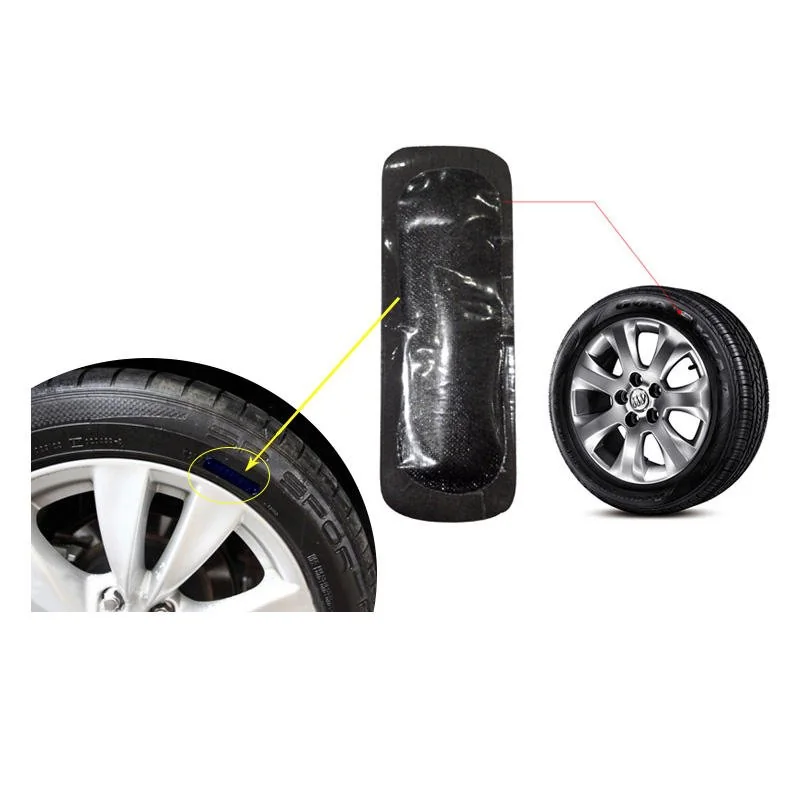
| FYL-UHF-004 | FYL-SP-006 | FYL-SP-002 | |
|---|---|---|---|
| Application | PCB traceability, aerospace, autoclave | Chemical plants, paint-cure ovens | Tire embedding during vulcanization |
| Substrate | Polyimide, textile face | FPC (flexible PCB) + silicone | Rubber-compatible substrate |
| Rated temperature | -40°C to +200°C | -40°C to +200°C | -40°C to +125°C |
| Exposure type | Repeated sustained cycles | Continuous, plus chemical exposure | Confirm: likely brief cure-cycle peak |
| Read range | 1-8m | 1-4m | 0.3-2m (through rubber) |
| MOQ | 200 pcs | 100 pcs | 200 pcs |
What Actually Goes Wrong When Ratings Get Confused
- A storage-temperature number read as a continuous operating rating, leading to a tag mounted permanently in a zone hotter than it can actually sustain long-term.
- A brief cure-cycle rating assumed to mean the tag tolerates sustained operation at that temperature indefinitely.
- Chemical exposure overlooked because only the temperature number was checked, when a chemically hostile but only moderately hot environment can degrade a tag heat alone wouldn't touch.
- A curved or irregular mounting surface specified with a rigid label construction that doesn't conform properly, undermining even a correctly-rated tag's adhesion.
- No test tag run through the actual process, oven, autoclave cycle or vulcanization run, before committing to a full production order.
Before You Place a Production Order
- Confirm whether your process exposes the tag to sustained heat, repeated cycles, or a single brief peak, and ask which condition a quoted rating actually describes.
- Confirm chemical exposure separately from temperature; a hot but chemically clean process and a hot, corrosive one can call for different constructions even at the same temperature.
- Confirm the mounting surface shape (flat, curved, embedded) against the tag's actual construction, rigid label vs flexible FPC vs embedded substrate.
- For any process near a tag's rated ceiling, especially a brief high-heat step like vulcanization or soldering, confirm the exact cycle profile with FYRFID engineering rather than assuming the number covers it.
- Test a sample tag through your actual process before committing to a full production order.
For welding, casting and heat-treatment environments specifically, this covers the ABS/PPS/ceramic construction decision and the same operating-vs-storage temperature distinction in more depth.
Sources & standards
- ISO/IEC 18000-63:2021 (formerly 18000-6C) — ISO/IEC, reference