The one-paragraph version
A reader sends out radio energy through an antenna, the tag uses that energy to answer with its code, and software turns the answers into a list you can act on. Nothing in a passive UHF label has a battery. Everything you buy beyond the label exists to power, hear and use that answer.
The Tag: One Job, Answer With a Code
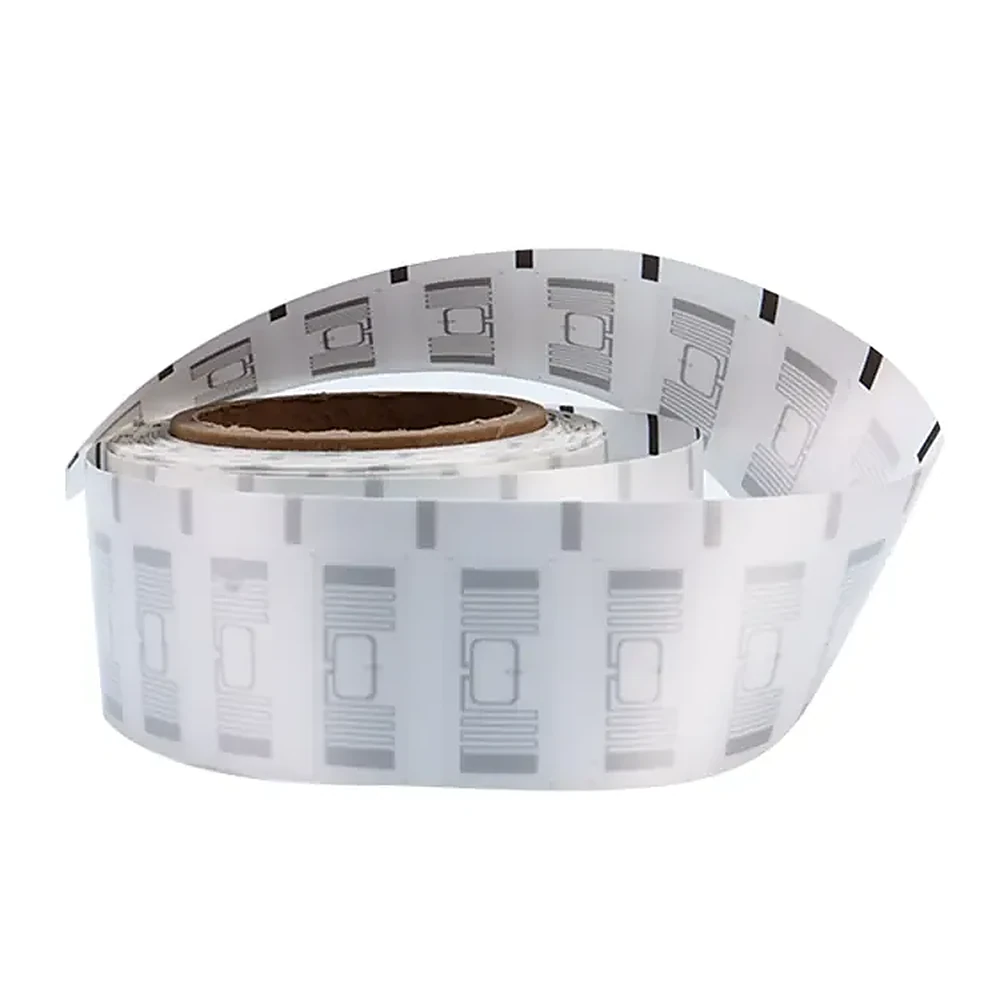
A passive UHF tag is a chip and an antenna on a thin substrate. When it is in the reader's field it powers up and replies with its electronic product code (EPC). UHF tags follow the EPC Gen2 air interface, standardised as ISO/IEC 18000-63, which is why labels and readers from different makers can work together. The chip stores a number; what that number means lives in your database, or in the structure defined by the GS1 EPC Tag Data Standard.
The Antenna: Where the Reading Zone Is
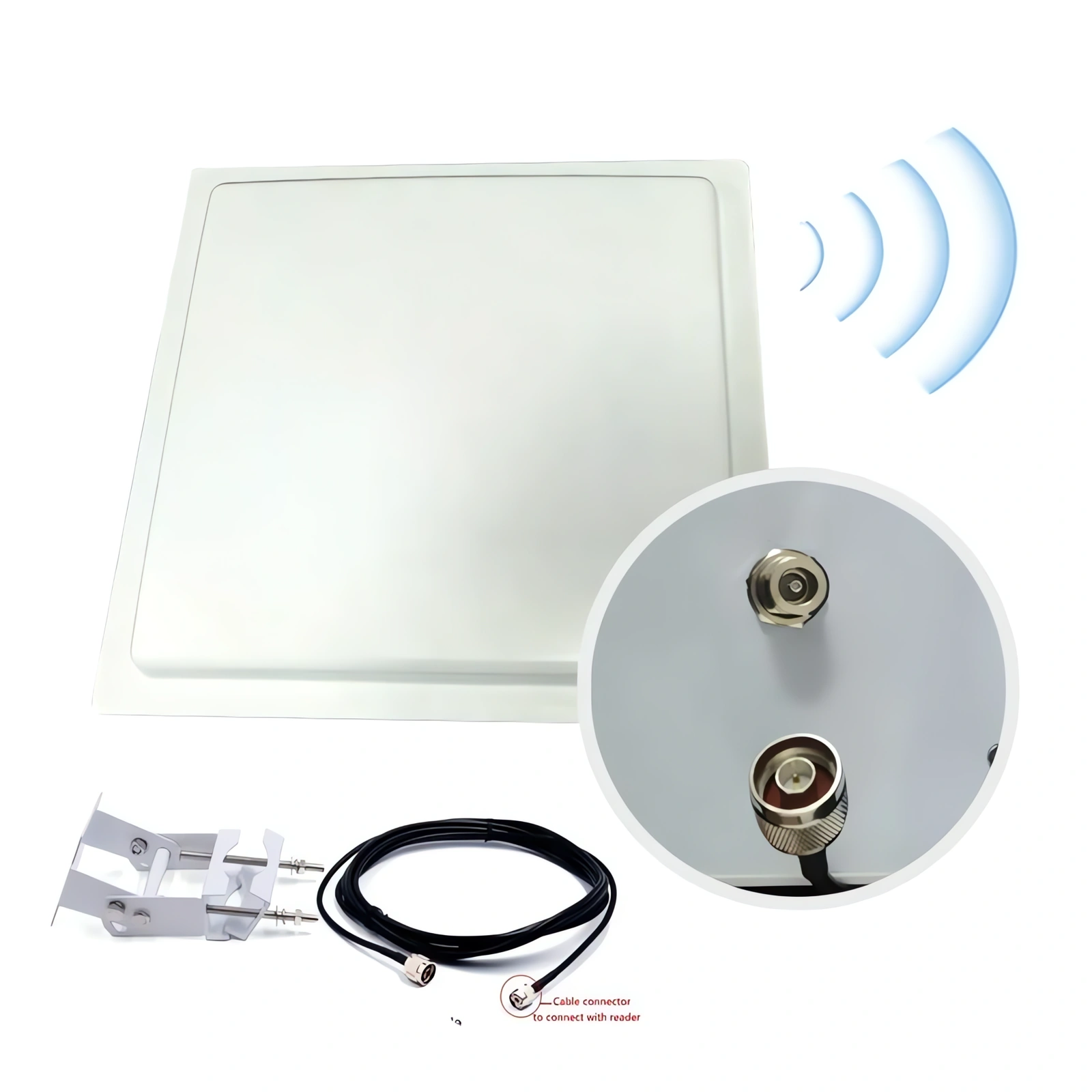
The antenna decides where the tag can be seen. A panel antenna covers a cone-shaped zone in front of it, not a flat wall. FYRFID's panel antenna is listed for 860-868 MHz and 902-928 MHz, ISO 18000-6C, with an IP67 rating, and its read range is stated as dependent on the tags. The distance belongs to the antenna, reader and tag together; no single part has a read range of its own.
The Reader: Power, Listen, Report
The reader generates the signal, listens for replies and passes the codes on. A fixed reader sits at a door or a conveyor. FYRFID's four-port UHF fixed reader is specified at 860-960 MHz, EPC Gen2, with four TNC antenna ports, RS-232 and TCP/IP connection, and a listed range of 0-20 m depending on the tag and antenna. A handheld reader puts reader and antenna in one device for counts and spot checks.

The Software: Turning Reads Into Decisions
Raw reads are a list of codes with timestamps. Software removes duplicates, matches codes to items and decides what happens: a count, an alert, an update in your warehouse or stock system. For a first test a demonstration app and a spreadsheet are enough. Integration with an ERP or POS is a separate piece of work and is best added after the read results are proven.
| Part | Does | You decide |
|---|---|---|
| Tag / label | Replies with a code | Size, surface, process it survives |
| Antenna | Defines the reading zone | Mounting position and angle |
| Reader | Powers and reads | Handheld or fixed, number of ports |
| Printer / encoder | Writes the code | Numbering scheme |
| Software | Turns reads into a list | What decision the list supports |
Three Questions Buyers Ask Next
Can My Phone Be the Reader?
Usually not for UHF. A smartphone's NFC works at 13.56 MHz and reads NFC and some HF tags at a few centimetres. It cannot read the UHF labels used for inventory and logistics, which need a UHF reader: a handheld with a built-in UHF module, or a fixed reader with antennas. Testing a UHF label with a phone, finding nothing, and concluding the label is faulty is a common first mistake. If the project needs consumers to tap with their own phones, that is an NFC project, not a UHF one.
How Does a Reader Read Many Tags at Once?
The EPC Gen2 protocol lets a reader sort through a crowd of tags one at a time, very quickly. Each tag keeps an inventoried flag for each of four sessions. When the reader reads a tag it switches that flag from A to B, so the tag goes quiet and lets the others answer; how long it stays quiet depends on the session chosen. That is why the same reader can be set either to count every tag once in a dense rack, or to keep reporting tags as they sit at a doorway. The setting is chosen in the reader software, and the wrong one makes a count look unreliable when the tags are fine.
What Can the Chip Actually Store?
A UHF chip has separate memory areas: the EPC, which is the code you write and read; the TID, a factory-set chip identifier; and on some chips a user memory. Many common chips carry little or no user memory. The NXP UCODE 8 used in several FYRFID tags, for example, is listed with a 128-bit EPC, a 96-bit TID and 0-bit user memory. So the usual design is to store a number on the tag and keep the details, such as style, size, owner or history, in your database.
What First Projects Get Wrong
- Judging the system by the tag alone, without the antenna position and reader that will read it.
- Treating a quoted read range as a promise, when it depends on the tag and the item it sits on.
- Buying readers before the label has been tested on the real product.
- Leaving software until last, then finding the read list has nowhere to go.
- Expecting a printer without an RFID module to encode labels.
The seven questions that turn this system picture into a quote you can compare.