Key Takeaway · The short version
Ask your retail customer which ARC Spec applies to your product, then confirm that the inlay inside your label is on that Spec's Approved Inlay List. The Spec is in the retailer's supplier playbook. The list is published by the Auburn University RFID Lab. A label converted from an approved inlay is what most mandates are checking for.
What ARC Is
ARC is a programme run by the Auburn University RFID Lab. It gives retailers, brands and suppliers a common way to state what a passive UHF RFID inlay must do, and to check that a given inlay does it. The Lab describes two parts: performance approval, which tests specific inlay models against a Spec, and ARC Quality certification, which audits whether a manufacturer can produce inlays consistently at volume.
Specs: One Requirement per Use Case
A Spec is a set of performance thresholds an inlay must meet for a particular deployment, developed from use-case information gathered from end users. Specs are named by letter and number, such as Spec L, Spec I, Spec U or Spec W5, and the published list changes over time. There is no single "ARC grade" that covers every product: an inlay approved for one Spec is not automatically approved for another. Retailers reference Spec names in their supplier playbooks, and that is where you find the one that applies to you.
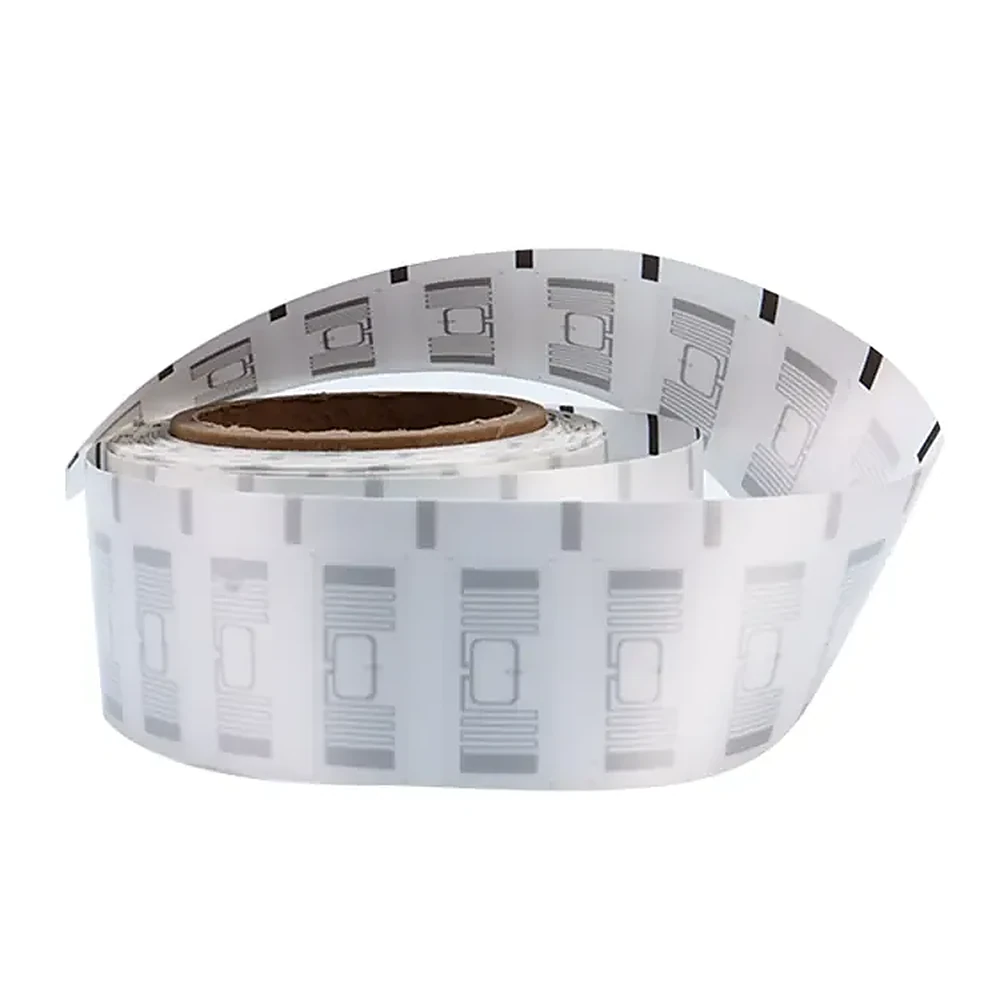
Approved Inlay Lists
For each Spec, the Lab publishes an Approved Inlay List of inlay models benchmark-tested against that Spec. A label converter or tag maker builds finished labels from these inlays. When a retailer audits a shipment, the question is whether the tag carries an inlay model on the list for the Spec in its playbook.
How to Check a Supplier's Label
- Get the Spec name from your retail customer's playbook or RFID programme contact.
- Ask the label supplier for the exact inlay model and chip inside the label you are buying, in writing.
- Find that inlay model on the published Approved Inlay List for your Spec.
- If the supplier claims ARC Quality certification for itself, check the claim against the Lab's own information; do not rely on a logo or a letter alone.
- Re-check whenever the supplier changes the inlay, the chip or the label construction, because the approval follows the inlay model.
| Phrase | What it usually means | What to ask for |
|---|---|---|
| ARC approved inlay | An inlay model on the Approved Inlay List for a Spec | Inlay model and Spec name |
| ARC Quality certified | A manufacturer audited by the Lab for consistent production | The Lab's listing for that manufacturer |
| ARC compliant | Often a supplier's own claim with no list behind it | Inlay model and the list it appears on |
| Category A | Not an ARC term; treat it as a warning sign | The actual Spec name |
Outside the US
ARC exists to serve US retail mandates, and buyers in Latin America, Europe or the Middle East are generally not required to use ARC-approved inlays unless their own customer asks for it. Some procurement teams still use an approved inlay as a quality shorthand. If you supply a US retailer from another country, the playbook rule applies to you all the same.
How FYRFID Handles an ARC Request
FYRFID converts finished labels from inlays bought from ARC-approved inlay suppliers. That matters because ARC approval sits with the inlay model, not with the converter: what makes our label acceptable under a retailer's Spec is that the inlay inside it is on that Spec's Approved Inlay List. So the useful step is a written answer, not a logo. Tell us the retailer and the Spec named in your playbook, and we will confirm the exact inlay model and chip in the proposed label, so you can check it against the published list before you order. An inlay approved for one Spec is not automatically approved for another, so if the label you want does not use an approved inlay for your Spec, we will say so before production and suggest one that does.
ARC Spec Matching & Supplier Verification Table
A common misunderstanding in retail source tagging is treating "ARC certified" as a universal blanket stamp across all SKUs. Auburn University RFID Lab tests specific inlay + IC models against numbered category Specs—meaning a label approved for folded denim (Spec F) may fail verification audits if shipped for cosmetics, sporting goods, or electronics.
| Verification Step | What to Request from Retail Customer / Supplier | What Causes Audit Rejection |
|---|---|---|
| 1. Spec Letter(s) | Confirm exact Spec code(s) required (e.g. Spec F, G, K, M, Q, W) | Quoting "ARC certified" without listing matching Spec letter |
| 2. Approved Inlay Model | Verify exact inlay SKU + chip IC on Auburn Approved Inlay List | Substituting an unlisted chip revision to cut unit price |
| 3. Converted Form Factor | Ensure printing, face stock, and adhesive do not shift frequency out of band | Metallized ink, heavy foil stamping or wet varnish over antenna |
| 4. GS1 EPC Scheme | Verify SGTIN-96 header, company prefix length & serial uniqueness | Duplicate serial numbers across factory vendor purchase orders |
The inlay is what ARC approves. This explains the inlay formats a label is built from.