Before you order
The single most important number on a handheld RFID reader spec sheet is read range, and it varies by roughly 10x between models that otherwise look the same. Some real handheld units in our own range top out around 2 metres by design; others reach 20 metres. Confirm the actual distance your job needs before comparing anything else on the spec sheet.
Why "Handheld RFID Reader" Isn't One Spec
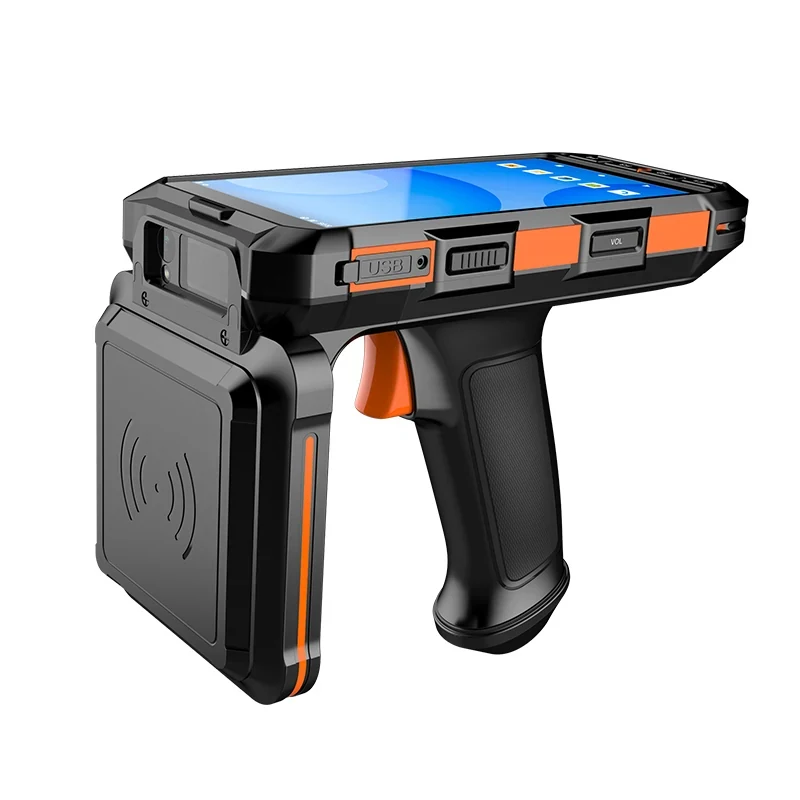
A handheld reader is a rugged Android device with a UHF RFID module and antenna built into the grip end. Past that shared description, the actual read range, battery life, environmental rating and connectivity differ enough between models that two units in the same product family can suit completely different jobs. A common mistake isn't picking the wrong brand, it's assuming "handheld reader" is a single category with one typical spec.
The clearest example in our own range: our long-range model (FY-RD-C6100-002) reads UHF tags at 0-10m, while another handheld built for close-proximity counting reads reliably only within about 0-2m. Both are legitimate, correctly-built products, just for different jobs. A warehouse doing aisle-level cycle counts from a distance needs the first. A retail or asset team doing item-by-item verification at close range is often better served, and better priced, by the second.
Read Range: Confirm It, Don't Assume It
Read range on a handheld depends on the antenna built into the unit and the RF chip driving it, not on the phone-like screen and body that make most of these devices look interchangeable. A quoted "up to 10m" range is a ceiling under ideal conditions, tag orientation, tag type, and open line of sight, not a guarantee at every angle in a real warehouse. Ask for the realistic range for your actual tag type and environment, not just the headline number.
Our FY-RD-CHIP-003 model is a useful contrast point precisely because it doesn't chase long range: it's built around a 0-2m UHF read distance with an ABS housing and a much lighter spec sheet overall, which keeps it cheaper for jobs that never need distance in the first place. Paying for 10m range on a job that only ever needs 1-2m is money spent on a spec that never gets used.
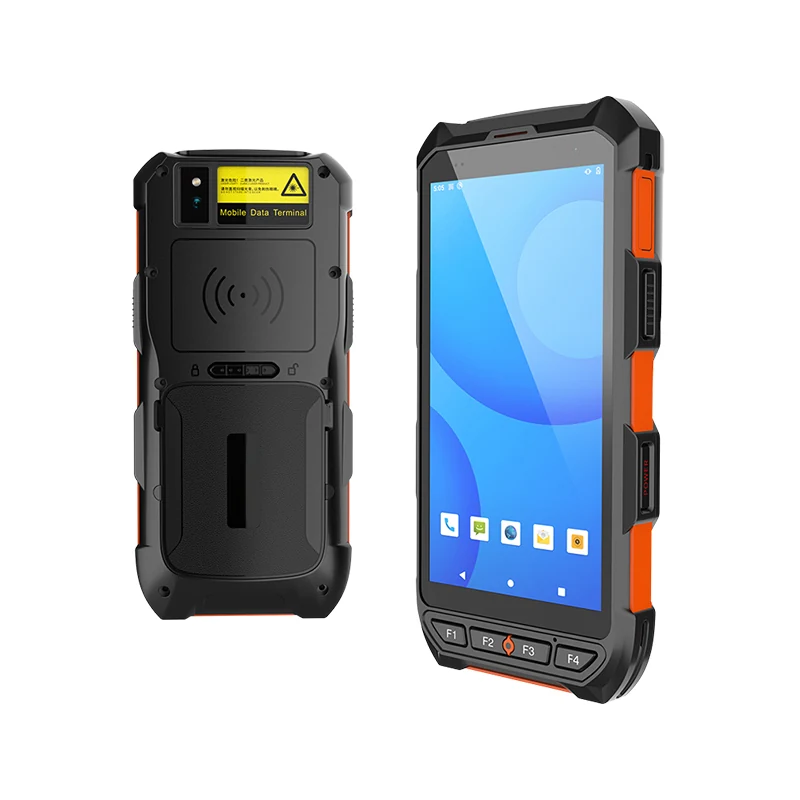
| FY-RD-C6100-002 | FY-RD-SG7806-001 | FY-RD-CHIP-003 | |
|---|---|---|---|
| UHF read range | 0-10m | Confirm for your region/frequency | 0-2m |
| UHF chip | Impinj E710 | Impinj E710 | Standard UHF module |
| Frequency | 865-868 / 920-925 / 902-928MHz | 865-868MHz or 920-925MHz | 860-930MHz (13.56MHz optional) |
| OS | Android 10 or 13 | Android 10 | Android-based |
| Battery | 8000mAh, li-polymer | 9000mAh | 4800mAh, up to 360h standby |
| Environmental | IP65, drop-rated 1.5m to concrete, -20°C to 50°C operating | Confirm on order | ABS housing, general indoor/light outdoor use |
| Extras | 2D barcode (Honeywell 5703), A-GPS, full WWAN/WLAN | NFC 13.56MHz, 4GB+64GB storage | GPRS, WiFi, GPS, camera |
Battery Life Is a Shift-Length Question, Not a Spec Sheet Number
8000-9000mAh batteries across our long-range models sound similar on paper, but actual runtime depends on how continuously the reader is scanning, screen brightness, and whether GPS and WiFi stay on all shift. The right question isn't "how many mAh" but "does this survive a full shift on the floor for how this team actually uses it", which is worth asking directly rather than assuming from the number alone.
Environmental Rating: Match It to Where the Reader Actually Works
Our FY-RD-C6100-002 carries an IP65 rating and is drop-rated to 1.5m (5ft) onto concrete across its full -20°C to 50°C operating range, which matters for a reader that spends its day being carried, set down, and occasionally dropped on a warehouse or yard floor. A lighter-duty model built for indoor counting doesn't need, and isn't priced for, that level of ruggedness. Match the environmental rating to where the reader actually spends its day, not to the toughest-sounding option on the list.
Barcode and NFC: Check What's Actually Built In
Many operations run RFID and barcode side by side during a transition period, or permanently, for items that aren't tagged yet. Our FY-RD-C6100-002 includes a genuine 2D barcode engine (Honeywell 5703) alongside its UHF reader, and a separate 13.56MHz NFC reader for close-range tags like access cards, which is a different frequency and use case entirely from the long-range UHF antenna. If barcode scanning is part of the daily workflow, confirm the barcode engine is a real built-in scanner, not just a camera doing barcode recognition through the phone app, which is slower and less reliable at range.
What Actually Goes Wrong When the Wrong Model Gets Ordered
- A close-range unit ordered for a job that needs aisle-level scanning: the team ends up walking right up to every tag, defeating the point of going handheld over a fixed reader.
- A long-range, fully-loaded unit ordered for simple item-by-item counting: the job gets done, but at a higher price and heavier unit than the work needed.
- Battery life assumed from the mAh number without confirming it against actual shift length and how continuously the screen and radio stay active.
- No 2D barcode engine confirmed in advance, on a job that turns out to need barcode fallback for untagged items on day one.
- Frequency band ordered without confirming it matches the destination country's UHF allocation, since 865-868MHz, 902-928MHz and 920-925MHz all serve different regions.
Before You Place a Production Order
- Confirm the actual read distance the job needs, in metres, not "as far as possible", and ask for the realistic range at that distance for your tag type.
- Confirm the UHF frequency band matches your destination country's allocation.
- Confirm whether the job also needs a built-in 2D barcode scanner or NFC reader, not just UHF.
- Confirm the environmental rating (IP rating, drop rating, operating temperature) against where the reader will actually be used and how roughly it will be handled.
- Ask for the realistic battery runtime under your actual usage pattern, not just the mAh rating, and confirm whether spare batteries or a charging cradle are available for multi-shift operations.
Handheld readers cover manual scanning. For continuous, hands-free reads at a doorway or conveyor line, a fixed portal setup is the other half of the picture.
Sources & standards
- ISO/IEC 18000-63:2021 (formerly 18000-6C) — ISO/IEC, reference