Before you specify
An LED tag only earns its extra cost over a plain UHF tag in one specific situation: when a person needs to visually find one specific item among many similar ones, fast, without reading a screen. If your workflow already resolves location through a handheld or fixed reader confirming a match, a standard passive tag is cheaper and does the identification job just as well. The LED is for the human eye, not the reader.
The Command Chain That Makes a Tag Light Up
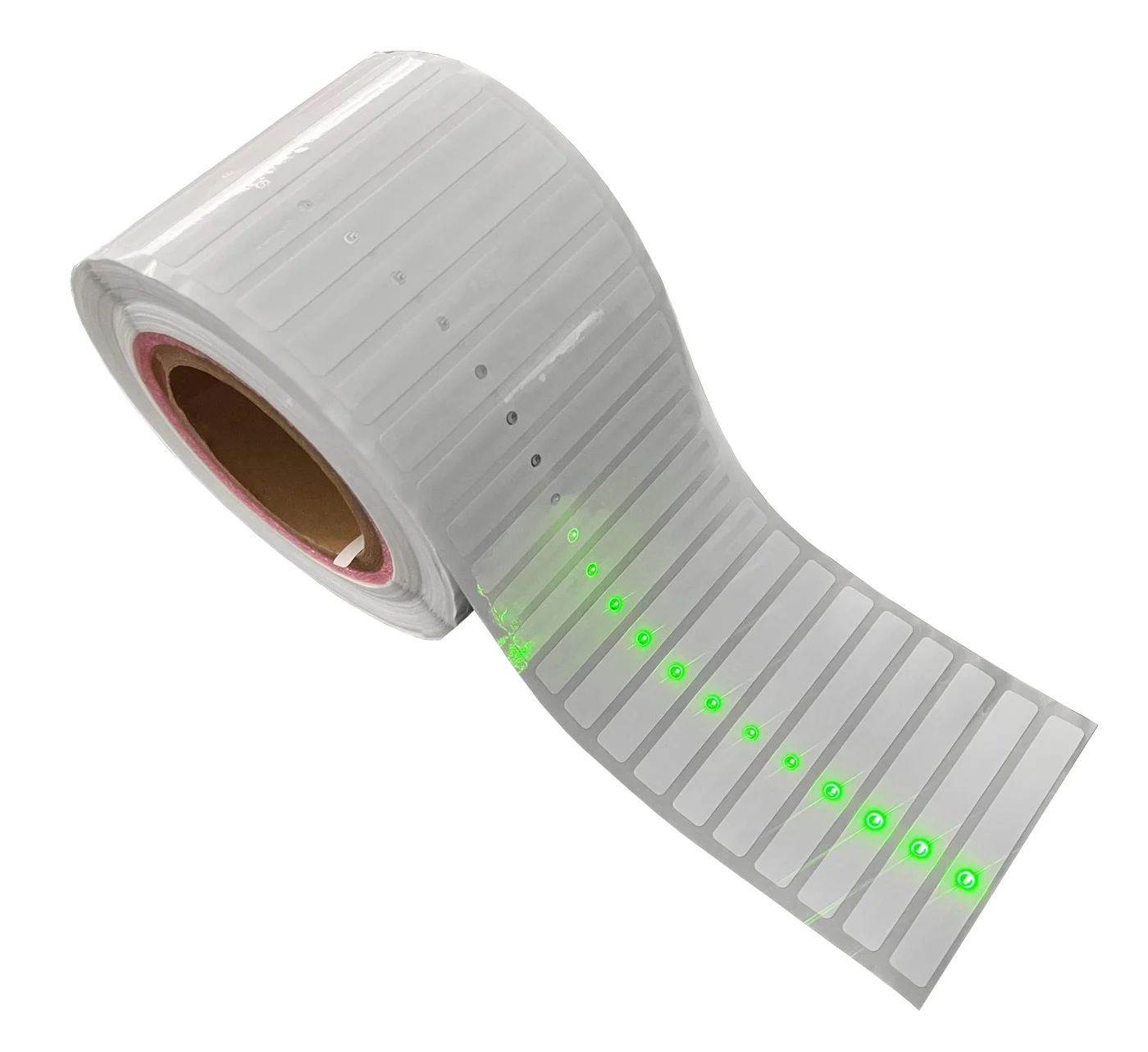
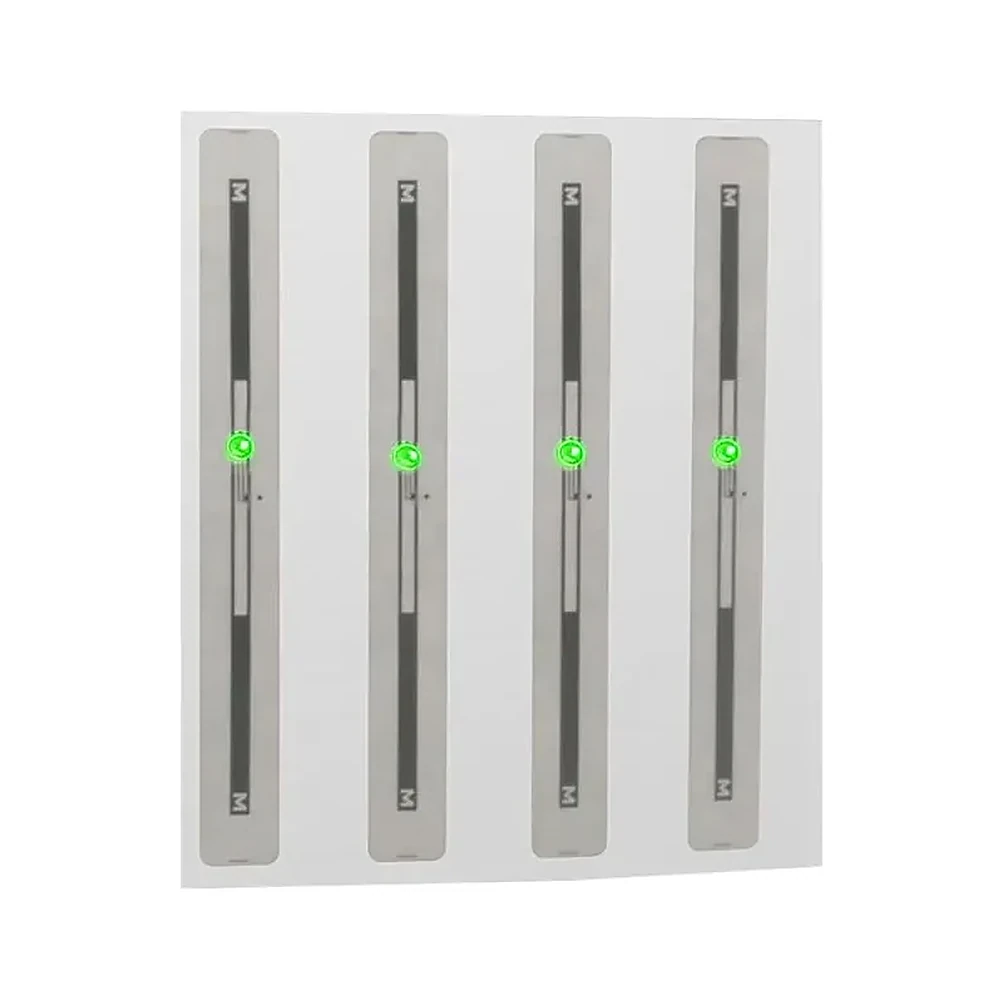
The tag doesn't decide to flash on its own. A UHF reader running pick-to-light or asset-locate software sends a targeted command addressed to one specific EPC, the same unique ID every UHF tag already carries for identification, and only the tag matching that ID lights its LED. Every other tag in read range, including ones sitting right next to it on the same shelf, stays dark. This is the same EPC Gen2/ISO 18000-6C addressing scheme covered throughout our reader and portal guides, repurposed here to trigger a visual signal instead of just a data read.
Both of our LED-enabled tags list "passive contactless RFID" as their operating mode, which is worth confirming directly with FYRFID engineering before specifying a deployment: passive LED indication typically draws on RF energy harvested from the reader's own signal for a brief flash, a different mechanism from a battery-powered active tag, and it affects how visible and how long that flash actually is in your specific lighting conditions. Don't assume the flash behaves like a battery-driven beacon without checking.
Two Real Constructions for Two Different Mounting Jobs
Hard tag with LED (FYT-AST-005) is a rigid ABS housing, 60×35×10mm, 2-6m read range, IP54, built for asset tags that need to survive being mounted on equipment or shelving long-term, a hospital stock cart, a returnable container, a fixed rack position. This is the format for a location that's tagged once and stays put.
LED label (FYL-SP-005) is an adhesive-backed format, 100×60mm, 3-8m read range, IP52, built to stick directly onto a carton or box face, with barcode printing available on the same label. This is the format for pick-to-light in an order-fulfilment setting, where the tag travels with the box rather than staying fixed to a shelf.
| Hard tag with LED | LED label | |
|---|---|---|
| SKU | FYT-AST-005 | FYL-SP-005 |
| Read range | 2-6m | 3-8m |
| Housing | Rigid ABS, IP54 | Adhesive-backed, IP52 |
| Size | 60×35×10mm | 100×60mm |
| Best suited to | Fixed asset locations, equipment, carts | Cartons and boxes in a pick-and-pack workflow |
| MOQ | 50 pcs | 100 pcs |
Where This Actually Beats a Plain Barcode or UHF Tag
A standard UHF tag tells a reader an item is somewhere in range, useful for the counting and verification workflows covered in our portal and handheld guides, but it doesn't tell a person exactly which physical item that is when several look alike. A barcode requires walking up to each candidate and scanning it to check. An LED tag collapses that search to a glance: the software confirms the item's identity, sends the locate command, and a person just looks for the light. This earns its cost specifically in picking, asset audits in cluttered stock rooms, and hospital settings where staff need to confirm a specific supply box without handling every similar one nearby.
What Actually Goes Wrong When This Gets Over- or Under-Specified
- LED tags specified for a workflow that already confirms location through reader software alone, paying for a visual feature nobody actually looks at.
- A rigid hard tag used where an adhesive label was needed for a moving carton, or vice versa, mismatching the mounting to the actual item.
- The LED's power mechanism (RF-harvested flash vs a separate power source) not confirmed against the actual lighting and distance conditions of the stock room or warehouse floor.
- Read range assumed from the top of the spec range without testing against actual shelf spacing and rack density.
- No pilot test of the locate command through the real reader software and warehouse layout before a full tagging rollout.
Before You Place a Production Order
- Confirm the actual problem is visual search among similar-looking items, not just identification, before adding LED cost over a standard tag.
- Confirm the mounting format, rigid hard tag or adhesive label, against whether the tagged item is fixed or moves through a pick-and-pack process.
- Confirm the LED's flash mechanism and expected visibility with FYRFID engineering against your specific lighting and distance conditions.
- Confirm your reader software actually supports sending a targeted locate command to a single EPC, not just bulk reads.
- Pilot the full locate workflow, software command through visible flash, in your real environment before a full deployment.
If your locating need goes beyond a visual flash to continuous real-time tracking, this covers when battery-powered active RFID is actually the right tier.
Sources & standards
- ISO/IEC 18000-63:2021 (formerly 18000-6C) — ISO/IEC, reference