01
Door access systems
Your readers use 125 kHz EM-type cards.
Typical setupEM4100, TK4100 or T5577; UID, format and numbering on request.
This is the most common door access card: tap it on a reader and the door opens if its number is on the list. It also works for loyalty cards and time clocks, and it fits most existing readers. Key facts: reads 2–10 cm; MOQ Typically 200 pcs.
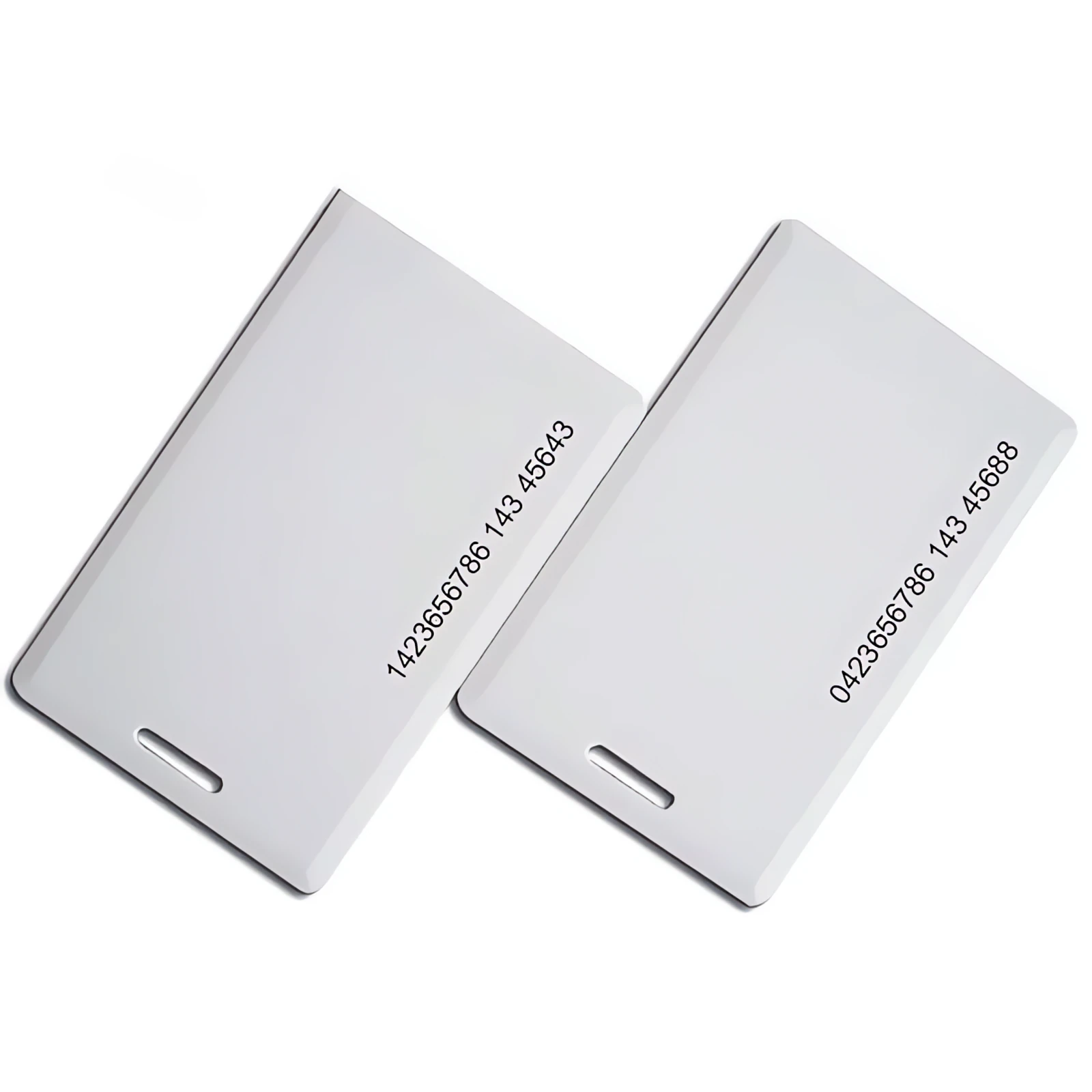
Your readers use 125 kHz EM-type cards.
Typical setupEM4100, TK4100 or T5577; UID, format and numbering on request.
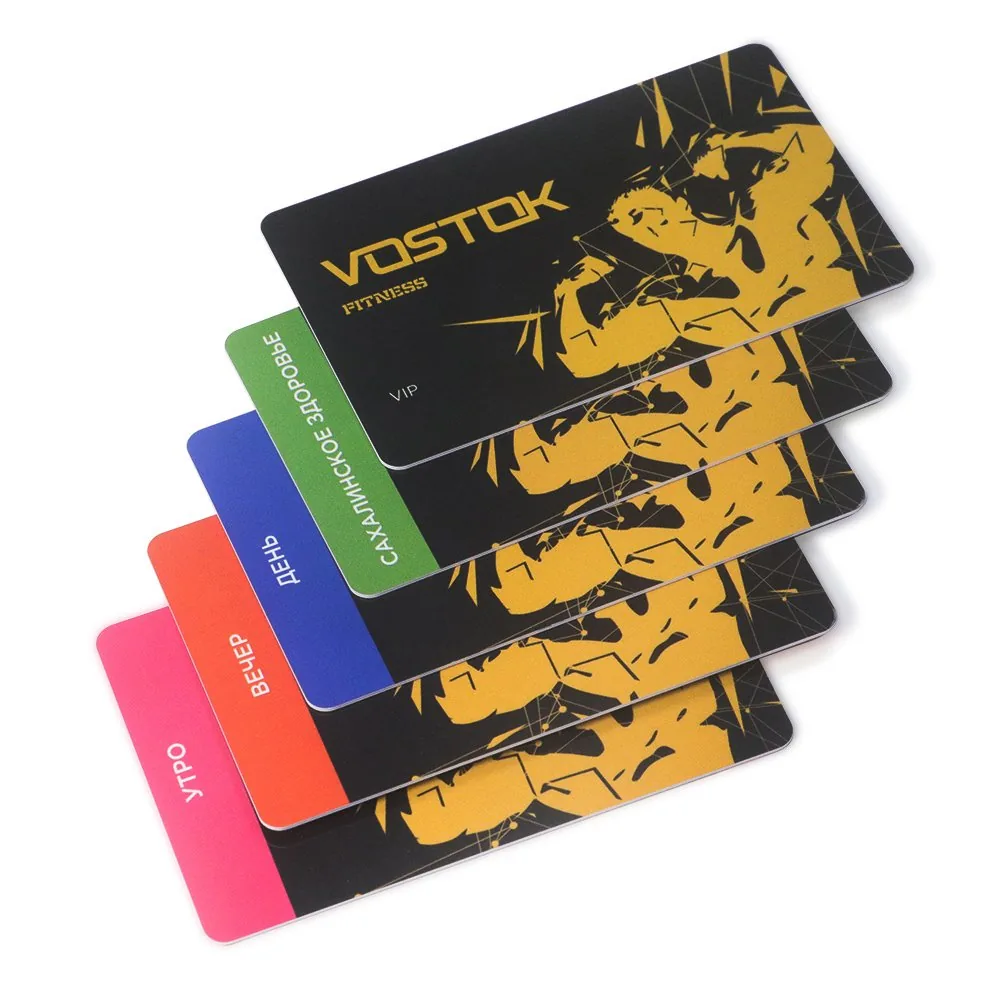
Members carry a printed card identified by its chip number.
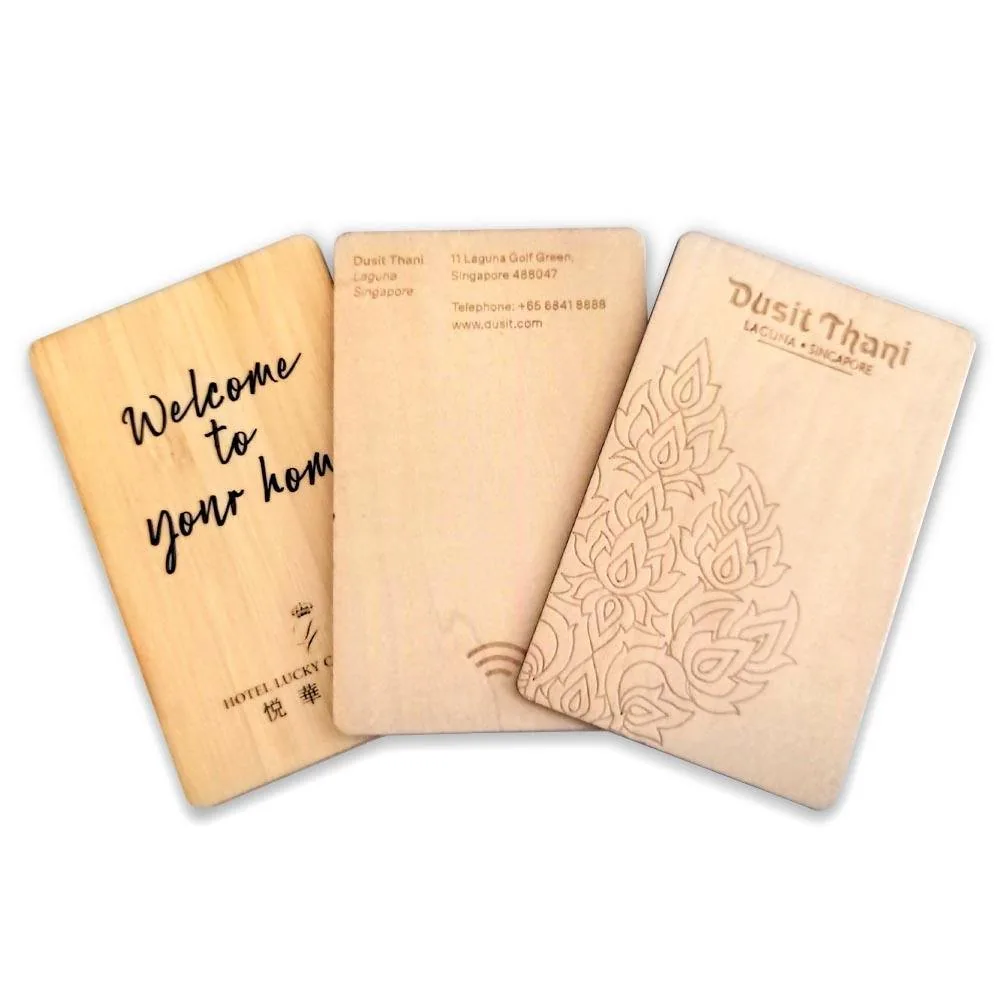
Typical setupCMYK, UV or silkscreen printing.
Staff clock in with a simple ID card.
Typical setupPrinted number matching the chip ID.
You keep stock of blank cards for local installers.
Typical setupBlank white option; individual OPP or custom retail pack.
This is the most common door access card: tap it on a reader and the door opens if its number is on the list. It also works for loyalty cards and time clocks, and it fits most existing readers.
How it works, in plain words
What you need to use it
What it looks like in your business
Today: a card that does not fit your reader means a new reader and new wiring. With the card: most readers accept this card type, so you rarely need to change the reader.
What you get: It fits what you own.
Today: plain white cards look anonymous and do not build the brand. With the card: full-colour printing or blank white. The number can also be printed on the card.
What you get: Cards look like your brand.
Today: timesheets are filled in by hand and disputed. With the card: staff tap at a terminal that records the card and the time; payroll matches it to the person.
What you get: Attendance without paper.
Today: unusual cards sell slowly and sit on shelves. With the card: standard size, minimum 200 pcs, easy to resell.
What you get: A fast-moving product.
Today: cards are ordered that the readers do not read, because 125 kHz and 13.56 MHz cards are not interchangeable. With the card: tell us the reader model, or the frequency and chip family. We match the card to it and can send a sample to test at a real door. For this product: size CR80 standard (85.5 x 54 x 0.76 mm), material PVC / PET composite, read range 2–10 cm (reader & environment dependent).
What you get: Cards that work at your readers.
The hardware and software that work with the 125kHz RFID Smart Card in a typical project.
Carried by each user. Chip: EM4100, TK4100 or rewritable T5577.
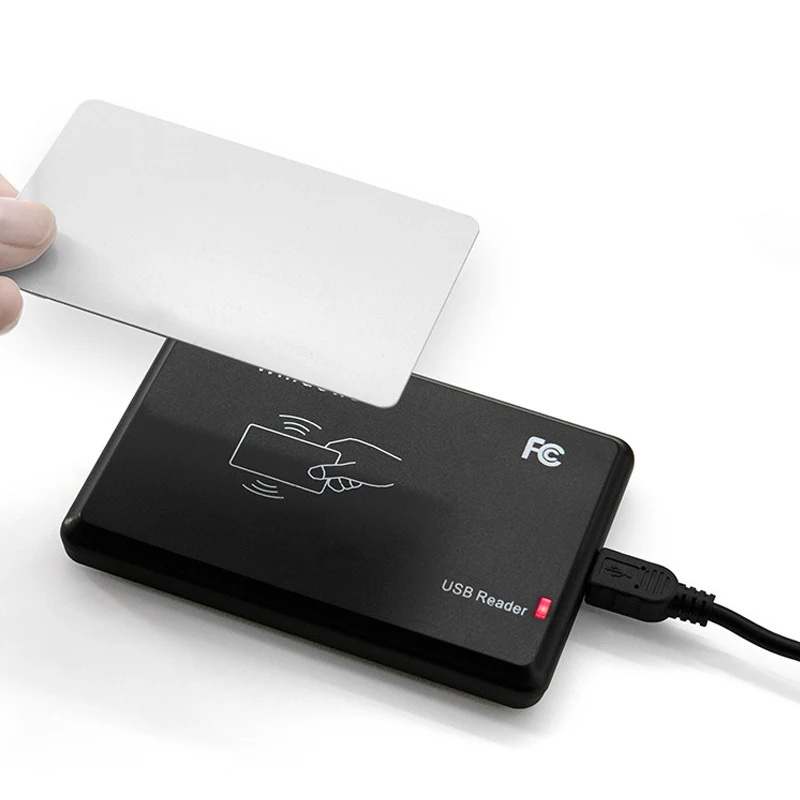
Reads the card number into the access system when the card is issued.
Read the card at the door and unlock if the user has access. Frequency: 125 kHz.
Grants and removes access per user, door and time.
Note the reader brand, frequency and card format (for example a 26-bit format with a facility code) before ordering.
Send us the format, facility code and numbering range; we program the cards before delivery.
Read each card at the enrollment reader and assign it to a person and access level.
Users present the card at the reader.
Disable the lost card number in the software and issue a new card.
| Chip / IC | EM4100, TK4100, T5577 (rewritable) |
|---|---|
| Frequency | 125 kHz (LF) |
| Memory | 64-bit read-only ID (EM4100) |
| Read range | 2–10 cm (reader & environment dependent) |
| Size | CR80 standard (85.5 x 54 x 0.76 mm) |
| Material | PVC / PET composite |
| Operating temp | -10 ~+50 °C (typ.) |
| Waterproof / IP | Waterproof, scratch-resistant, bend-resistant |
| Certifications | RoHS |
Need a value that is not listed? Ask in the form and our engineers will confirm it for your order.
| MOQ | Typically 200 pcs |
|---|---|
| Sample policy | Free samples available |
| Sample quantity | 3–5 pcs (Free) |
| Sample lead time | 5-7 days |
| Bulk lead time | 7-14 days |
| Packaging | Individual OPP or custom retail pack |
| Pricing | Quoted per project and quantity. Send your quantity and requirements in the form. |
| Printing & branding | CMYK, UV, silkscreen, or blank white |
|---|---|
| Chip encoding | UID, format and numbering on request |
EM4100 and TK4100 carry a fixed read-only ID. T5577 is rewritable, so it can be programmed to copy other 125 kHz formats.
Yes, easily. Use them where your readers require 125 kHz; for new sites choose 13.56 MHz secure cards.
Yes. UID, format and numbering are set on request.
Typically 200 pcs.
Only if they use the same radio type and chip family. Tell us your reader model and we will confirm. 125 kHz and 13.56 MHz systems do not read each other's cards.
Basic 125 kHz proximity cards send a fixed number and can be copied easily with cheap tools. If security matters, choose a card with a secure chip and a reader that supports it.
A desktop enrolment reader reads the card number into your access software, where you link it to a person.
Yes, if you choose a printable card. Tell us the printer you have.
The minimum order quantity is Typically 200 pcs. Before bulk production we can send 3–5 pcs (Free) for testing.
Free samples available. Sample quantity: 3–5 pcs (Free). Samples are ready in 5-7 days.
Bulk lead time is 7-14 days, counted from sample or artwork approval.
Last updated:
Tell us your quantity, application and delivery country. We reply within 24 hours.