01
Hospital wards
Staff must see a patient's risk at a glance, such as allergies or fall risk.
Typical setupPre-printed alert words (Allergy Alert, Fall Risk) or custom text.
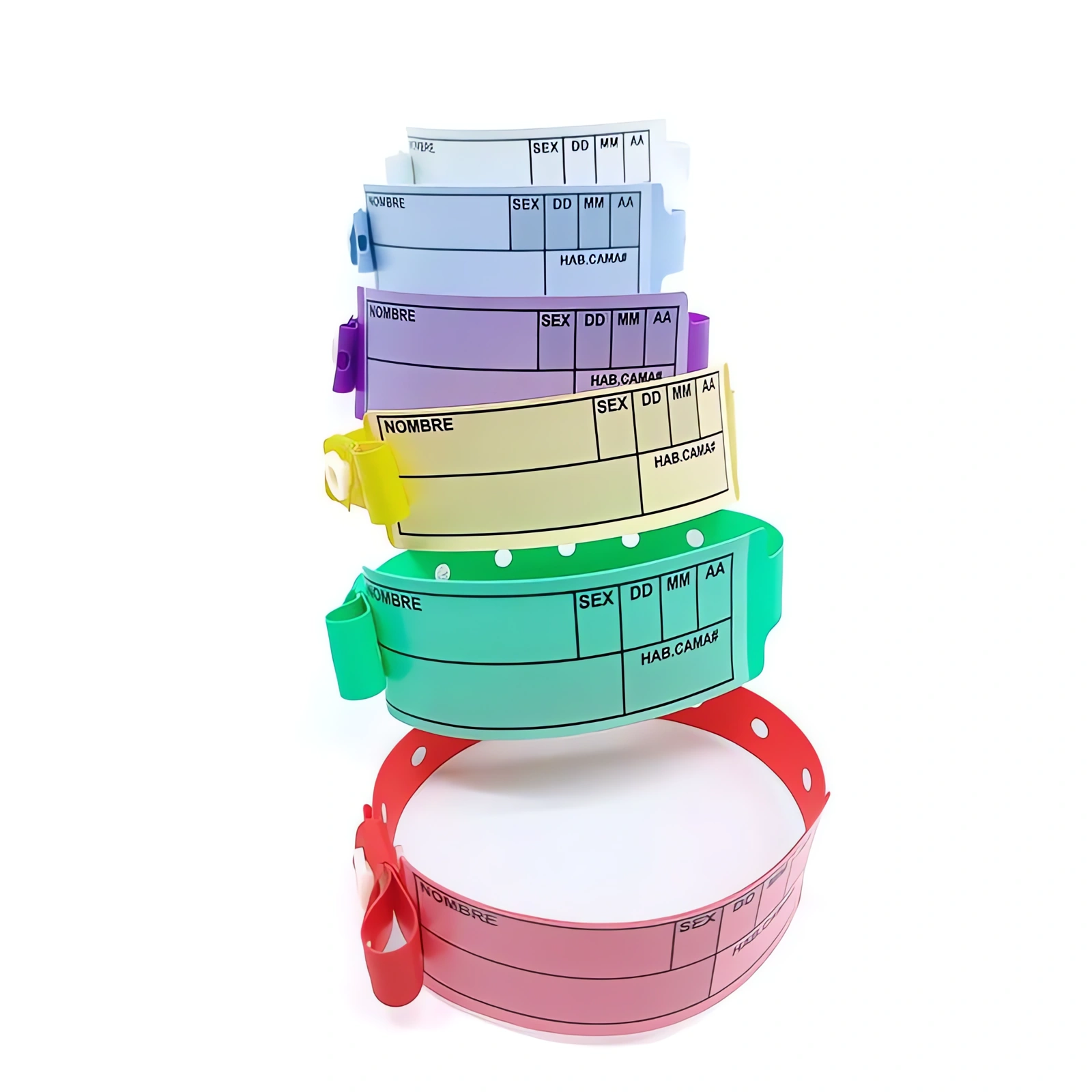
This is a single-use waterproof hospital wristband with a chip that links the band to the patient's record. The wide face is for printed or written details; the chip lets a phone or reader open the record. Key facts: reads 0–5 cm; MOQ 1000 pcs.
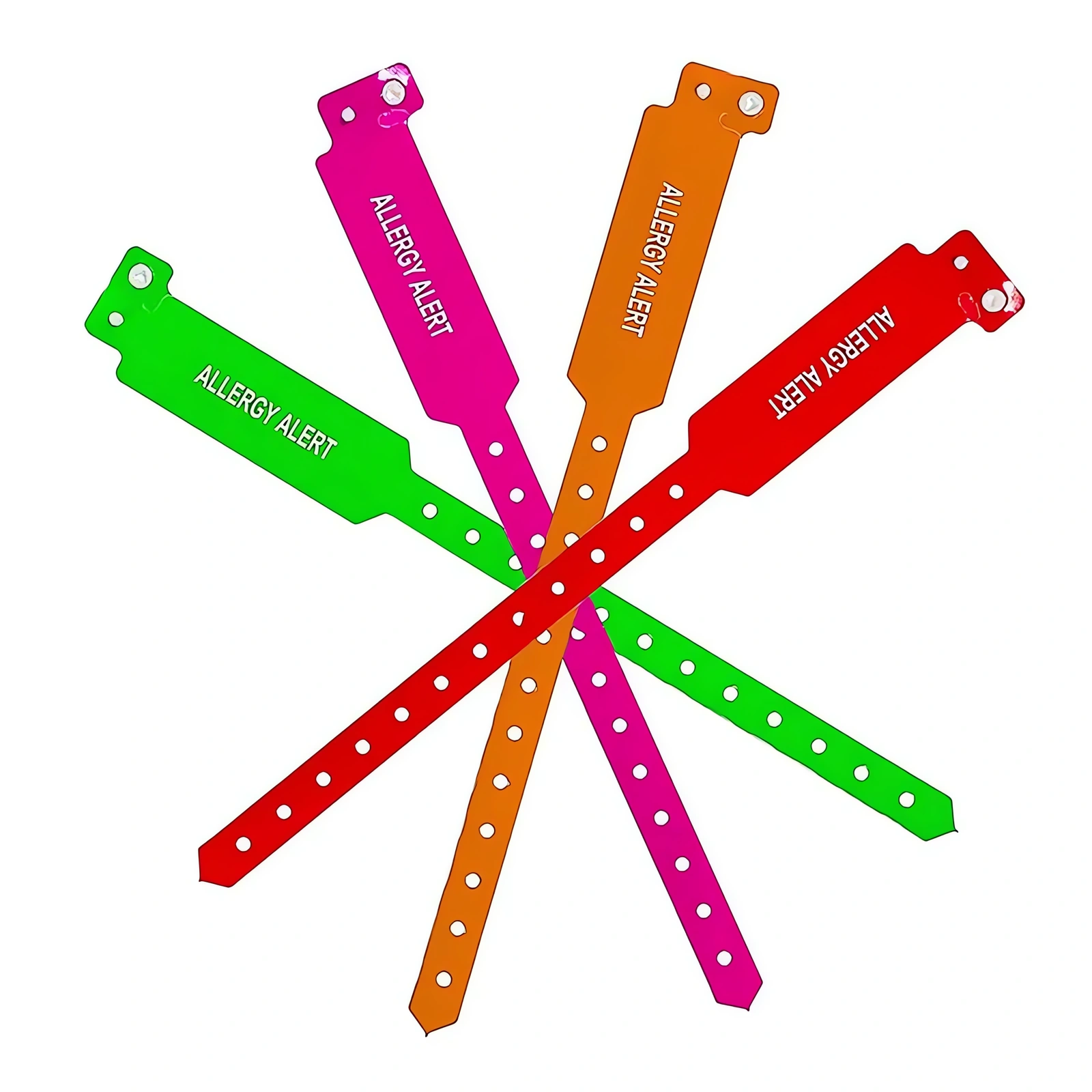
Staff must see a patient's risk at a glance, such as allergies or fall risk.
Typical setupPre-printed alert words (Allergy Alert, Fall Risk) or custom text.
Residents at risk of falls need a visible alert for every shift.
Typical setupWide-face vinyl band, waterproof and tear-resistant.
The same alert system in sizes that fit children.
Typical setupAdult and child sizes.
The visual alert should link to a record a phone or reader can open.
Typical setupNTAG213 chip; encoding on request.
This is a single-use waterproof hospital wristband with a chip that links the band to the patient's record. The wide face is for printed or written details; the chip lets a phone or reader open the record.
How it works, in plain words
What you need to use it
What it looks like in your business
Today: staff rely on a name written on the band, which can fade or be misread at night. With the band: the wide face carries the printed name and alerts, and the chip links the band to the record. Staff read the print on rounds and scan the chip at medication or sampling.
What you get: Printed and scanned identity that match.
Today: paper or label bands come off in the shower or during dressing, and residents may be left without ID. With the band: waterproof, tear-resistant vinyl stays on, and a night nurse scans it with a phone without waking the resident.
What you get: Identification continues through personal care.
Today: a band that is too loose slips off a child's wrist, and one that is too tight gets cut off. With the band: child and adult sizes are available, so the band fits and stays on for the visit.
What you get: The right size for every patient.
Today: safety managers want proof that scanning helps before they pay for readers. With the band: the chip works with ordinary NFC phones, so one ward can pilot a scan-to-confirm process with a first order of 1000 pcs.
What you get: Prove the value before investing.
Today: a band with a chip is bought, but nobody has decided where it is read or how it links to the record. With the band: agree with the ward where the band is read (bedside, specimens, transfers) and how the number is linked to the record in your hospital system. Test with phones first. For this product: size Adult & child sizes; wide face shape, material PVC / Vinyl, waterproof and durable, read range 0–5 cm.
What you get: A process that fits your ward.
The hardware and software that work with the Custom PVC Medical Alert Vinyl Wristband in a typical project.
Worn from admission to discharge, printed with the patient's identifiers and a barcode. Chip: NTAG213.
Alert words are pre-printed; patient identifiers go on the main ID band.
Staff scan the band before medication, blood draws and procedures, and compare it with the order.
Holds the patient record the band points to.
Use at least two identifiers, such as full name and date of birth; a room number is not an identifier.
Encode the chip with the patient ID if your scanners read RFID or NFC; otherwise the barcode carries it.
Use the right size for adults, children and newborns, and check the band is readable after fitting.
Staff scan the band and confirm both identifiers before each procedure.
Cut the band off and dispose of it with patient data protected.
| Chip / IC | NTAG213, ISO/IEC 14443-A, NDEF compatible; user memory ~144 bytes |
|---|---|
| Frequency | 13.56 MHz (HF / NFC) |
| Protocol / Standard | ISO/IEC 14443A · NFC Forum Type 2 |
| Memory | 144 / 504 / 888 Bytes (by selected IC) |
| Read range | 0–5 cm |
| Size | Adult & child sizes; wide face shape |
| Material | PVC / Vinyl, waterproof and durable |
| Operating temp | -10 ~+50 °C (typ.) |
| Waterproof / IP | Single-use; waterproof and tear-resistant |
| Mounting | Wrist-worn |
| Certifications | ISO 14443A, NFC Forum Type 2, RoHS |
Need a value that is not listed? Ask in the form and our engineers will confirm it for your order.
| MOQ | 1000 pcs |
|---|---|
| Sample policy | Free samples available |
| Sample quantity | 3–5 pcs (Free) |
| Sample lead time | 5-7 days |
| Bulk lead time | 7–12 working days |
| Packaging | 100 pcs/box or custom retail pack |
| Pricing | Quoted per project and quantity. Send your quantity and requirements in the form. |
| Printing & branding | Pre-printed alert words (Allergy Alert, Fall Risk) or custom text |
|---|---|
| Chip encoding | Chip encoding available on request |
Many US hospital associations use red for allergy, yellow for fall risk and purple for do not resuscitate. There is no single national rule, so agree colours with your nursing team.
Yes. We print preset alert words such as Allergy Alert and Fall Risk, or your custom text.
No. It is an alert band worn with the ID band.
Yes. It is waterproof, tear-resistant vinyl for single use.
1000 pcs.
It can work alongside it. Some bands carry both a printed barcode and a chip. Studies show that scanning wristband barcodes before medication can reduce errors; a chip adds a second way to read.
Yes. The chip is read by ordinary NFC phones, so a ward can run a small pilot before buying readers.
The bands are made of skin-safe, latex-free material (as stated for each band). Check the material for each product, and ask us for documents your hospital needs.
The minimum order quantity is 1000 pcs. Before bulk production we can send 3–5 pcs (Free) for testing.
Free samples available. Sample quantity: 3–5 pcs (Free). Samples are ready in 5-7 days.
Bulk lead time is 7–12 working days, counted from sample or artwork approval.
Last updated:
Tell us your quantity, application and delivery country. We reply within 24 hours.