01
Hospitals with thermal printers
Admissions print the patient band on demand from the HIS.
Typical setupDirect thermal surface: text, 1D/2D barcodes, QR codes.
This is a hospital band you print at admission on a thermal printer (name, number, barcode), with a chip added so a phone or reader can open the patient's record. Key facts: reads 0–5 cm; MOQ 1000 pcs.
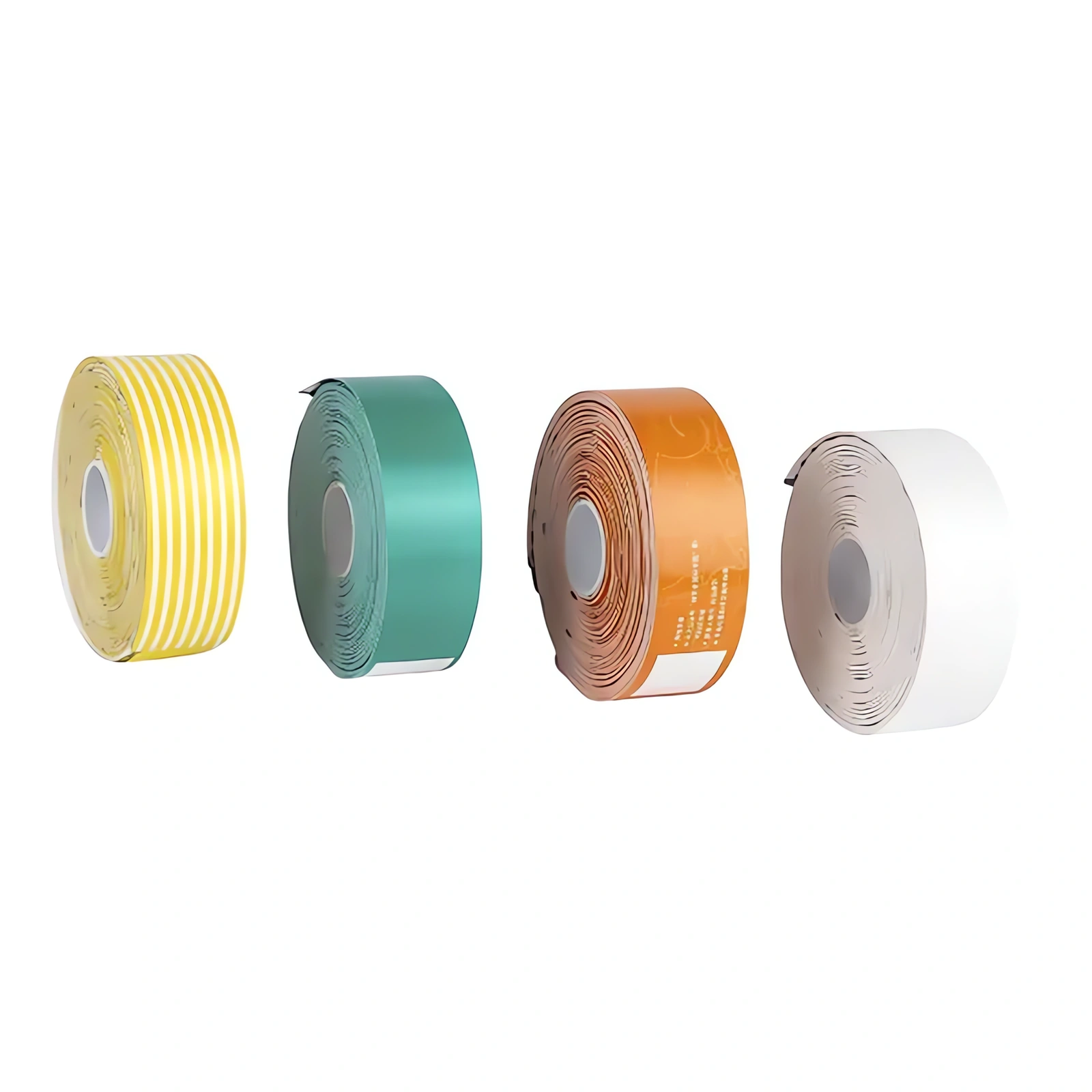
Admissions print the patient band on demand from the HIS.
Typical setupDirect thermal surface: text, 1D/2D barcodes, QR codes.
Bands are cleaned with alcohol wipes and must stay legible.
Typical setupWaterproof, tear-resistant, alcohol-wipe resistant.
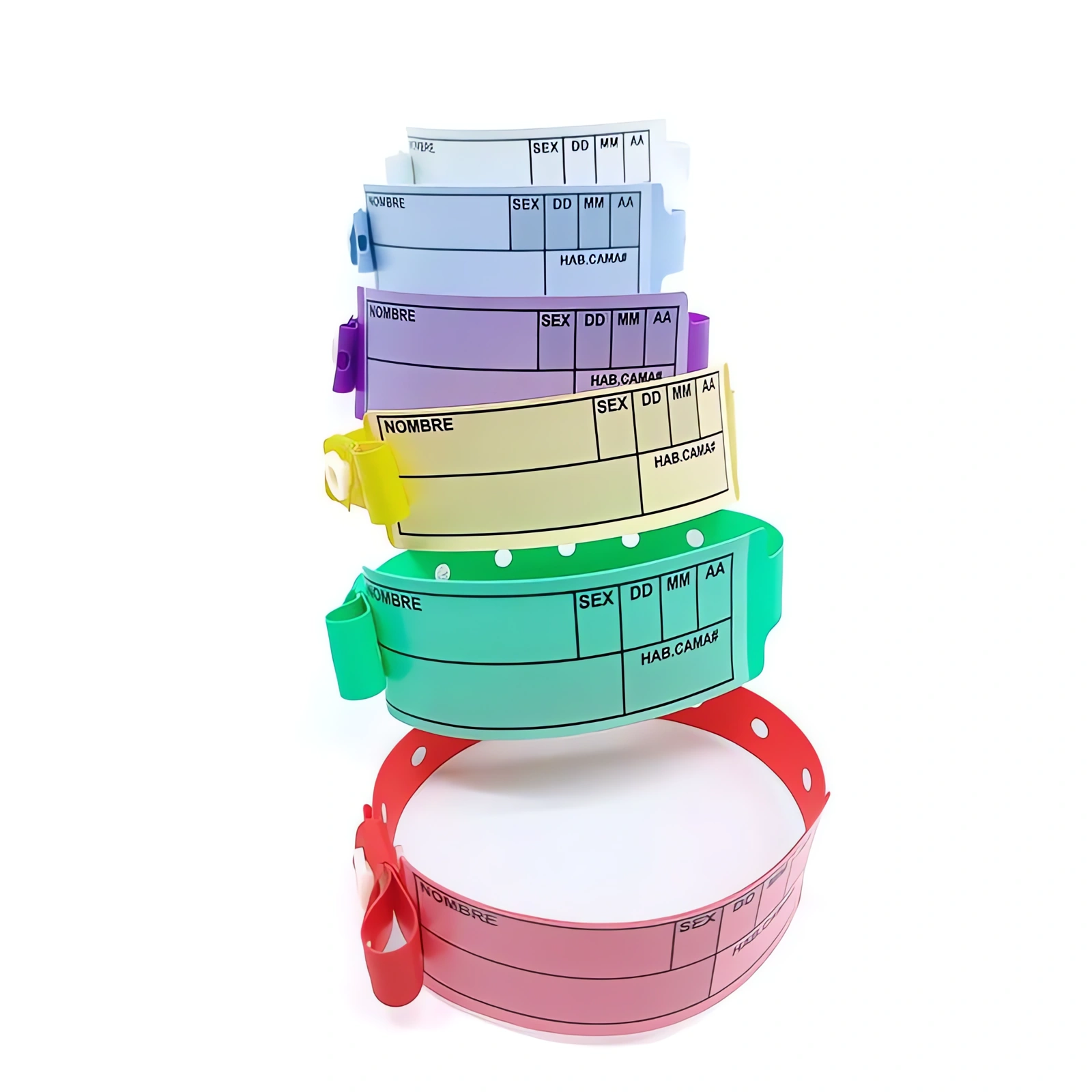
Smaller patients need smaller bands on skin-friendly material.
Typical setupAdult standard; paediatric/infant sizes; latex-free.
Bands are printed in seconds when patients arrive.
Typical setupPrint on demand; NTAG213 encoded on request.
This is a hospital band you print at admission on a thermal printer (name, number, barcode), with a chip added so a phone or reader can open the patient's record. It is latex-free and wipes clean with alcohol.
How it works, in plain words
What you need to use it
What it looks like in your business
Today: bands print a barcode only, and staff scan it with barcode scanners. With the band: the same print job also links the chip to the record, so staff can use either the barcode or a phone tap to open it.
What you get: One band, two ways to check.
Today: alcohol wipes smudge ordinary printed bands, and they become unreadable. With the band: the band is waterproof, tear-resistant and wipes clean with alcohol, so the print stays readable after cleaning.
What you get: The identity stays legible through care.
Today: one size does not fit a baby or an adult, so staff mix bands from different suppliers. With the band: adult standard, child and infant sizes come from one product line.
What you get: The right band for every patient.
Today: every minute at registration delays the first check. With the band: print and wrap in seconds, and the patient keeps one identity through triage, tests and transfer.
What you get: ID from the door.
Today: a band with a chip is bought, but nobody has decided where it is read or how it links to the record. With the band: agree with the ward where the band is read (bedside, specimens, transfers) and how the number is linked to the record in your hospital system. Test with phones first. For this product: size Adult standard; pediatric/infant sizes available, read range 0–5 cm, minimum order 1000 pcs.
What you get: A process that fits your ward.
The hardware and software that work with the Thermal Printable Medical Patient Identification Wristband in a typical project.
Worn from admission to discharge, printed with the patient's identifiers and a barcode. Chip: NTAG213.
Admissions prints the band on a direct thermal wristband printer from the HIS.
Staff scan the band before medication, blood draws and procedures, and compare it with the order.
Holds the patient record the band points to.
Use at least two identifiers, such as full name and date of birth; a room number is not an identifier.
Encode the chip with the patient ID if your scanners read RFID or NFC; otherwise the barcode carries it.
Use the right size for adults, children and newborns, and check the band is readable after fitting.
Staff scan the band and confirm both identifiers before each procedure.
Cut the band off and dispose of it with patient data protected.
| Chip / IC | NTAG213, ISO/IEC 14443-A, NDEF compatible; user memory ~144 bytes |
|---|---|
| Frequency | 13.56 MHz (HF / NFC) |
| Protocol / Standard | ISO/IEC 14443A · NFC Forum Type 2 |
| Memory | 144 / 504 / 888 Bytes (by selected IC) |
| Read range | 0–5 cm |
| Size | Adult standard; pediatric/infant sizes available |
| Material | Soft synthetic, latex-free, skin-friendly; thermal printable surface |
| Operating temp | -10 ~+50 °C (typ.) |
| Waterproof / IP | Waterproof, tear-resistant, alcohol-wipe resistant |
| Mounting | Wrist-worn |
| Certifications | ISO 14443A, NFC Forum Type 2, RoHS |
Need a value that is not listed? Ask in the form and our engineers will confirm it for your order.
| MOQ | 1000 pcs |
|---|---|
| Sample policy | Free samples available |
| Sample quantity | 3–5 pcs (Free) |
| Sample lead time | 5-7 days |
| Bulk lead time | 5–10 working days |
| Packaging | Individual OPP or bulk pack; custom label and carton marks |
| Pricing | Quoted per project and quantity. Send your quantity and requirements in the form. |
| Printing & branding | Direct thermal (supports text, 1D/2D barcodes, QR codes) |
|---|---|
| Chip encoding | Chip encoding available on request |
It has a direct thermal printable surface for text, 1D/2D barcodes and QR codes. Send your printer model and we send samples to test.
Yes. The band is waterproof, tear-resistant and alcohol-wipe resistant.
Yes. It is soft, latex-free and skin-friendly.
Usually full name and date of birth, or a hospital ID number. The room number is not an identifier.
1000 pcs.
It can work alongside it. Some bands carry both a printed barcode and a chip. Studies show that scanning wristband barcodes before medication can reduce errors; a chip adds a second way to read.
Yes. The chip is read by ordinary NFC phones, so a ward can run a small pilot before buying readers.
The bands are made of skin-safe, latex-free material (as stated for each band). Check the material for each product, and ask us for documents your hospital needs.
The minimum order quantity is 1000 pcs. Before bulk production we can send 3–5 pcs (Free) for testing.
Free samples available. Sample quantity: 3–5 pcs (Free). Samples are ready in 5-7 days.
Bulk lead time is 5–10 working days, counted from sample or artwork approval.
Last updated:
Tell us your quantity, application and delivery country. We reply within 24 hours.