01
Dock doors & gates
Tags in any orientation must be read as goods pass.
Typical setupCircular polarization, 9 dBi.
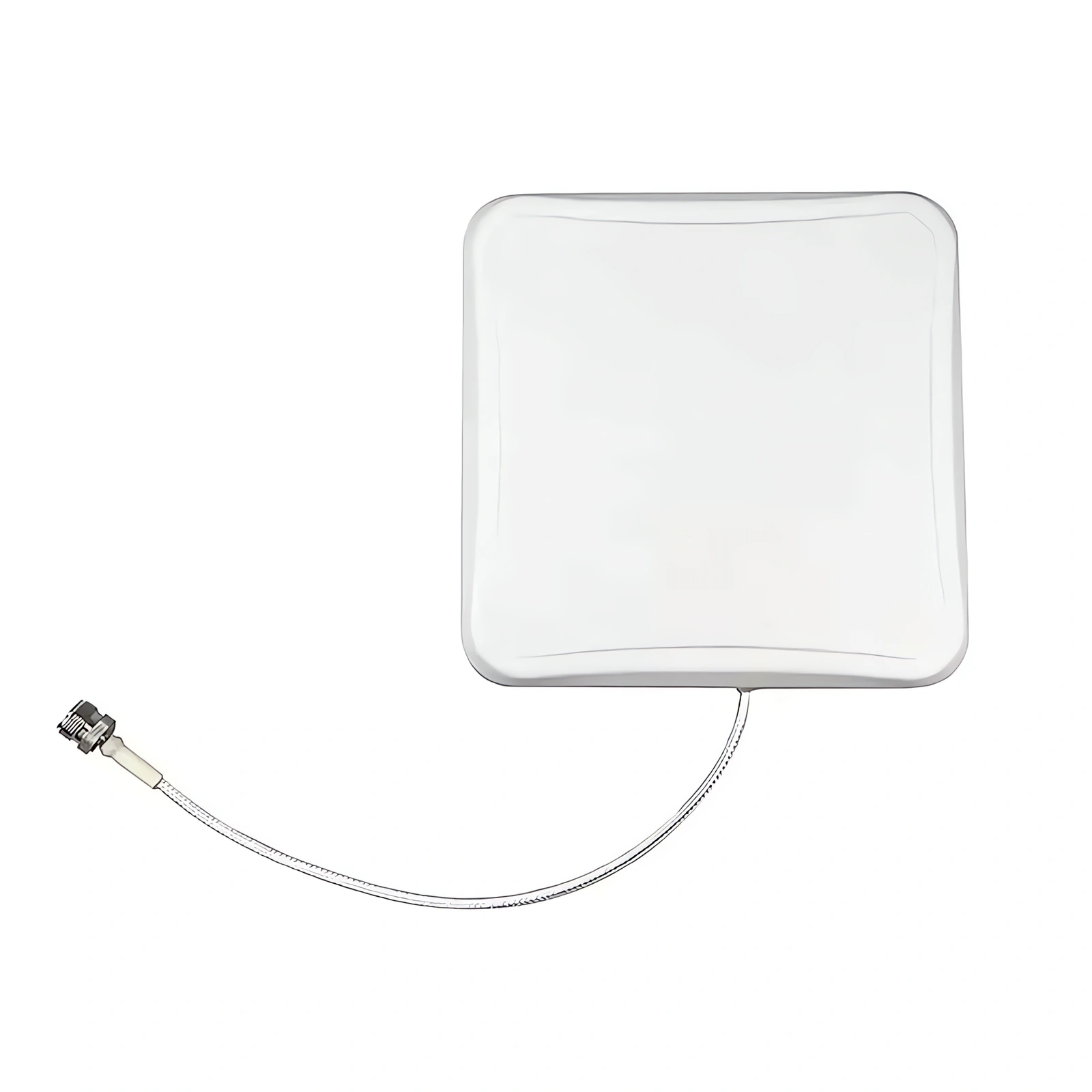
This is a large outdoor-rated antenna that connects to a UHF reader and decides where tags are read at a gate or dock door. Key facts: 830×400×51mm · IP67; MOQ 50pcs.

Tags in any orientation must be read as goods pass.
Typical setupCircular polarization, 9 dBi.
Antennas face weather.
Typical setupIP67, aluminium alloy.
You need antennas for fixed reader projects.
Typical setupOEM, ODM.
This is a large outdoor-rated antenna that connects to a UHF reader and decides where tags are read at a gate or dock door. It reads tags even when they are turned the wrong way, up to 3.5 m. The reader makes the signal; this antenna beams it out and listens for the replies.
How it works, in plain words
What you need to use it
What it looks like in your business
Today: pallets are restacked and labels end up sideways or upside down, and a simple antenna misses them. With the antenna: this circular antenna sends its signal in a rotating pattern, so a tag is read whatever way it faces. A linear antenna would reach slightly further, but only when the tag lines up with it.
What you get: Fewer missed pallets at the door.
Today: one antenna on one wall cannot reach tags hidden behind other cartons. With the antenna: mount one on each side of the opening (more can be added on the same reader), angled slightly inwards. Both antennas connect to the same reader, which switches between them and reports which one heard each tag.
What you get: Tags are read from both sides of the load.
Today: the antenna also reads stock on nearby racks, and the system records movements that never happened. With the antenna: choose a narrow enough beam, aim the antenna at the opening, and lower the reader's power until the zone covers only the passage. The reader's power setting matters as much as the antenna.
What you get: No phantom movements from nearby stock.
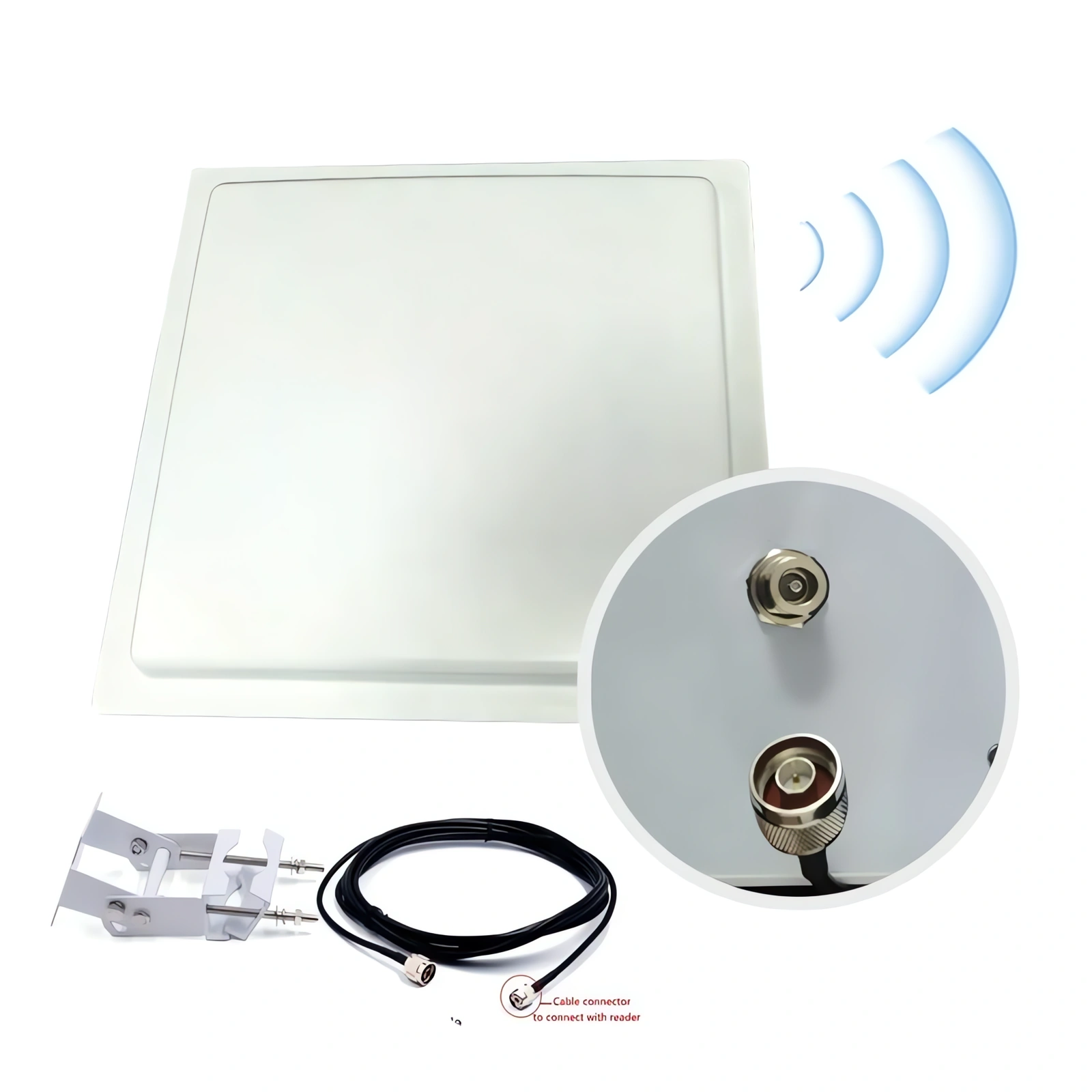
Today: a long or poor cable weakens the signal, so tags at the edge of the door are missed. With the antenna: connect the antenna to a reader that works on the same radio band for your country (this model covers 860–960 MHz), with a short, low-loss cable and the right connector. Ask us to confirm the connector type for your reader before ordering.
What you get: A matched pair that works at the first test.
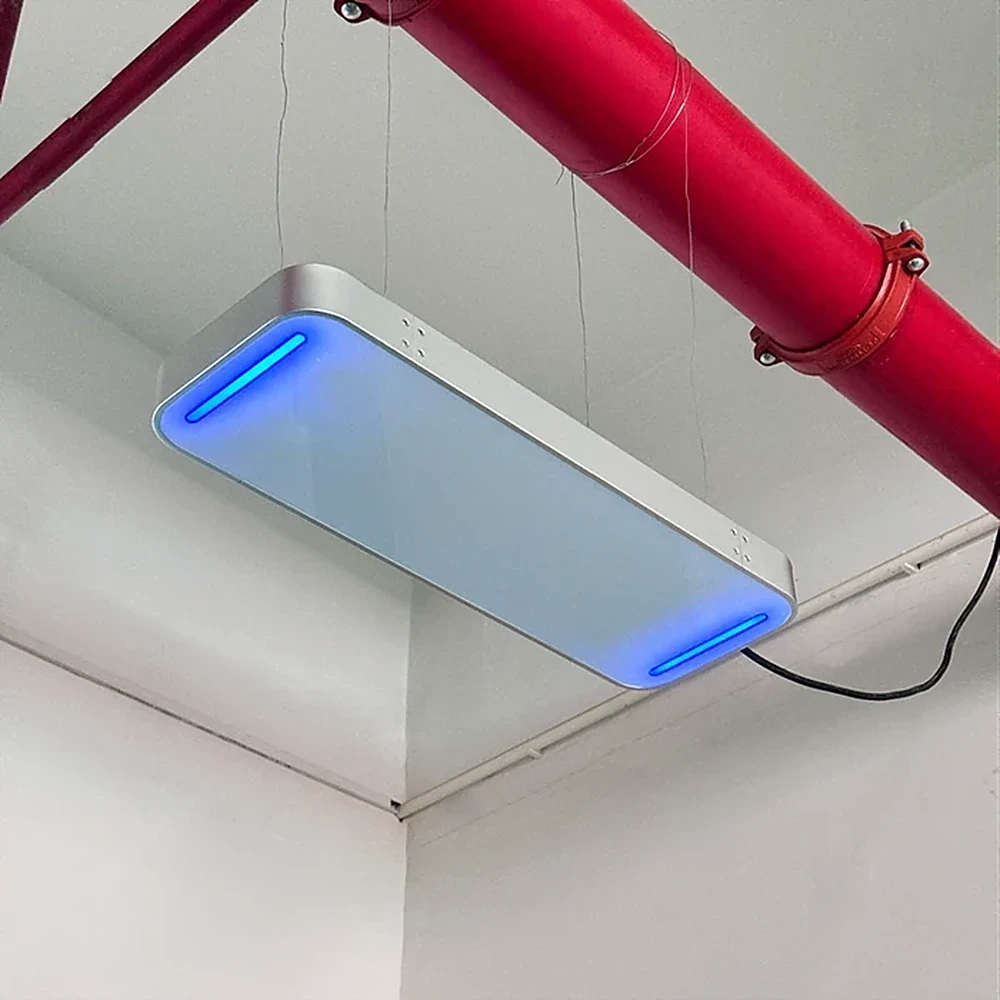
Today: plastic antennas at an outdoor gate crack or fill with water. With the antenna: the CNC aluminium body is rated IP67 and works from −25°C to +65°C, so it suits outdoor gates and loading bays.
What you get: It keeps working in weather.


The hardware and software that work with the Circular Polarization RFID Antenna 9dBi in a typical project.
Fixed on the goods, pallets or runners you want to read.
Beams the signal and listens for replies. Its position and angle define the read zone.
Carries the signal between the reader and the antenna. Long or poor cable weakens it.
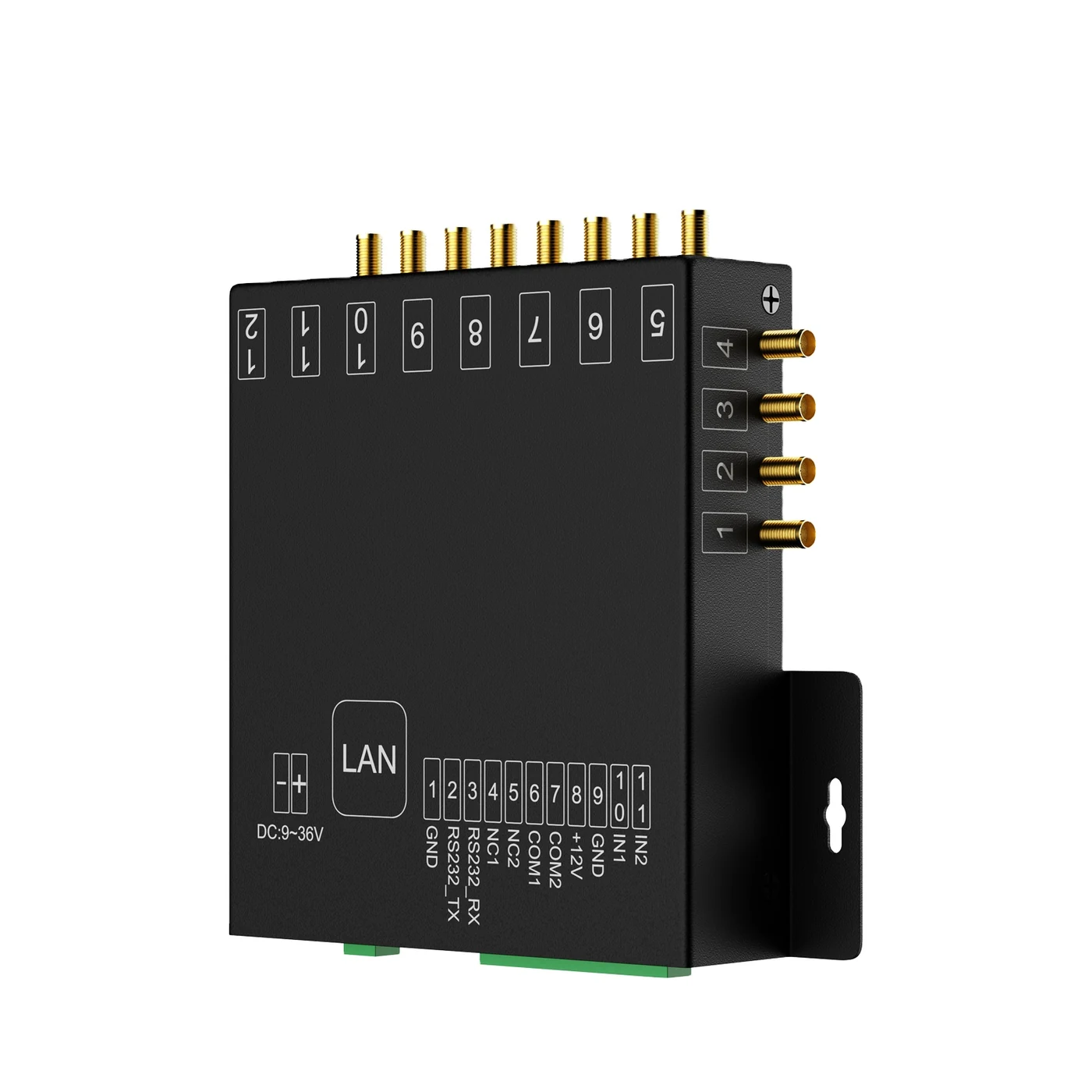
Sets the power, controls up to several antennas and sends the tag list to your software.
Turns tag reads into events: "pallet 12 passed Door 3".
Decide where tags should be read, and just as important, where they should not (nearby shelves, other lanes).
The antenna and the reader must use the same band for your country (for example 865–868 MHz in Europe, 902–928 MHz in the US). The antenna connector must fit the reader port, directly or with the right cable.
Fix the antenna firmly with its face towards the tags. At a doorway, antennas on both sides, angled slightly inwards, cover the passage better than flat on the wall.
Connect the cable and set the reader's power. Use enough power to cover the opening, not the maximum by default.
Run real pallets or items through at normal speed, many times, and adjust angle and power until all target tags are read and neighbouring ones are not.
| Frequency | 860-960 MHz |
|---|---|
| Protocol / Standard | ISO 18000-6C(EPC C1 G2) |
| Read range | 0-3.5m |
| Size | 830*400*51mm |
| Material | CNC aluminum alloy |
| Operating temp | -25 °C to +65 °C |
| Waterproof / IP | IP 67 |
| Mounting | fix with screws |
| Certifications | RoHS, REACH; |
Need a value that is not listed? Ask in the form and our engineers will confirm it for your order.
| MOQ | 50pcs |
|---|---|
| Sample policy | Paid samples (no free samples for hardware) |
| Sample lead time | 7-14 days |
| Bulk lead time | 7-14 days |
| Packaging | 1 unit/carton |
| Pricing | Quoted per project and quantity. Send your quantity and requirements in the form. |
| Printing & branding | OEM, ODM |
|---|
Selected technical, installation and application media for this product.
No. It must be connected to a UHF reader, which makes the signal and handles the tag data. The antenna only beams the signal and listens for replies. Reader and antenna must use the same radio band for your country.
A circular antenna reads tags at any angle, which suits pallets and cartons whose labels face different directions. A linear antenna reaches further at the same gain, but the tag must line up with it. For most dock doors, circular is the safer choice.
It depends on the door width, the load and the tags. Guides for dock doors describe layouts from two antennas (one on each side) to four or more with an overhead one. Plan the read zone first and test with your own pallets.
Yes, set it during commissioning. Use only as much power as is needed to cover the opening. Too much power makes the antenna read stock outside the door.
Use a short, low-loss coaxial cable and a connector that fits your reader. Tell us the reader model and we will confirm the connector for this antenna.
The minimum order quantity is 50pcs.
Paid samples (no free samples for hardware). Samples are ready in 7-14 days.
Bulk lead time is 7-14 days, counted from sample or artwork approval.
Printing and customization: OEM, ODM.
Last updated:
Tell us your quantity, application and delivery country. We reply within 24 hours.