Quick answer
A reader sends out radio waves, a tag with no battery of its own uses a little of that energy to wake its chip and send back a code, and software turns the codes into a count, an alert or a record. The tag does not need to be seen, and many tags can answer in one pass. Everything else in this guide is about what you have to buy, where it goes wrong and whether it pays back.
What Happens When a Tag Is Read
Think of a passive tag as a very small radio that is asleep until a reader wakes it. The whole exchange takes a fraction of a second and follows the same five steps whatever the frequency.
- The reader transmits. It sends radio energy through an antenna, either built into the reader or connected by a cable.
- The tag wakes up. The tag's own antenna catches that energy and powers the chip. A passive tag has no battery, which is why it can be thin, cheap and last for years.
- The chip answers. It sends back its code, usually a number that identifies one item.
- The reader sorts the answers. If many tags answer at once, the reader uses an anti-collision protocol to ask them one at a time, very quickly.
- Software acts on the list. The codes become a stock count, a door event, a missing-item alert or a line in your system.
The physics differs by frequency. Low-frequency (LF) and high-frequency (HF) tags sit so close to the reader antenna that they are coupled to it like a transformer: the tag changes how much it loads the reader's field, and the reader detects that change. Ultra-high-frequency (UHF) tags are further away than one radio wavelength, so they work by backscatter: the tag reflects part of the reader's signal back, modulated with its code. That difference is the reason LF and HF read at centimetres and UHF reads at metres.

What Is Inside a Tag and What the Code Means
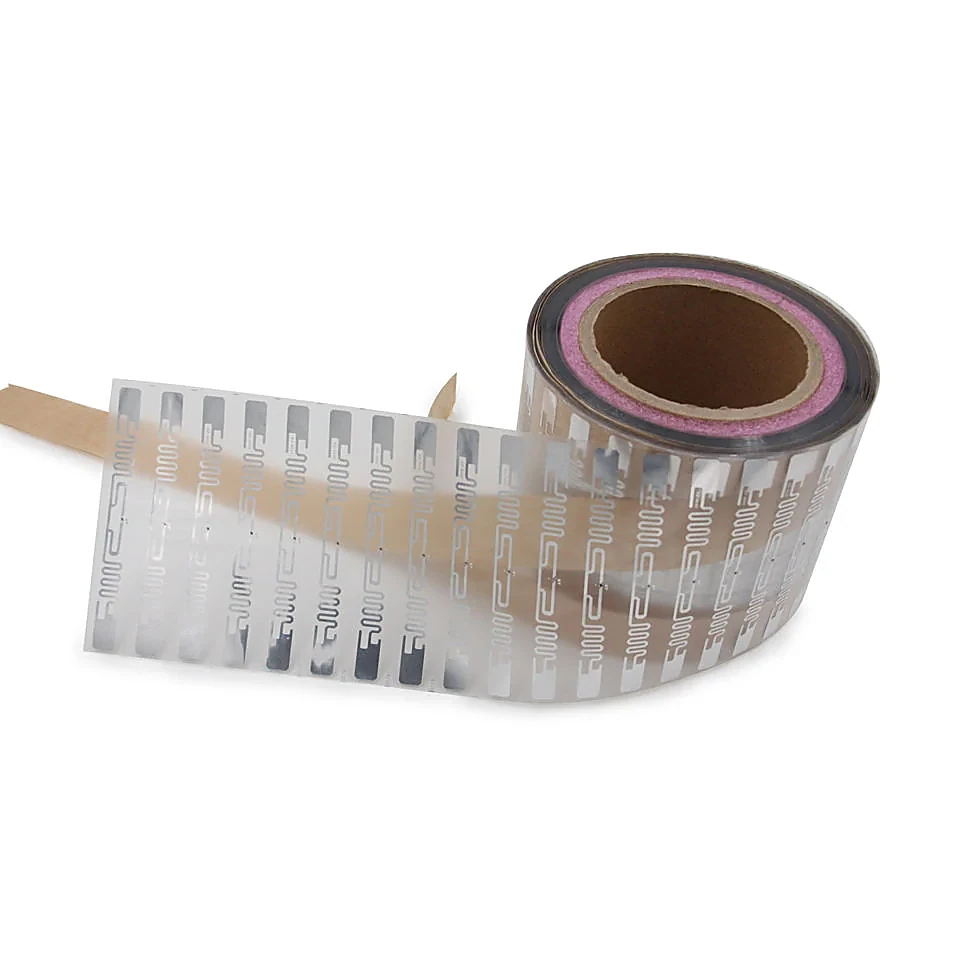
A tag has three parts: a microchip that stores and processes the data, an antenna that receives and sends the signal, and a substrate that holds them (paper, film, plastic or a hard housing). The chip's memory is where the code lives. A UHF chip typically has four areas: the EPC (the code you write and read), the TID (a factory-locked chip identifier), an optional user memory, and a reserved area for passwords.
In retail and logistics the code is often a 96-bit Electronic Product Code: 8 bits for a header, 28 bits for the company, 24 bits for the product class and 36 bits for a serial number. The important point for a buyer is that the tag usually holds only a number. What the number means, such as which style, which owner or which location, lives in your database. A tag does not replace your inventory system; it feeds it.
The Parts You Have to Buy
A working system has four hardware pieces and one piece of software. The prices below are US list prices from one retailer, read on 29 October 2026, shown only to give a sense of scale. They are not FYRFID prices. For a quote on your own items, send us the details and we will price the tag, not a category.
| Part | What it does | Typical US list price |
|---|---|---|
| Tag or label | Carries the code on the item | Inlays about $0.09 to $1.75 each; rugged hard tags about $1 to $20 |
| Reader | Powers the tags, reads the answers, passes the codes on | Handheld or fixed about $500 to $3,000 and up; USB desktop about $500 to $600 |
| Antenna | Sends and receives the radio signal (not needed when the reader has one built in) | About $50 to $300 each |
| Printer or encoder | Writes the code onto a label (optional if labels arrive pre-encoded) | Depends on model; ask for a quote |
| Software / middleware | Removes duplicates, matches codes to items, connects to your stock or ERP system | Often a recurring subscription or a custom integration; the least predictable line |
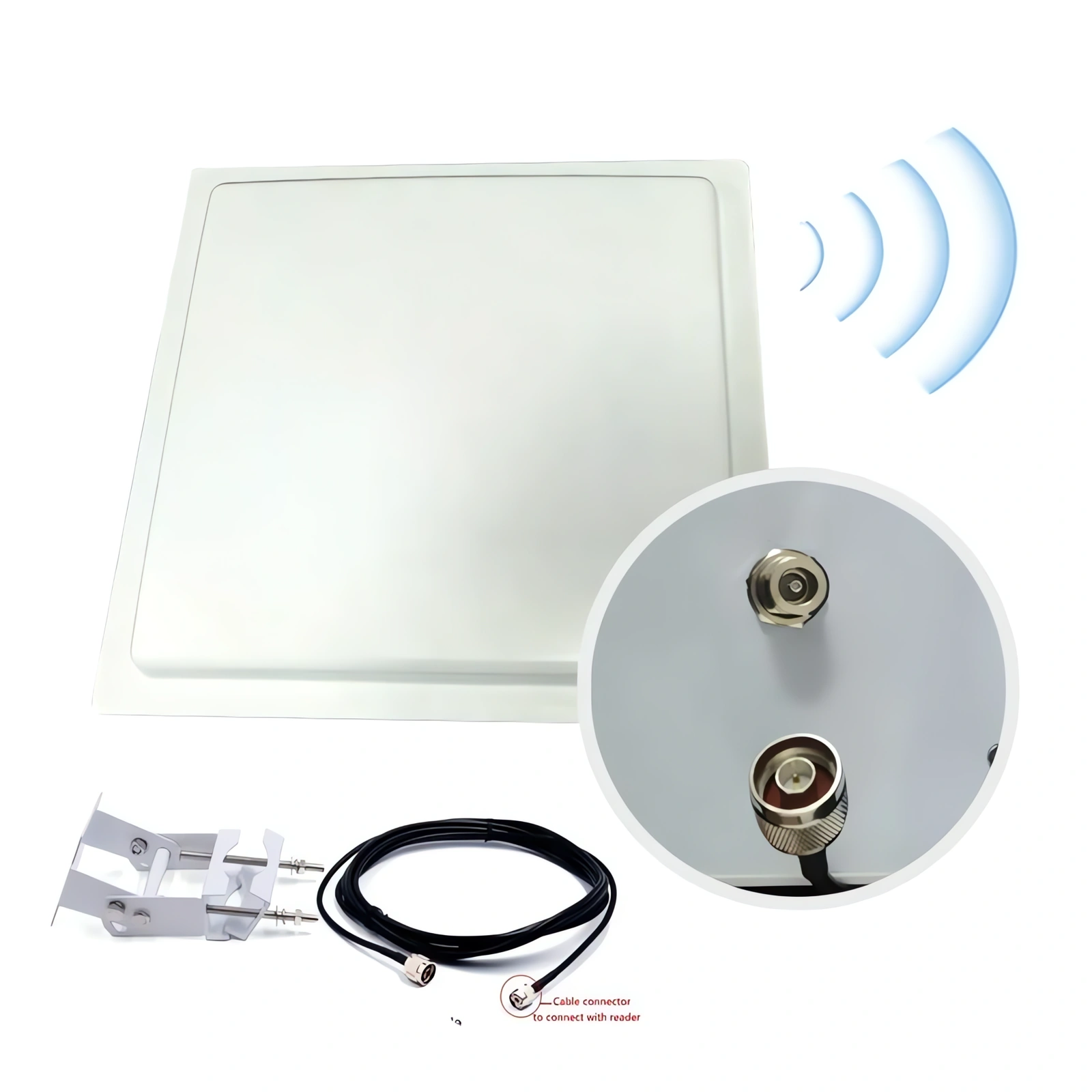
For a detailed look at the four parts of a UHF system and who supplies what, see How an RFID System Actually Works: Tag, Reader, Antenna and Software.
Which Frequency, and How Far It Reads
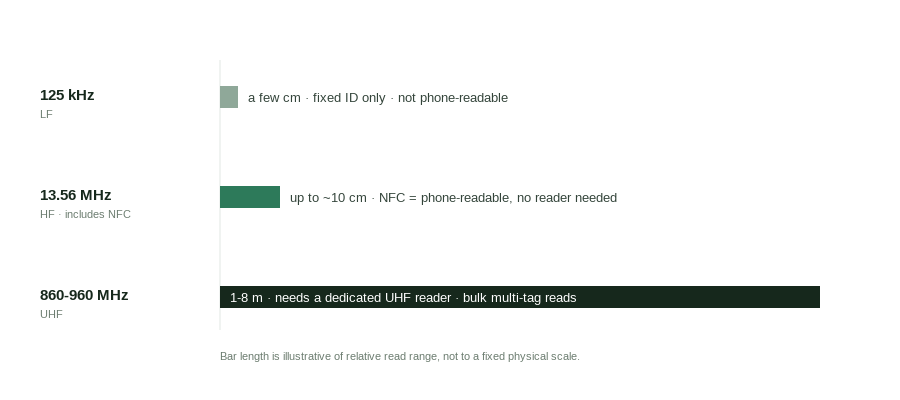
RFID is a family, not a single technology. The frequency you choose sets the read range, the cost and the environments it tolerates. The ranges below are typical starting points. A read range is a result of the tag, the antenna, the reader power, where the tag is placed and what it is attached to. It is not a number printed on the tag.
| Typical read range | Best for | Watch out for | |
|---|---|---|---|
| LF 125 to 134 kHz | Contact to about 10 cm | Animal ID, door access, damp or metal-heavy places | Very short range, higher tag cost |
| HF / NFC 13.56 MHz | Near contact to about 30 cm | ID cards, library books, tickets, phone tap | Short range, lower data rate than UHF |
| UHF 860 to 960 MHz | Several feet to 10 m or more, set-up dependent | Stock counting, logistics, assets, laundry, many tags at once | Sensitive to metal, liquids and tag placement |
| Active (battery) 433 MHz / 2.45 GHz | 30 to 100 m or more | Vehicles, containers, large sites | Tags cost about $15 to $50; battery shipping rules; fewer shared standards |
Two practical notes. First, UHF is licensed by region: Europe uses 865 to 868 MHz and North America 902 to 928 MHz, so buy equipment for the country where it will run. Second, if your goal is for customers to tap their own phones, you need an HF/NFC product, not a UHF one. The difference is explained in RFID vs NFC: What Is the Difference?.
A Workflow From Tag to Decision
Whatever you track, the working process has the same shape. Writing it down for your own business before you buy anything is the cheapest step in the project.
- Decide what you identify. One garment, one tool, one pallet, one person. The unit you tag sets the tag size and cost.
- Pick the tag for the surface and the process. Plastic, cardboard, metal, glass, liquid, a hot wash cycle: each rules out most tags.
- Encode and attach. Write the code with an encoder or buy labels pre-encoded, then stick, sew, screw or embed the tag.
- Place the read point. A handheld for counts and spot checks, or fixed antennas at a doorway, conveyor or shelf.
- Send the reads to software. Remove duplicates, match codes to items, flag what is missing.
- Act and measure. A reorder, an alert, an audit result. If nobody acts on the list, the system has not changed anything.
What Problems It Actually Solves
The best-documented result comes from the Auburn University RFID Lab and GS1 US. In their apparel retail studies, item-level RFID raised average inventory accuracy from 63% to 95%, reduced out-of-stocks by up to 50%, and cut cycle-count time by 96%. In a separate one-year study of eight brands and five retailers (Project Zipper, 2017 to 2018), 69% of inbound orders contained an error when only barcodes were used. Where RFID was used and differences were reconciled, order accuracy reached 99.9%.
Read the numbers with care
These studies covered apparel retail and its supply chain, were run by a university lab with funding in part from GS1 US, and the 99.9% figure applies when the user reconciles every difference RFID reveals. They show what is possible when RFID is well implemented in that setting. They are not a promise for a tool crib, a laundry or a farm.
The underlying problems RFID addresses are the same in other settings: counts that take days and are wrong the day after, items that exist but cannot be found, and shipments or issues that are not recorded. It is not always the right answer. RFID tags cost more than barcodes and are often a complement, not a replacement. The case where a barcode is enough is set out in When RFID Is the Wrong Answer.
What Goes Wrong in Real Projects
Most disappointing RFID projects fail for ordinary reasons that show up in a test long before a large order. These are the ones to check first.
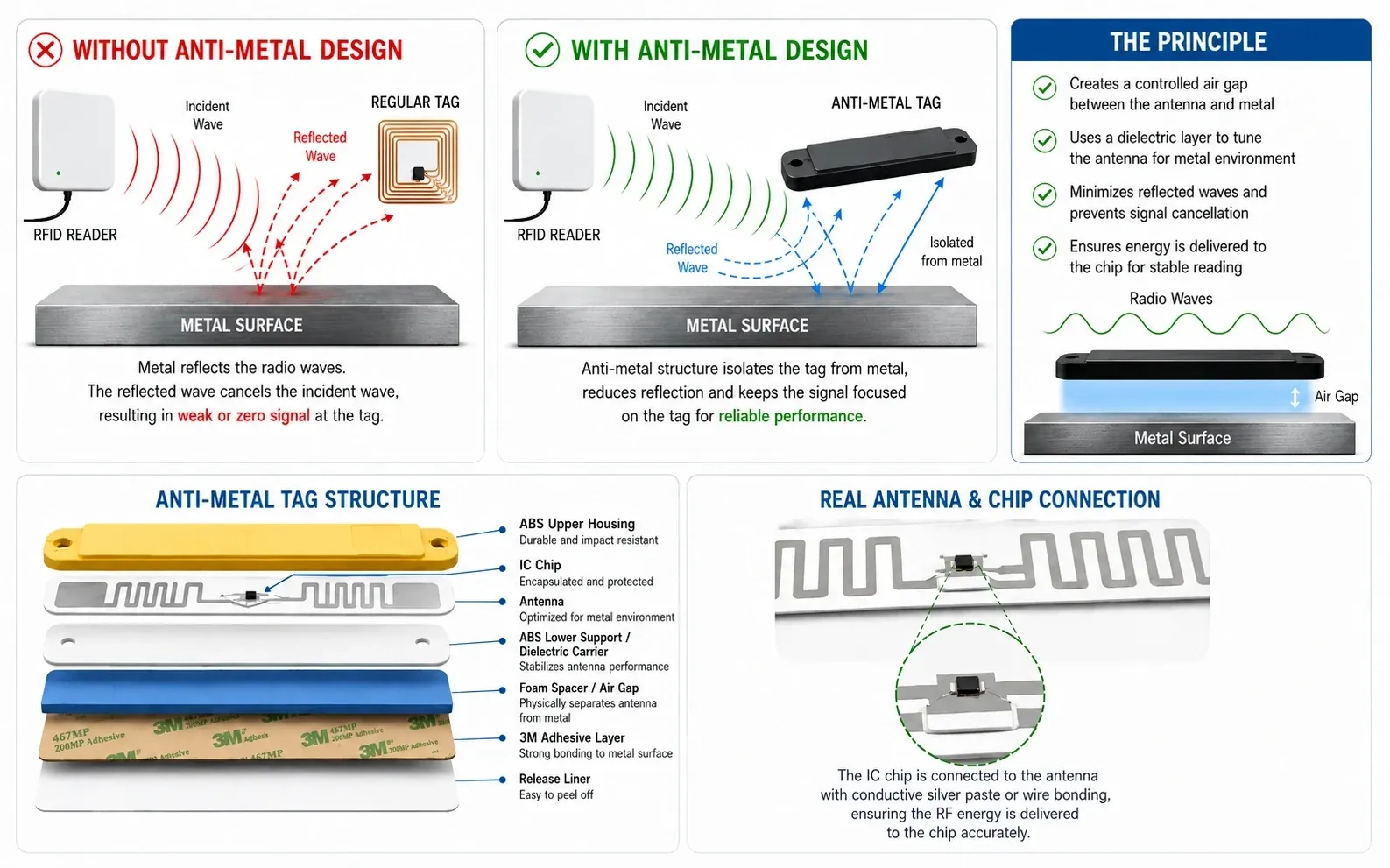
- Metal and liquids. UHF labels are sensitive to both. A standard label on a metal shelf or a bottle can stop reading, while a tag built for metal will work. Test on the real item. See RFID Tags on Bottles and Liquids and Anti-Metal RFID Tags: ABS vs PPS vs Ceramic.
- Reads are not 100%. Bulk reading many tags at once is fast, but under real conditions it can miss tags that are shielded by other tags or items. Plan a process that tolerates a small miss rate, or add a second read.
- The count changes between runs. Reader power, antenna position and session settings change what is read. This is a set-up issue, not a faulty tag. See Why Your RFID Count Changes Every Time.
- Wrong frequency or region. An HF reader will not read a UHF label, and a reader built for one region's band is the wrong product for another.
- Tag orientation. A linear antenna reads further but needs tags in a consistent direction; a circular antenna reads tags in any orientation at slightly shorter range.
- Software left until last. Reads that have nowhere to go are only a list. Integration with your stock or ERP system is often the longest part of the project.
- Recurring tag cost. Labels used once per item are consumed every time you tag something new. Plan the tag cost per item, not per order.
What It Costs
Split the cost into two kinds. Fixed costs are durable equipment you buy once: readers, antennas, cables and reusable tags such as access fobs. Recurring costs are consumed or billed repeatedly: labels applied once per item, printer ribbon and software subscriptions. Many first budgets list only the fixed costs and are surprised by the recurring ones.
The table below is an illustration with stated assumptions, not a case study. FYRFID does not have published project data to show here, so replace every input with your own numbers.
| Line | Assumption | Result |
|---|---|---|
| Tags | 5,000 items at $0.15 per tag (inside the $0.09 to $1.75 inlay range) | About $750, and recurring as new items are tagged |
| Reader | One USB desktop reader at about $600 | About $600, one-off |
| Software and integration | Not priced here; depends on your system | Get a written quote; it can be the largest line |
| Testing and staff time | A pilot and training; not priced here | Count it, even if it is your own time |
| Hardware and tags only | Tags plus one reader | About $1,350 before software and time |
If you need fixed readers and antennas instead of one desktop reader, the equipment line rises quickly: one reader at about $1,500 plus four antennas at about $50 to $300 each is a different budget. That is why the read point is decided before the order, not after.
How to Judge Payback Before You Spend
Project Zipper gives a simple frame that works well beyond retail: compare the cost of the tags and scanning equipment with the cost of the errors you are paying today. For your own business, list the errors in four buckets.
- Labour: hours spent on counts, searching for items and re-checking. The study reports a 96% drop in cycle-count time for tagged apparel stock; your saving depends on how long counting takes now.
- Loss and shrink: items that go missing or are not recorded when they leave.
- Lost sales or downtime: stock that exists but cannot be found, or tools that are not where the system says.
- Errors and claims: wrong shipments, disputed deliveries, returns that cannot be traced.
Then divide the upfront cost by the yearly saving to get a rough payback period. As a worked example using only the assumptions above: a stock count that takes two people eight hours, four times a year, at $20 an hour, costs about $1,280 a year. A 96% reduction would save about $1,230 a year. Against about $1,350 of tags and one reader that is a payback of a little over a year on counting labour alone, before software and staff time. The honest reading is that counting hours rarely justify a project by themselves; the case is made by the loss, lost-sales and error buckets, which you have to measure in your own business.
The cheapest way to find your real numbers
Run a small pilot on your own items before a full order. A few hundred labels, one reader and a simple count will show your real read rate, your real tag cost per item and how much of the saving is real. The method is in Start With a 200-Label Pilot.
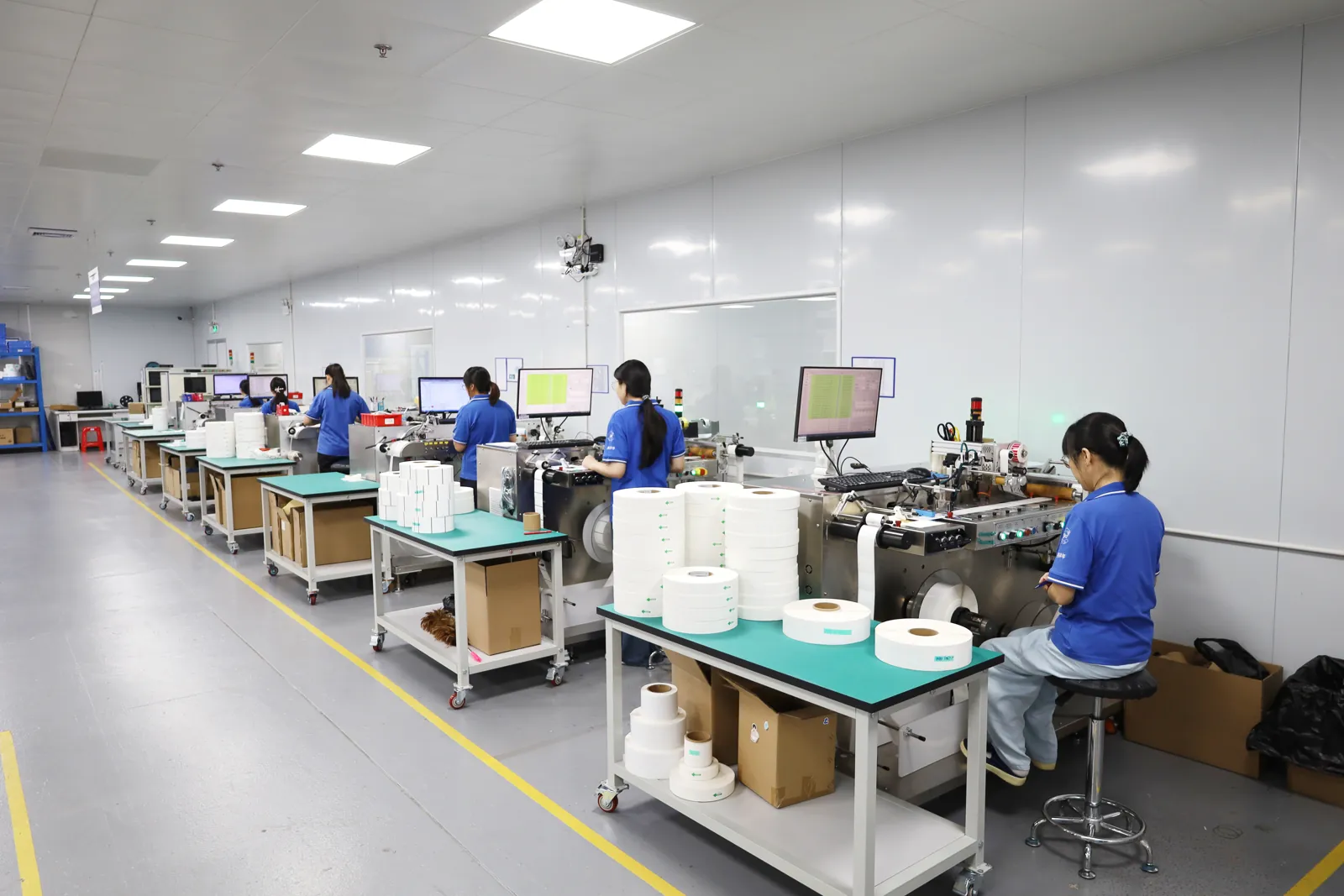 Encode and verify
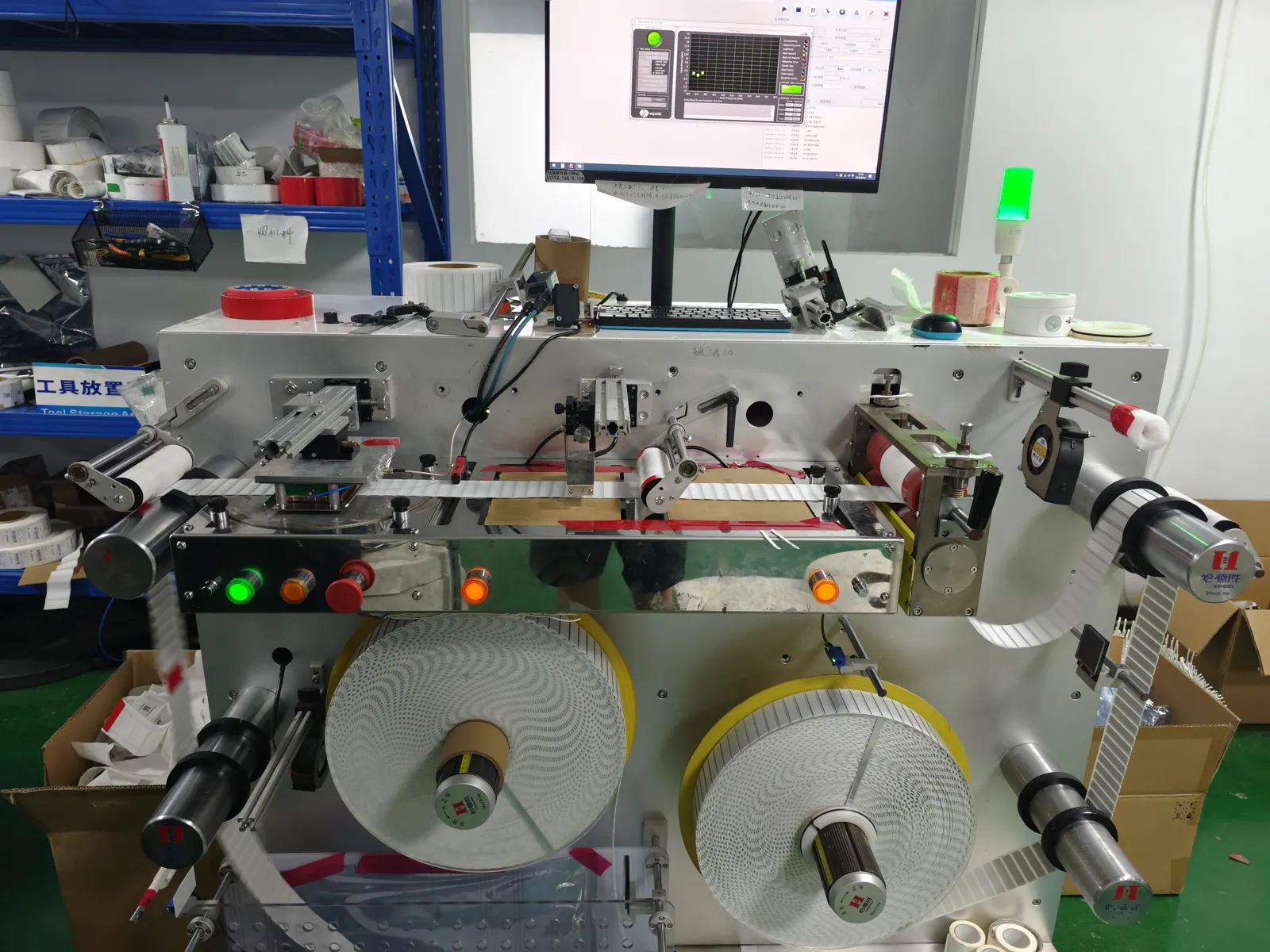 Performance test
A Checklist Before You Ask for a Quote
- What exactly are you identifying: item, case, pallet, tool, person?
- What is it made of and what condition does it live in: metal, liquid, heat, wash, outdoors?
- Where will it be read: at a doorway, on a shelf, with a handheld, on a conveyor?
- How many items, how often are new ones tagged, and who applies the tag?
- What system must receive the data: spreadsheet, stock system, ERP?
- Which country will the reader operate in?
- What is the cost of the problem today, in hours, losses and errors?
These questions turn the system and cost picture above into a quote you can actually compare.
Sources & standards
- Radio-frequency identification: design, tags, readers and signaling — Wikipedia, reference
- What Is RFID? Components, benefits and standards — Zebra Technologies, reference
- What is RFID? The Beginner's Guide to How RFID Systems Work — Atlas RFID Store, reference
- What is RAIN Technology — RAIN Alliance, reference
- RFID and the Electronic Product Code — GS1, reference
- EPC/RFID Data Exchange Study: Project Zipper Executive Summary (2018) — GS1 US and Auburn University RFID Lab, reference
- ISO/IEC 18000-63:2021 (formerly 18000-6C) — ISO/IEC, reference